
Reviewed · VERONA WALKING TOURS
Walking Tour in Verona: 9+ Landmarks with Live Guide
Ninety minutes to see Verona’s big clues. This express Verona walking tour strings together more than nine landmark stops, with a live guide telling the stories behind the squares, towers, and Roman leftovers. I love how it’s designed to help you get your bearings fast without turning your day into a long slog.
Two things really stand out: you stay in a small group (max 12), and you get clear, human explanations you can carry with you after the walk. One possible drawback: since the tour focuses on exterior sights, you won’t automatically get access to interiors like the Duomo, and places such as the tower or Roman theater may require separate tickets if you want to go in.
In This Review
- Key highlights at a glance
- A 90-Minute Verona Starter Kit That Feels Like Real Sightseeing
- Meeting at Piazza Erbe: Your Verona Compass
- Piazza delle Erbe to Torre dei Lamberti: Power, Trade, and a View
- The Historic Staircase and Piazza dei Signori: Where Social Lines Show
- Casa di Giulietta: The Love Story Stop (With Perspective)
- Arche Scaligere and Ponte Pietra: Medieval Tombs Meet Roman Engineering
- Duomo di Verona and Teatro Romano: The Exterior Tour Value
- Why the Guides Matter: The Difference Between Seeing and Understanding
- Price and Group Size: What $42.17 Buys You in Real Terms
- Practical Tips So You Enjoy It, Not Just Survive It
- Who Should Book This Verona Walking Tour?
- Should You Book This Verona Walking Tour?
- FAQ
- How long is the walking tour?
- How many landmarks are included?
- Is the tour ticket mobile?
- Is admission included for the stops?
- What language is the guide offered in?
- What is the group size limit?
- Where does the tour start and end?
- Can I cancel for a full refund?
- Is the tour suitable for most travelers?
Key highlights at a glance
- Small group pace (up to 12 people): easier questions, more time at stops, fewer photo bottlenecks
- Live English guide storytelling: love, power, and conflict tied directly to what you’re seeing
- Outside-focused route with big names: Piazza delle Erbe, Piazza dei Signori, Casa di Giulietta, Ponte Pietra, and more
- Time-smart itinerary: about 1.5 hours so you can still wander afterward on your own
- End near Verona Cathedral: convenient finish if you want to keep exploring right away
A 90-Minute Verona Starter Kit That Feels Like Real Sightseeing
This walk is for you if Verona feels big in your head but you only have a slice of time. The format is simple: meet in the center, follow the guide along a tight loop, and hit the key stops you’ll want to revisit later. You’re not trying to cram museums into one afternoon.
I like that the tour is built around understanding what you’re looking at. You’ll hear why certain squares mattered, how medieval power showed itself in stone, and how the city layered Roman, medieval, and Renaissance-era life on top of each other. The tone keeps it practical, not like a lecture you have to translate in your head.
The group size helps, too. With a max of 12 people, you’re less likely to get swept along. That means you can ask questions, pause for photos, and actually connect the stories to the specific corners you’re standing on.
More of the centro storico on foot with a guide.
Meeting at Piazza Erbe: Your Verona Compass
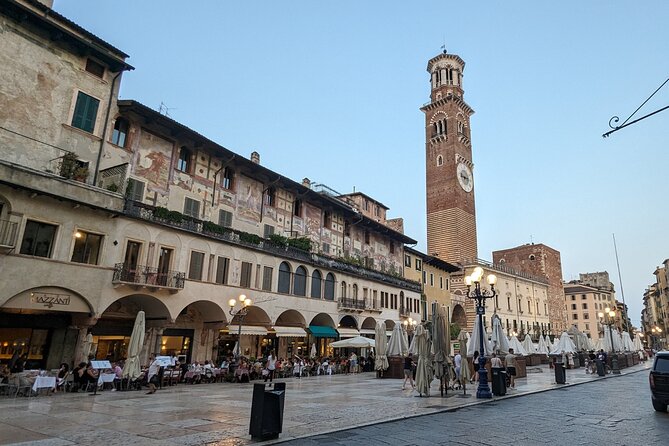
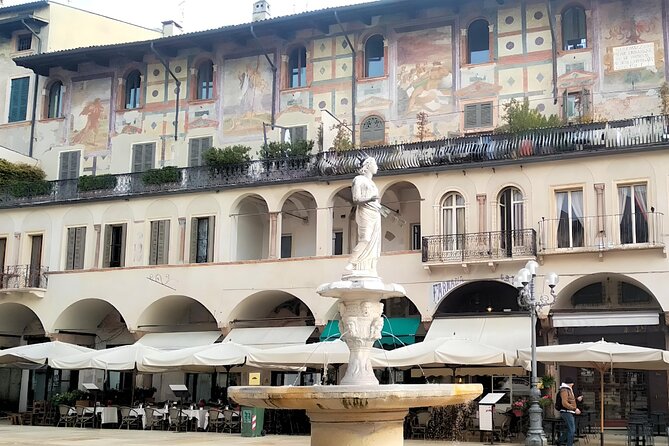
You start at Piazza Erbe, 38a (Piazza delle Erbe). This is one of the best “first stop” squares in Verona because it’s instantly recognizable and easy to use as a base later.
Piazza delle Erbe is known for its market energy and long-running role as a gathering place. On the walk, it’s not just a pretty start—it’s context. Your guide uses it to set up Verona’s history of commerce and civic life, so the later stops don’t feel random.
When you’re done with the tour, you can also treat Piazza Erbe as your launchpad. If you want more time at the fountains, shops, or viewpoints, you can break off and come back later without re-navigating the whole city.
Piazza delle Erbe to Torre dei Lamberti: Power, Trade, and a View
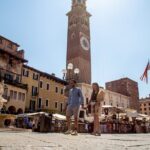
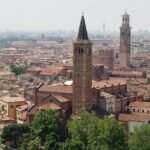
From Piazza delle Erbe, the route heads toward Torre dei Lamberti. The Lamberti Tower dates to the 12th century, and even if you never climb it, you’ll feel how it functions as a landmark. It’s the kind of structure that helps you understand where the city’s old center sat.
This stop also works well because it shifts you from square life into vertical “power” life. Sights like a tower make the medieval city’s social structure more visible. You start to understand that Verona wasn’t only about streets and buildings; it was also about who had visibility—and influence.
A practical note: the tower’s climb is not included. You can still appreciate the exterior and the setting, but if you want the full tower experience, plan on buying tickets separately.
The Historic Staircase and Piazza dei Signori: Where Social Lines Show
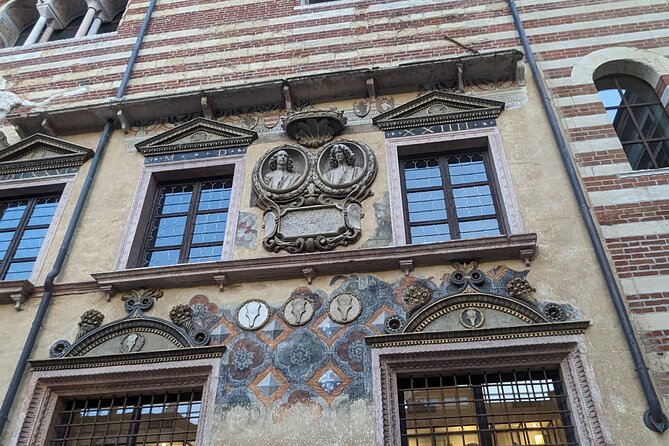
You’ll see a historic staircase near Piazza delle Erbe, a stone link between the lower areas and the spaces where the ruling class lived. That detail matters because it turns a random set of steps into a story about movement, access, and status.
From there, the walk moves to Piazza dei Signori, a square known for its elegant architecture and civic role. The Loggia del Consiglio and the Palazzo del Capitano help you picture how leadership displayed itself in public spaces. This is one of those stops where your guide can turn “buildings” into “power centers” with a few well-placed explanations.
Time-wise, you’re not stuck long at any one spot, and that’s the point. The stop is short, so focus on what the buildings are telling you—then come back later if you want deeper time.
Casa di Giulietta: The Love Story Stop (With Perspective)
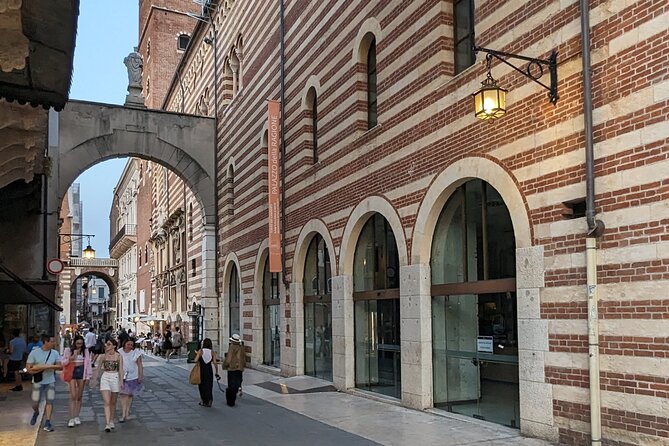
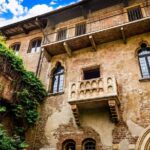
Casa di Giulietta, Juliet’s House, is a famous Verona attraction, and it draws crowds for a reason. Even if you’re not a Shakespeare superfan, it’s a quick way to connect Verona to the cultural mythology people associate with love and tragedy here.
This stop is also useful for another reason: it provides a break from politics and architecture. The guide can shift gears from civic power to romance, and that variety keeps the walk from getting heavy.
One thing to keep in mind: this is another stop where the value is in what you learn and how you interpret the site from the street. If you’re expecting a deep, ticketed experience, you may want extra time on your own after the tour.
More days out with a Verona local guide.


Arche Scaligere and Ponte Pietra: Medieval Tombs Meet Roman Engineering
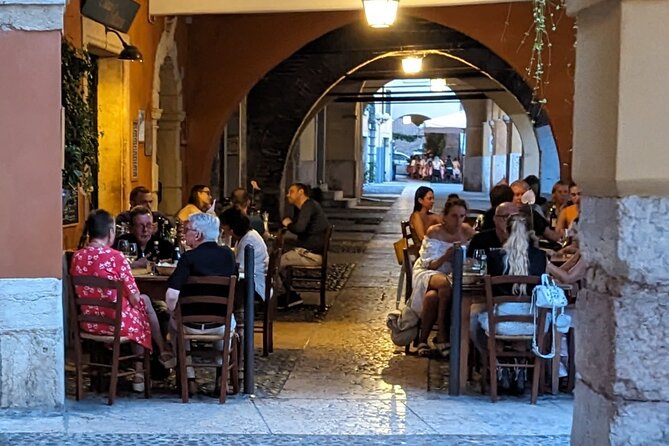
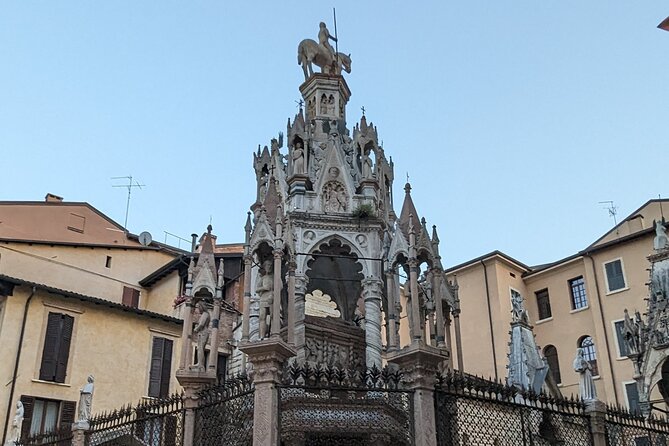
Next up is the Arche Scaligere, the gothic funerary monuments tied to the Scaligeri family. Seeing these monuments in person helps you understand medieval influence wasn’t only about who ran the city—it was also about how families wanted to be remembered. Your guide’s stories make the stone feel personal instead of decorative.
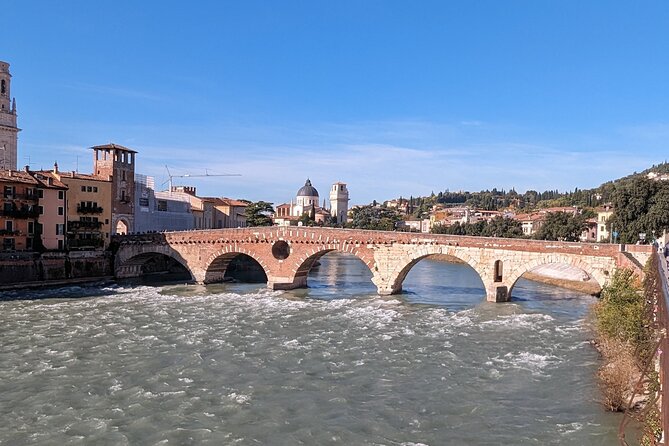
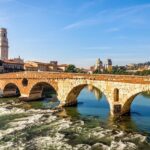
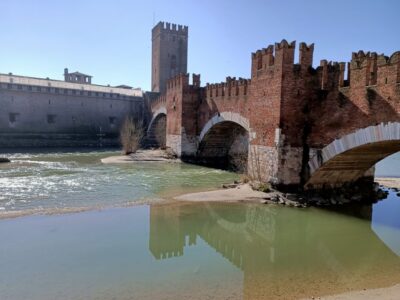
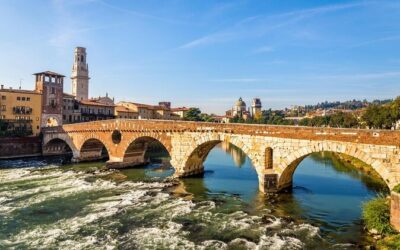
After that, the tour brings you to Ponte Pietra, the ancient Roman bridge over the Adige River. Origins go back to the 1st century BC, which is a wild fact to stand next to when you’re only walking for 90 minutes. The bridge gives you a clear Roman thread through the city.
I especially like that this stop sets up good “daylight geography.” Bridges and river edges are natural place markers. Once you understand where the Roman bridge sits, it becomes easier to explore the city beyond the tour route.
Duomo di Verona and Teatro Romano: The Exterior Tour Value
The Duomo di Verona (Cattedrale di Santa Maria Matricolare) is a Romanesque church from the 12th century, with a facade that’s built for close looking—carvings, sculptures, and architectural detail. Since admission isn’t included, you’ll likely focus on exterior viewing during the walk. Still, it’s a strong finish-line kind of stop.
Then comes Teatro Romano, an ancient Roman theater from the 1st century AD. Even without stepping inside, the idea is clear: Verona reused space and materials across centuries, and the city kept its layers visible.
If you’re the type who wants inside access, plan to add a follow-up on your own. But if your goal is to understand what the city is made of—Roman street logic, medieval power symbolism, and church authority—these exterior stops do the job without eating your day.
Why the Guides Matter: The Difference Between Seeing and Understanding
The best part of this walk isn’t the checklist of famous names. It’s how the guide connects them into a coherent story you can remember.
In reviews tied to this exact tour style, guides like Carlos and Leonardo are described as friendly and easy to follow, with the kind of explanations that help you notice things on your own later. Leonardo in particular comes up as a favorite, with many people appreciating how he paced a lot of information without turning it into a rush.
Alessandra is another name you’ll hear for adding extra details and making the walk feel like a movie scene—just slower and more grounded. If you like asking questions, this is the kind of tour where the guide can afford to pause, answer, and sometimes even show you a side detail you might miss solo. One review even mentions a guide pointing out unexpected Roman-era references spotted in a store along the way—exactly the sort of “small detour value” that makes guided walks worthwhile.
That said, guides are people, not machines. You’ll get the most out of it if you show up ready to walk, ask one or two questions, and listen for the clues that connect stops.
Price and Group Size: What $42.17 Buys You in Real Terms
At about $42.17 per person for roughly 1.5 hours, the price makes sense when you think about what you’re paying for. You’re not paying for museum entry fees—you’re paying for a live English guide to turn outside landmarks into an intelligible route.
The value improves if:
- you want 9+ landmarks in a single morning/afternoon block
- you prefer a smaller group (max 12) over a big crowd sweep
- you want the city’s timeline explained while you’re physically standing where events played out
It may be less worth it if you already know Verona well and you mainly need photos. It also might feel limited if you’re specifically aiming for inside entries and climbs during this 90-minute window, because admission is not included and you’re focused on exterior viewing.
Practical Tips So You Enjoy It, Not Just Survive It
Wear comfortable shoes. This is a walking route, and you’ll encounter areas like a historic staircase along the way. Even if the steps aren’t the whole tour, they’re enough to make flip-flops a bad idea.
Bring water and plan for sun and shade. Verona can change fast—especially if your walk time lands between lunch and late afternoon.
Use the end point strategically. The tour finishes near Verona Cathedral at Piazza Vescovado. If you want to keep the momentum, you can head from there into nearby streets without needing to fight for your bearings again.
And yes, the “you can still do more after this” aspect is real. The whole point is to give you a foundation so you can choose your next wandering move on your own, rather than just ticking off photo angles.
Who Should Book This Verona Walking Tour?
Book it if you want:
- a time-smart Verona introduction (about 90 minutes)
- a guide-driven explanation of squares, monuments, and Roman-to-medieval connections
- a smaller-group experience that lets you talk and ask things
It’s also a good option for first-timers who are staying central. The meeting point at Piazza Erbe and the finish near the Duomo keep you in the thick of the city.
If you’re traveling with mobility limitations, the tour does include a historic staircase stop and lots of street walking, so you’ll want to think carefully about comfort and pacing before signing up.
Should You Book This Verona Walking Tour?
Yes—if you want Verona explained in a walkable, outside-focused way. This tour is strong for getting your bearings, linking the city’s main squares to real stories, and leaving you with enough knowledge to enjoy the places again on your own.
If you’re chasing only interiors, full climbs, and ticketed attractions, consider adding separate plans after. But for a compact first pass through Verona with a live guide and a small group, this is a smart use of time and a solid value.
FAQ
How long is the walking tour?
It lasts about 1 hour 30 minutes.
How many landmarks are included?
The tour includes 9+ landmarks.
Is the tour ticket mobile?
Yes, it uses a mobile ticket.
Is admission included for the stops?
Admission fees are not needed for this tour because it focuses on walking outside. Some specific sites listed do not include admission, so if you want to go inside, you may need extra tickets.
What language is the guide offered in?
The tour is offered in English.
What is the group size limit?
The tour has a maximum of 12 travelers.
Where does the tour start and end?
It starts at Piazza Erbe, 38a, 37121 Verona VR, Italy, and ends near Verona Cathedral at Piazza Vescovado, 37121 Verona VR, Italy.
Can I cancel for a full refund?
Yes. Free cancellation is available up to 24 hours in advance for a full refund.
Is the tour suitable for most travelers?
Most travelers can participate, and service animals are allowed.
More Verona Tours


More Verona Walking Tours


More Tour Reviews in Verona

Weighing up other options? More ways to spend a day in Verona and out on Lake Garda






Verona Walking Tours, compared.
 ★ 5.0History and Hidden Gems Guided Walking TourFrom $411,379 reviews
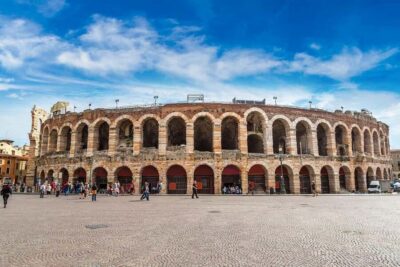 ★ 4.9Small Group Guided Walking Tour with Arena TicketsFrom $81848 reviews
 ★ 4.9Classic and Hidden Gems Bike TourFrom $33577 reviews
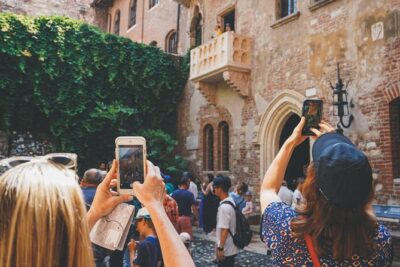 ★ 5.0Verona Highlights Walking Tour in Small-groupFrom $42493 reviews
 ★ 5.0Highlights and hidden gems Verona Bike TourFrom $47393 reviews
 ★ 5.0Verona walking tour:food, wine, legends, lunch/dinner & cable carFrom $123386 reviews
 ★ 5.0Verona All in one: Food Walking Tour, Lunch & WineFrom $114342 reviews
 ★ 5.0Verona Small Group Walking Tour with Cable Car and Arena TicketsFrom $71311 reviews
Browse the lists this tour appears in