
Reviewed · VERONA WALKING TOURS
Verona Walking Tour with Audio and Written Guide by a Local
Verona is best when you can wander on your terms. This Walking Cap experience pairs an audio track with a written guide so you can hit the major sights, then pause for photos, snacks, or a longer look—no group-wrangling required. I like that it’s built for independent pacing, starting and ending right at Arena di Verona.
My favorite part is the value: for $7.86, you get a full digital route with multilingual audio and text (English, Spanish, Italian, German, French). The second big win is that several of the stops are specifically flagged as no admission ticket needed, so your money goes to the guide, not extra entrances.
The main thing to consider is also the core of the product: you’re using your smartphone for the route and audio. If your internet is weak, audio can stall, and since headphones are not included, you’ll want to rely on your phone speaker or bring earbuds.
In This Review
- Quick take: what makes this Verona walk work
- Why this Verona plan is so easy: audio-led without the group pressure
- Setting up on your phone: internet, audio, and battery sanity
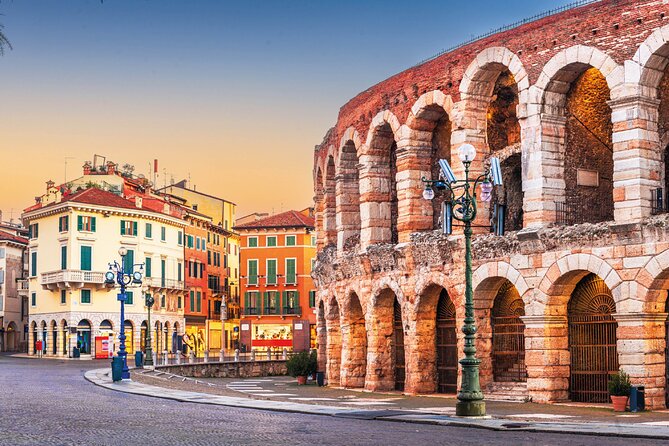
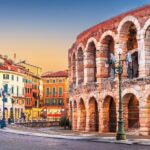
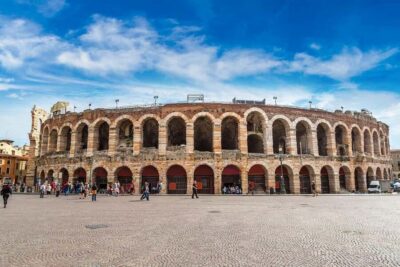
- Arena di Verona start point: the walk begins at the city’s best landmark
- Castelvecchio Bridge: your first big photo moment
- Museo di Castelvecchio: courtyard time is the bonus
- Porta Borsari: Roman Verona’s main entrance
- Ponte Garibaldi and its crossing trick: the bridge you might underestimate
- The main church stop: paintings and a quick art pause
- Ponte Pietra: Roman-built and worth the quick look
- Piazza dei Signori: Verona’s drawing room feeling
- The 84-meter tower: a view worth organizing your time around
- Piazza delle Erbe: oldest square, Roman Forum layers
- Casa di Giulietta: iconic exterior, deeper story behind it
- Arena di Verona finale: finish where Roman Verona still feels huge
- Price and value: what you really get for $7.86
- Who should book this Verona walk (and who might not)
- Should you book Walking Cap’s Verona walk?
- FAQ
- How long is the Verona walking tour with audio and written guide?
- Where does the tour start and where does it end?
- What languages are available for the audio and written guide?
- Do I need headphones to hear the audio?
- Do I need a smartphone and internet connection?
- Are admission tickets required for the stops?
- Is this a guided group tour?
- How big is the group size?
- Can I get a full refund if I cancel?
Quick take: what makes this Verona walk work
- Self-paced pacing: you can start, stop, and linger at each stop instead of marching with a group
- Audio + text together: helpful when a square gets noisy or you want to reread a detail
- Iconic photo moments: Castelvecchio Bridge, Roman bridges, and the grand finish at Arena di Verona
- Multilingual guide: English is available, plus Spanish, Italian, German, and French
- Stops marked free: several key sights are noted as no ticket required for the areas you’ll visit
Why this Verona plan is so easy: audio-led without the group pressure
This is designed for a very specific kind of traveler: the person who wants Verona’s highlights, but hates feeling locked into someone else’s schedule. The route is laid out so you’re not just wandering vaguely—you’re moving from point to point with an explanation ready when you arrive.
The format also gives you control. Instead of rushing through the same five minutes at every stop, you can stretch the time where you care (bridge photos, a courtyard, a viewpoint) and keep things quick where you don’t. With a total walk time of about 2 to 3 hours, you’ll still have room to build the rest of your day around it.
One more practical angle: the guide is pre-built for smartphone use, and it’s not trying to force you into a dedicated app. That matters in Italy, where signal can jump around and phone storage can get tight fast.
More of the centro storico on foot with a guide.
Setting up on your phone: internet, audio, and battery sanity
You’ll need a smartphone with internet connection to use the digital guide. Your voucher includes activation instructions, and the route relies on the phone (and in some cases Google Maps links) to help you find each stop.
Here’s what you should do before you start walking:
- Make sure you’re on a stable data connection or plan to use Wi‑Fi where available.
- Keep your screen accessible. Some guide playback behavior can be affected when your screen turns off.
- If you use maps directions, expect some battery drain and consider a power bank.
Audio is delivered through your phone speakers, or via your own headphones/earbuds (headphones are not included). If the audio doesn’t load and keeps trying to start, a quick refresh is a simple fix that the provider recommends in troubleshooting situations.
Also note the human detail: support is available through the operator (Matteo from Walking Cap) and can help when links or access are slow. If you want a low-stress day, it’s worth doing a quick connection check once you’re at your starting point.
Arena di Verona start point: the walk begins at the city’s best landmark
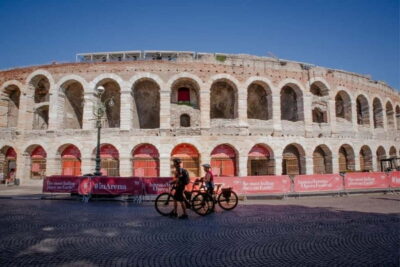
The meeting point and end point are both Arena di Verona, at P.za Bra, 1, 37121 Verona VR. Starting here is smart for two reasons.
First, it’s a recognizable anchor. If you’re navigating on foot, Verona streets can twist and overlap—having a big landmark as your start/end reduces decision fatigue. Second, ending at the Arena makes the walk feel like it has an arc: you begin with the city’s most famous Roman structure and finish back there with a sense of scale.
The Arena is listed as open across very long hours (Monday through Sunday, with hours shown as 12:00 AM to 11:30 PM). Since real-world schedules can shift by season or events, just treat that as a broad guide and double-check your specific day.
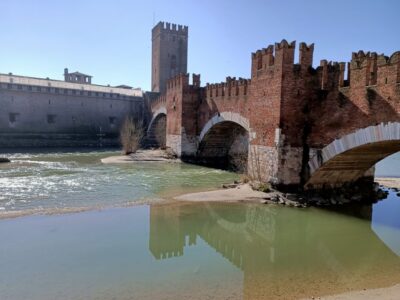
Castelvecchio Bridge: your first big photo moment
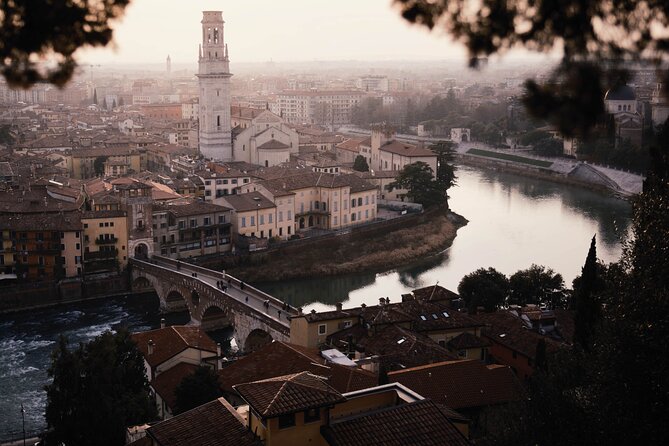
The walk opens with Castelvecchio Bridge, a classic Verona intro. This stop is short—about 15 minutes—but it’s timed well because your first views of the city should be quick, memorable, and easy to photograph.
What I like about putting this first: you get the “city story” feeling early. The bridge isn’t just scenery; it’s part of Verona’s identity, and the guide explains the city’s background as you’re standing in the right spot to understand it.
Photo tip: if you want the cleanest shots, move slightly along the bridge instead of photographing from exactly where the audio tab starts. Bridges reward angle changes.
Museo di Castelvecchio: courtyard time is the bonus
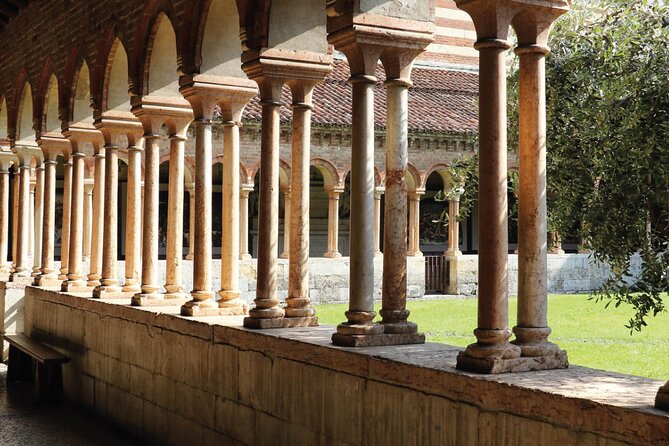
Next is Museo di Castelvecchio. The route gives you around 15 minutes, with a key detail: you can enter the courtyard and garden for free.
Even if you don’t spend time inside the museum galleries, this is a strong stop because courtyards in historic complexes often give you the best “feel” for a place. They show scale, atmosphere, and the kind of preserved space that makes Verona feel like a real lived-in city, not a checklist.
The guide frames the museum as a symbol tied to one of Verona’s significant families, which helps you understand why the complex matters beyond art on walls. If you’re short on time, the courtyard/garden access is a good way to get value without committing to a full museum visit.
Rather set your own pace? Self-guided walks and audio routes.
Porta Borsari: Roman Verona’s main entrance
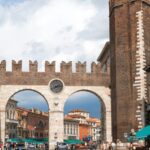
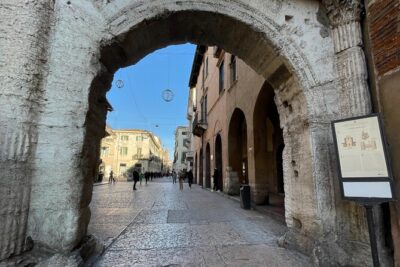
After the museum, you hit Porta Borsari (about 10 minutes). This is described as a World Heritage Site and as the main entrance to the city in Roman times.
This stop is valuable because it gives you a mental map of how Verona once functioned. A city gate is not just a pretty arch—it’s a boundary, a checkpoint, and a statement. When the guide shares the monument’s story while you’re right there, the stonework stops feeling abstract.
Timing note: don’t rush this one too much. Ten minutes is enough for the key explanation, but Roman gates can reward a slow look at details if you’ve got the energy.
Ponte Garibaldi and its crossing trick: the bridge you might underestimate
Then comes Ponte Garibaldi (around 10 minutes). Verona has multiple bridges, and this is one of its seven bridges highlighted on the route.
The guide adds a fun twist: a special trick that was once used to cross the bridge. Even without going into technical detail, that kind of story is what turns “another bridge” into a place you remember.
Practical move: if you like quick stories, stick to the recommended pace. If you want pictures, take them early on and save a few minutes to stand still after you finish the audio so the moment settles.
The main church stop: paintings and a quick art pause
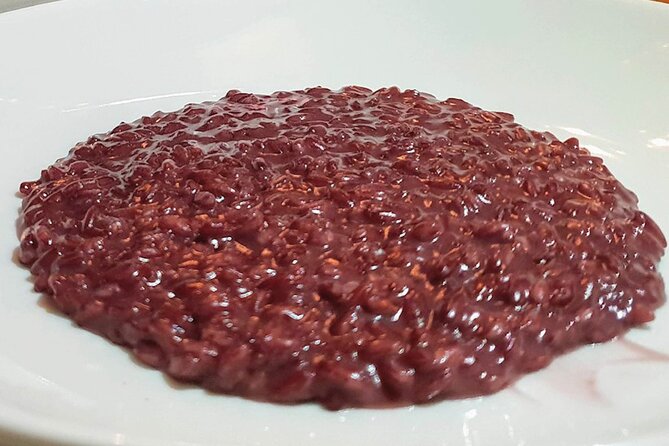
At this point in the route, you’ll reach the most important church in the city, framed with mention of interesting paintings. The stop is placed for a short pause—just long enough to reset your head from outdoor stone and bridges, and to focus on art in a quieter setting.
Because the exact church name isn’t specified in the route details you provided, I’ll keep expectations simple: plan on a quick art and narrative stop, not a long cathedral marathon. If you’re sensitive to crowds inside, this is exactly where your self-guided flexibility helps—you can linger only as long as it feels comfortable.
Ponte Pietra: Roman-built and worth the quick look
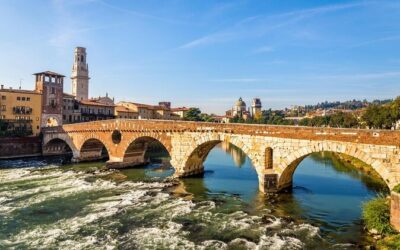
Next is Ponte Pietra (about 10 minutes). This bridge is noted as being built in Roman times, and you’ll get a cool view toward St. Peter’s Hill.
Even if you’ve seen Roman bridges before, this one tends to work well in a short stop format because it connects architecture and viewpoint. The guide points you to what to notice while the stop stays brief.
If you want better photos, do this: arrive, take one framing shot right away, then walk a few steps to adjust your angle. It’s a small effort that often makes a big difference.
Piazza dei Signori: Verona’s drawing room feeling
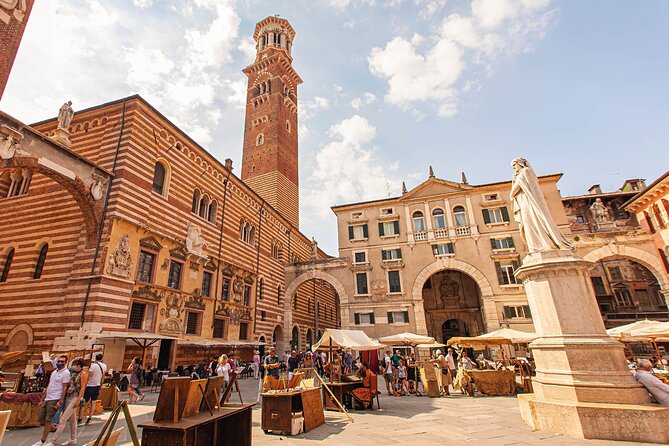
Piazza dei Signori gets about 10 minutes. It’s described as the drawing room of Verona, with extraordinary beauty, great perspectives, and magnificent buildings around the square.
This stop is all about “readability.” The square’s lines and surrounding facades make it easier to understand how streets funnel people toward certain focal points. It’s one of those places where a short narrative can help you see the city differently—less as random streets, more as planned geometry.
If you’re prone to skipping squares because you think you’ve “seen it already,” don’t. This is exactly where an audio prompt can make you notice what you’d otherwise miss.
The 84-meter tower: a view worth organizing your time around
The next highlight is the tallest building in the city at 84 meters, with a stunning viewpoint from the top. This is one of the best moments to decide how you want to spend your energy: climb for the view, or keep the walk moving if you’re short on time.
Since your provided info labels the stop’s admission as free, treat that as part of your planning—but still be ready for real-world timing constraints inside the tower itself (hours, queues, or any on-the-day limits). Your flexible self-guided pace helps here: you can spend more time in the square below if you decide to skip the climb.
Piazza delle Erbe: oldest square, Roman Forum layers
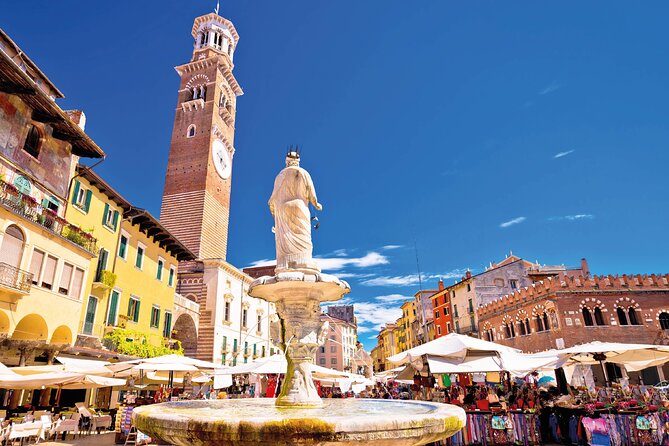
Now you hit Piazza delle Erbe (about 20 minutes), described as the oldest square in Verona and located above the area of the Roman Forum.
This is the kind of stop that turns a walking route into a real sense of place. You’re standing in a modern square, but the guide helps you remember there’s a much older civic layer beneath and around it. That’s a big reason why this experience feels more than “we walked past stuff.”
Give yourself enough time here to look around, not just read. The square is perfect for watching daily life while the guide feeds you context.
Casa di Giulietta: iconic exterior, deeper story behind it
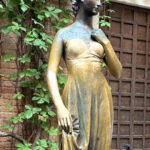
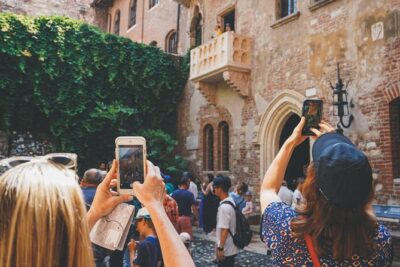
Casa di Giulietta is next (about 20 minutes). The famous house is the star, but the route includes an interesting twist: behind the famous balcony is a curious story that few people know about. The guide also notes that you can see the balcony from outside for free.
This stop is ideal in a self-guided format because you can handle it lightly. You don’t have to force a long visit if crowds make it unpleasant; you can grab the key views from outside and use the audio for the story.
If you care about photos, remember this: the house is iconic, but the best shots are often about timing and angles. Walk slightly around the exterior area rather than photographing only from the main viewpoint.
Arena di Verona finale: finish where Roman Verona still feels huge
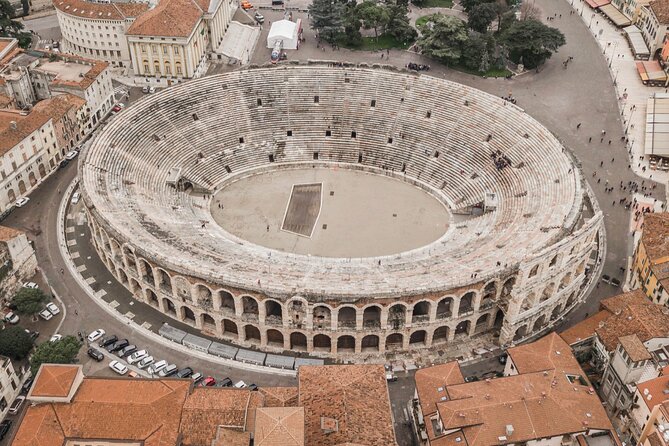
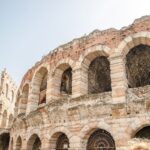
The route ends back at Arena di Verona, described as the symbol of the city and a beautiful Roman amphitheater that closes your walk.
Ending here ties everything together. Along the route you see Roman-era entrances and bridges; the story framing makes the Arena feel less like a distant monument and more like the natural conclusion to a Roman thread running through Verona’s bones.
It’s also a smart “finish anchor” if you want an easy plan afterward. You know exactly where you’ll land for dinner, a gelato stop, or transport.
Price and value: what you really get for $7.86
At $7.86 per person, this isn’t trying to compete with full-service guided tours. It’s cheaper because the format is different: you’re paying for a thoughtfully written route plus recorded audio/text that you control.
For your money, you get:
- A digital written guide plus audio-guide and text in multiple languages (Eng, Esp, Ita, Ger, Fr)
- A route with major highlights and short stop windows (2 to 3 hours total)
- A map-style flow designed for smartphone use
- Stops that are noted as free for the parts you visit
The main cost you should plan for is the phone reality: data/internet, and possibly battery power. Headphones aren’t included, so you’ll want earbuds if you’re in a noisy area. If you’re the type who hates depending on connectivity, this is the main reason not to book.
Who should book this Verona walk (and who might not)
This works best for you if:
- you like self-paced sightseeing and don’t want group timing
- you want a fast overview of big Verona sights in 2–3 hours
- you like having context ready on-site instead of pulling up random info later
- you’re okay using a smartphone as your guide interface
You might want to skip it if:
- you expect audio to work perfectly offline (the guide requires internet)
- you dislike phone-based directions or battery-dependent navigation
- you strongly prefer a live human guide with natural pronunciation and real-time questions
One more ear-specific note: the audio voice style may feel automated to some people. The good news is you’re not locked in. The written text is available as well, so you can switch to reading when you’d rather not listen.
Should you book Walking Cap’s Verona walk?
I’d book it if your goal is a smooth, highlight-focused Verona day—especially if you want the freedom to linger and the confidence of a ready-made route. The format is built for independence: you start at Arena di Verona, hit Roman landmarks and squares, learn the stories as you go, and finish back at the amphitheater.
I wouldn’t book it if you’re worried about connectivity, battery life, or you absolutely want a live guide walking beside you. For the rest of us, this is a practical way to get your bearings fast and still see Verona at human speed.
FAQ
How long is the Verona walking tour with audio and written guide?
It’s listed as about 2 to 3 hours.
Where does the tour start and where does it end?
It starts and ends at Arena di Verona, P.za Bra, 1, 37121 Verona VR, Italy.
What languages are available for the audio and written guide?
The guide includes English, Spanish, Italian, German, and French.
Do I need headphones to hear the audio?
No. You can hear the audio through your phone speakers, or use your own headphones (headphones are not included).
Do I need a smartphone and internet connection?
Yes. You need a smartphone with internet connection to use the digital guide, and the voucher includes details to activate it.
Are admission tickets required for the stops?
The route details provided mark each listed stop as free for admission ticket purposes.
Is this a guided group tour?
It’s self-guided. You follow the route using the digital guide at your own pace.
How big is the group size?
The tour/activity has a maximum of 99 travelers.
Can I get a full refund if I cancel?
Yes. Free cancellation is available, and you can cancel up to 24 hours in advance for a full refund.
More Self-Guided Verona
More Verona Walking Tours
More Tour Reviews in Verona
Weighing up other options? More ways to spend a day in Verona and out on Lake Garda




Verona Walking Tours, compared.
 ★ 5.0History and Hidden Gems Guided Walking TourFrom $411,379 reviews
 ★ 4.9Small Group Guided Walking Tour with Arena TicketsFrom $81848 reviews
 ★ 4.9Classic and Hidden Gems Bike TourFrom $33577 reviews
 ★ 5.0Verona Highlights Walking Tour in Small-groupFrom $42493 reviews
 ★ 5.0Highlights and hidden gems Verona Bike TourFrom $47393 reviews
 ★ 5.0Verona walking tour:food, wine, legends, lunch/dinner & cable carFrom $123386 reviews
 ★ 5.0Verona All in one: Food Walking Tour, Lunch & WineFrom $114342 reviews
 ★ 5.0Verona Small Group Walking Tour with Cable Car and Arena TicketsFrom $71311 reviews
Browse the lists this tour appears in