
Reviewed · VERONA WALKING TOURS
Verona: History and Hidden Gems Guided Walking Tour
Verona comes alive when you walk it with a local. This 2-hour guided route threads famous landmarks like the Arena and Piazza delle Erbe with quieter corners most people miss. I like how the pacing keeps the stories moving without turning it into a long lecture, and you’ll see the city through a clear timeline from Roman Verona to the Medieval era.
Two things I especially like are the small group size (up to 10) and the headsets, which make it easy to hear the guide even in busier spots. The guide, Fabio Massimo Rapanà, is Verona-born and fully licensed, and he’s the kind of host who connects street-level details to what came before.
One drawback to consider: it’s still a walking tour. If your legs are limited, you’ll want to plan for steady walking for the full route (the tour is rain or shine).
In This Review
- Key Highlights at a Glance
- Starting in Piazza Bra: Get Oriented Fast
- What to look for right away
- The Arena to the Old Streets: Where Rome Becomes Verona
- Why this section is worth your time
- River Views and the Ponte Scaligero: The Stop for Your Camera (and Your Breath)
- A small practical note
- Piazza delle Erbe: The Market Square with a Long Memory
- What you’ll notice after the explanation
- Piazza dei Signori: Public Buildings and a Medieval Power Feel
- Why this is one of the best “in-between” stops
- Basilica di Santa Anastasia and Piazzetta Moments
- If you like architecture
- Scaliger Tombs and the Shakespeare Trail: One Mood, Two Stories
- How to make this stop feel personal
- Synagogue and Convent Area: The Quiet Stops That Add Real Depth
- For photographers and slow walkers
- The Practical Side: What You Get for $41
- Who this price fits best
- The Pace, Rain or Shine, and Footwear Reality
- A Quick “Should You Book” Decision Guide
- FAQ
- FAQ
- How long is the Verona History and Hidden Gems Guided Walking Tour?
- Where do we meet for the tour?
- How much does the tour cost?
- What’s included in the ticket price?
- Are food, drinks, or entry tickets included?
- What languages is the guide available in?
- Does the tour run in bad weather?
- Is the tour wheelchair accessible?
- Can I cancel, and do I get a refund?
Key Highlights at a Glance
- Piazza Bra start, Arena focus first: great orientation with the city’s best-known centerpiece right at the beginning
- Roman to Medieval storyline: you’ll follow old walls, oldest streets, and key monuments in order
- Adige River viewpoints: planned stops for the Ponte Scaligero and scenic river views
- Two major piazzas explained: Piazza delle Erbe and Piazza dei Signori with the buildings and public spaces made clear
- Scaliger tombs to Romeo and Juliet: dramatic monuments, then the Shakespeare trail—without losing the historical context
- Listen-anywhere headsets: over-ear headsets help you catch every detail, even in noisy outdoor areas
Starting in Piazza Bra: Get Oriented Fast
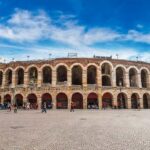
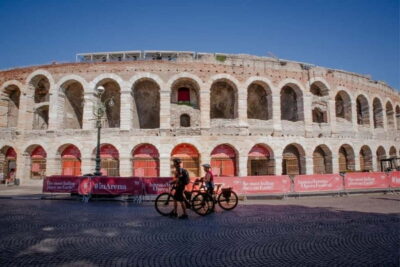
Most Verona visits start with photos. This one starts with context. You meet at Palazzo Barbieri – Comune di Verona in Piazza Bra, at the spot where the guide stands below the Italian flag. From there, you move straight toward the city’s biggest visual anchor, so you can build a mental map before you wander on your own later.
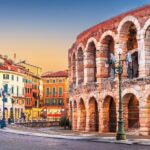
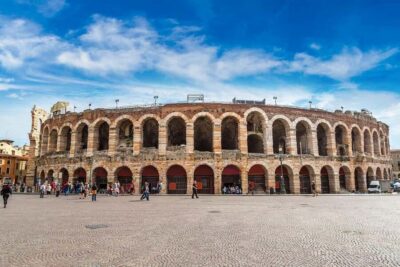
I really like this first 10 minutes because it gives your brain something to hold onto. You’ll see the Verona Arena early, then you’ll be guided through what made it powerful in the first place—specifically the gladiator battles and the architecture that still reads clearly today. Even if you’ve seen pictures already, arriving with a story helps you notice the details you would otherwise skate past.
More of the centro storico on foot with a guide.
What to look for right away
The Arena can feel like just a landmark if you only look outward. The tour’s approach pushes you to look at it like a piece of Verona’s past—so your next stops don’t feel random. It’s a smart opener because it turns famous into understandable.
The Arena to the Old Streets: Where Rome Becomes Verona
After the Arena, you shift from the showpiece to the connective tissue of the city. The route follows foundations of early medieval city walls to reach the Corso, described as one of the oldest streets in Verona. This is one of those “small” segments that’s actually a big deal, because it shows you how the city grew instead of just naming places.
You also pass a Porta Jovia, described as a Roman-era monument. This is where the tour’s timeline feeling matters: you’re not only ticking off sites—you’re seeing how each era left physical marks.
Why this section is worth your time
Verona is compact, but it can feel maze-like. When you learn how walls, gates, and street routes connect, it’s easier to later navigate on your own. You’ll also start noticing architectural cues in doorways, arches, and street alignment without needing to stop every two minutes.
River Views and the Ponte Scaligero: The Stop for Your Camera (and Your Breath)
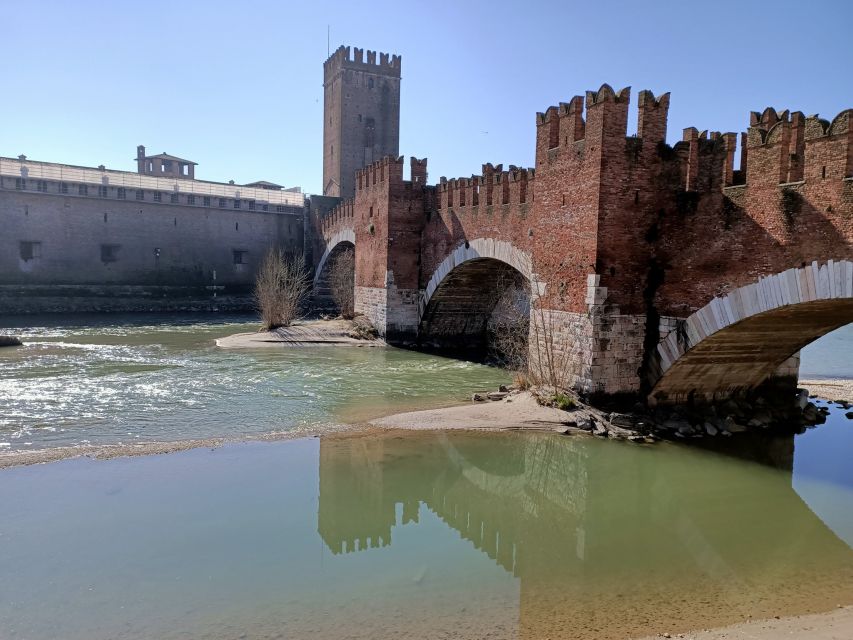
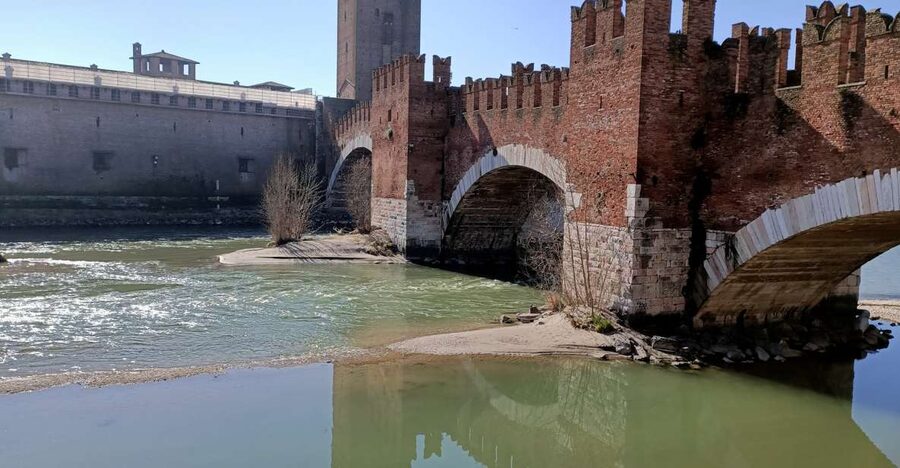
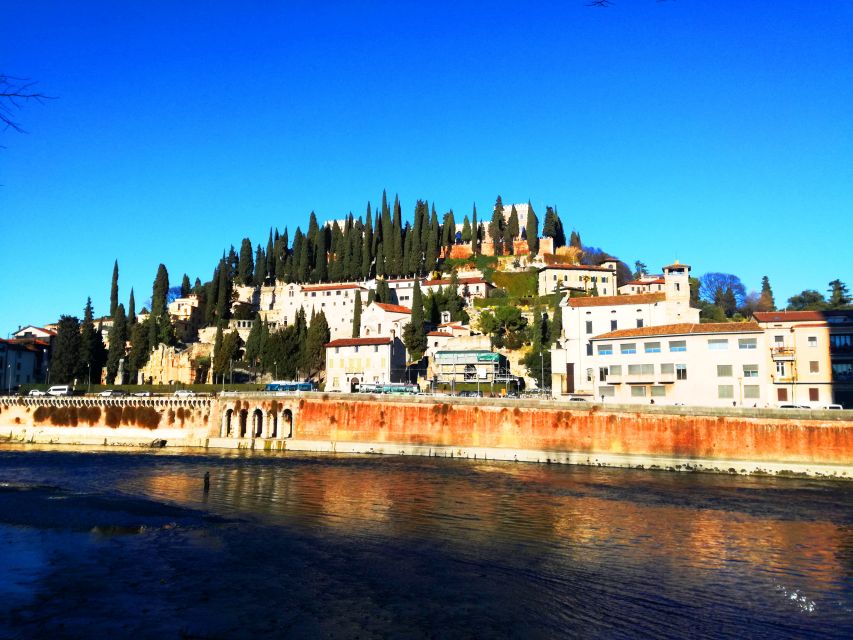
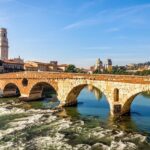
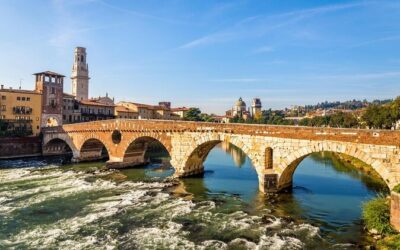
At some point, you want a break from tightly packed streets. This tour gives it to you with views over the Adige River and the Ponte Scaligero. Even if you’re not obsessed with bridges, the river walk viewpoints help you understand Verona’s geography—why the city feels dramatic in person.
This part also works well for photos, but it’s more than a picture moment. The guide uses these stops as punctuation in the storyline, so you can reset before heading back into piazzas and monuments.
More days out with a Verona local guide.

A small practical note
Bring water and slow down for a minute when you reach the views. Two hours goes by quickly, and this is one of the easiest places to relax while still feeling like you’re “doing the tour.”
Piazza delle Erbe: The Market Square with a Long Memory
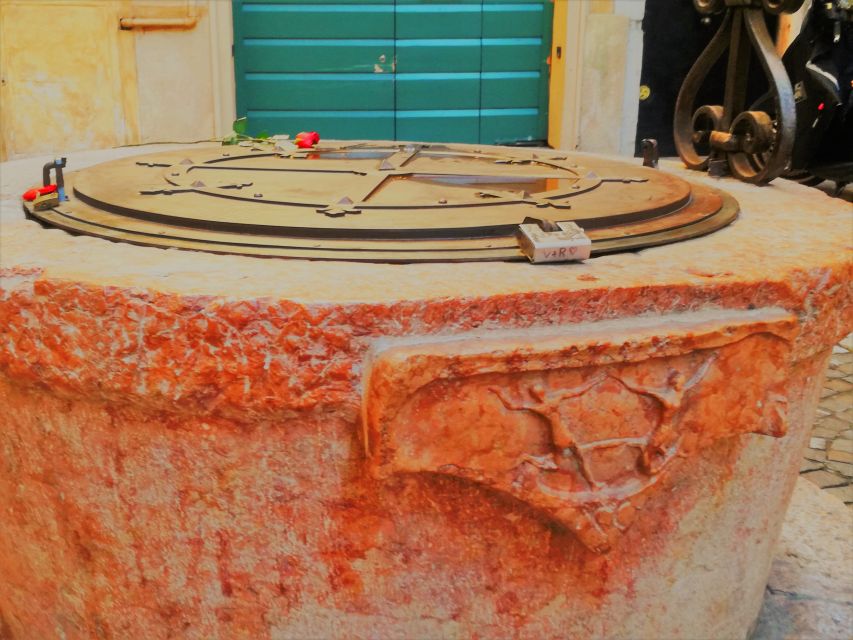
Then you hit one of Verona’s most important social stages: Piazza delle Erbe. You’ll spend time here to see the oldest fountain in the city, along with the surrounding historic façades. The guide also explains the history of the local market, so the square stops feeling like a backdrop and starts feeling like a working public space across centuries.
One thing I appreciate about tours like this is how they treat piazzas as living rooms. If you’ve ever visited a European square and wondered why people always gather there, this stop makes the answer less abstract. You can literally see why markets and meetings would naturally cluster here.
What you’ll notice after the explanation
Once you hear what the square was for, you naturally scan the edges differently. You’ll look at storefront rhythms and façade details with purpose instead of just taking a quick glance for architecture.
Piazza dei Signori: Public Buildings and a Medieval Power Feel
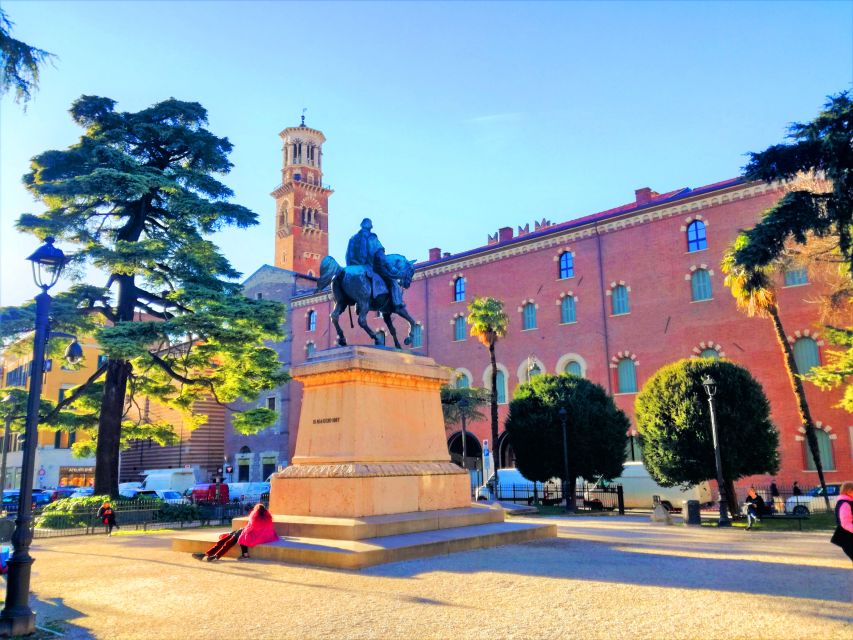
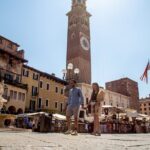
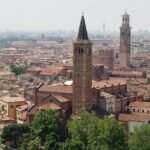
Next comes Piazza dei Signori, where you’re shown a cluster of major civic buildings: Palazzo della Ragione, Palazzo Della Scala, and Palazzo del Capitano. You’ll also see the highest tower in the city and learn what that tower meant in the Medieval era.
This segment is ideal if you like your history visible. It’s not just about who ruled—it’s about how power expressed itself in stone: towers, palaces, and the kind of public squares that turned decisions into theater.
Why this is one of the best “in-between” stops
Juliet’s balcony gets the headlines, but places like Piazza dei Signori are what make Verona feel like a real city rather than a film set. This stop helps you understand the city’s structure—who had influence and where people would have gathered to feel it.
Basilica di Santa Anastasia and Piazzetta Moments
The tour also includes Basilica di Santa Anastasia, with a photo stop timed so you can appreciate the façade details. You’ll be guided through the atmosphere of the area as you move from piazza to smaller spaces, including brief stops at Piazzetta Monte and Piazzetta Bra Molinari for scenery and perspective.
These shorter pauses might look optional, but they help the route breathe. In a 2-hour walking tour, that matters. You don’t want to be locked into one street wall after another with no chance to reorient and recover.
If you like architecture
This is the part where your eyes start reading buildings like text. Even when you only get a minute or two, the guide’s explanations help you know what to pay attention to.
Scaliger Tombs and the Shakespeare Trail: One Mood, Two Stories
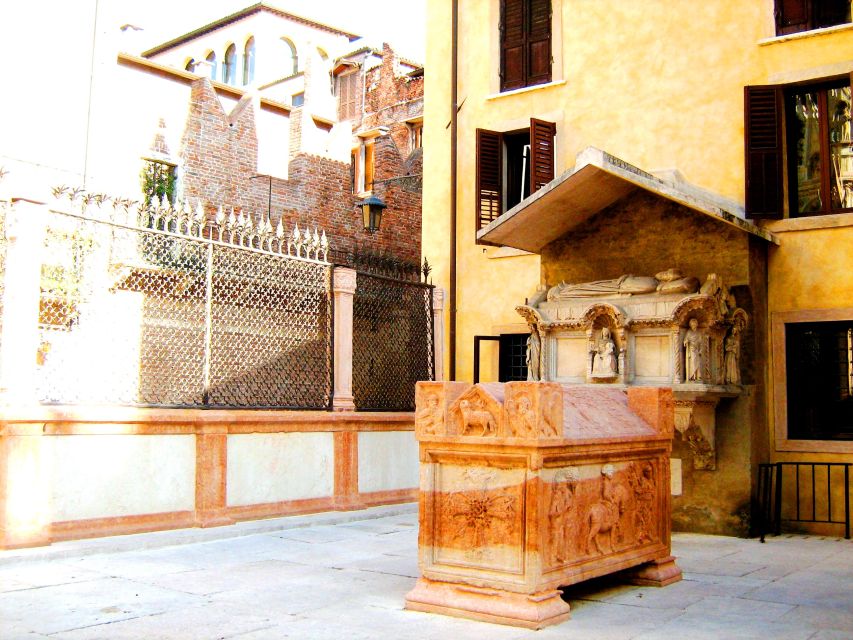
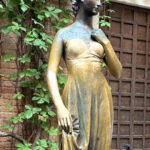
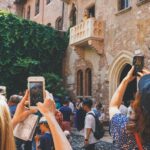
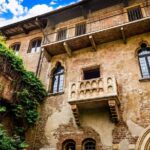
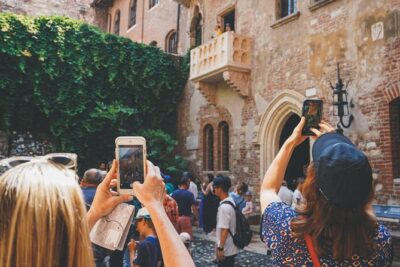
One of the most dramatic transitions on the route is the walk past the Arche Scaligere mausoleums on the way to the Casa di Romeo and then to Juliet’s House. You get a mix of tones here: monumental funerary architecture first, then the famous literary connection that people travel for.
Importantly, the tour frames the Shakespeare angle without ignoring the real historical inspiration behind it. That’s the value of stopping in the right order. You see how Verona’s past made it a natural setting for stories that later became global.
How to make this stop feel personal
Don’t treat Romeo and Juliet as only a photo mission. Use the Scaliger tombs moment to reset your thinking: Verona isn’t just a romantic city. It’s a city where powerful families, architecture, and public memory all shaped the way stories could take root.
Synagogue and Convent Area: The Quiet Stops That Add Real Depth
After the big names, you’ll move into less obvious territory, including Sinagoga di Verona and the Convent of Saint Mary ’della Scala’ of the Servants of Mary. You’ll also pass Via Dietro Anfiteatro—a street that feels like it belongs to the city’s everyday life rather than just its tourist route.
These sections matter because they prevent the tour from becoming a checklist of famous sights only. They also give you a more complete sense of what Verona looked like beyond the headline attractions.
For photographers and slow walkers
This is a good part to take your time for framing. The tour gives you short pass-by moments, which work best when you pause just long enough to catch a doorway detail, a wall line, or the way streets bend.
The Practical Side: What You Get for $41
At $41 per person for 2 hours, this tour sits in the mid-range for a Verona guided walk. The value isn’t just the guide—it’s the design choices that make the time feel efficient.
Here’s what you’re paying for, in real terms:
- a professional guide born, raised, and fully licensed in Verona
- small group size up to 10 participants, so you’re not lost in a crowd
- a route optimized for storytelling, meaning the order of stops helps the city “click”
- headsets, which make comprehension easier and reduce the frustration of straining to hear
- a focused itinerary that links major sights (Arena, Piazza delle Erbe, Piazza dei Signori, Juliet’s House) with quieter supporting scenes
What’s not included matters too. Food, drinks, and entries aren’t covered, so you’ll want to plan your meals separately and expect that major places might require tickets if you want to go inside.
Who this price fits best
If you’re the type who wants to understand what you’re seeing—street by street—this is a smart use of time. If you just want a slow stroll without context, you might feel the cost more than the value. But if you like history and architecture, $41 buys you a lot of attention per minute.
The Pace, Rain or Shine, and Footwear Reality
The tour runs rain or shine. That’s not always fun, but it is consistent. You’ll want comfortable shoes and water, because you’re walking through a compact area with several stops and short segments in between.
Also, the experience uses headsets, which is a big comfort upgrade. It means you can hear the guide clearly without stepping closer every time or losing the group rhythm.
A Quick “Should You Book” Decision Guide
Book this tour if you want:
- a fast orientation to Verona that makes later sightseeing easier
- a clear timeline connecting Roman-era elements to Medieval Verona
- a guide who explains what you’re actually looking at, not just dates and names
- small-group energy with practical hearing support via headsets
Skip it or swap it if:
- you don’t enjoy walking tours or you need lots of long seated breaks
- you prefer to explore completely on your own without structured stop-by-stop storytelling
- you only want time at a single blockbuster attraction
If you’re in Verona for a short visit and want the city to “make sense,” this is a strong first activity.
FAQ
FAQ
How long is the Verona History and Hidden Gems Guided Walking Tour?
It lasts 2 hours.
Where do we meet for the tour?
Meet your guide standing below the Italian flag at the Town Hall in Piazza Bra, at Palazzo Barbieri – Comune di Verona.
How much does the tour cost?
The price is $41 per person.
What’s included in the ticket price?
It includes a professional, licensed local guide, a small group up to 10 participants, headsets, and a route optimized for storytelling.
Are food, drinks, or entry tickets included?
No. Food and drinks are not included, and entries are not included either.
What languages is the guide available in?
The guide offers live commentary in English, German, Italian, and Spanish.
Does the tour run in bad weather?
Yes, it runs rain or shine.
Is the tour wheelchair accessible?
Yes, it is wheelchair accessible.
Can I cancel, and do I get a refund?
There is free cancellation up to 24 hours in advance for a full refund.
More Verona Tours

More Verona Walking Tours

More Tour Reviews in Verona
Weighing up other options? More ways to spend a day in Verona and out on Lake Garda





Verona Walking Tours, compared.
 ★ 4.9Small Group Guided Walking Tour with Arena TicketsFrom $81848 reviews
 ★ 4.9Classic and Hidden Gems Bike TourFrom $33577 reviews
 ★ 5.0Verona Highlights Walking Tour in Small-groupFrom $42493 reviews
 ★ 5.0Highlights and hidden gems Verona Bike TourFrom $47393 reviews
 ★ 5.0Verona walking tour:food, wine, legends, lunch/dinner & cable carFrom $123386 reviews
 ★ 5.0Verona All in one: Food Walking Tour, Lunch & WineFrom $114342 reviews
 ★ 5.0Verona Small Group Walking Tour with Cable Car and Arena TicketsFrom $71311 reviews
 ★ 4.8The Highlights of Verona Small Group Walking TourFrom $41294 reviews
Browse the lists this tour appears in