
Reviewed · VERONA WALKING TOURS
Verona Highlights Walking Tour in Small-group
Verona moves at a human pace. This small-group walking tour takes in the city’s UNESCO center in about 2 hours, with stops that range from Castelvecchio to the Roman Arena di Verona. I especially like how the guide ties landmarks to stories you can actually picture, and how you get a quick hit of highlights without feeling rushed. The main drawback: it’s still a walk, with some older-street terrain, so comfortable shoes matter.
You start right in the action at Piazza Bra, then head through Verona’s historic core where Roman bones and medieval power sit side by side. By the time you reach the Arena, you’ll understand why this place feels like a living theater, not just a photo stop. And since the group stays small (up to 16), you can ask questions as you go, which turns this from a checklist into a real orientation.
In This Review
- Key Highlights to Look For
- A 2-hour small-group walk that gets Verona right
- Piazza Bra to Castelvecchio: the city’s medieval spine
- The Roman Arena di Verona: why it’s still a headline
- Juliet’s House courtyard and the legend of Romeo
- Piazza Bra and the cafés: a square that still feels like Verona
- Piazza delle Erbe: Roman forum roots under a living market
- Piazza dei Signori and Dante’s statue: power, culture, and politics
- Arche Scaligere: Scaliger tombs and Gothic drama in stone
- What you’ll likely pay for (and how to plan your time)
- Who should book this walking tour
- Should you book Verona Highlights Walking Tour in Small-group?
- FAQ
- How long is the Verona Highlights walking tour?
- Where does the tour start and end?
- Is the tour in English?
- Is the tour a small group?
- Do I need to bring admission tickets for the main sights?
- Does the tour run in bad weather?
- What’s the meeting point address?
- Is Juliet’s Balcony included in all dates?
- Is the tour suitable for people with reduced mobility?
- Is free cancellation available?
Key Highlights to Look For
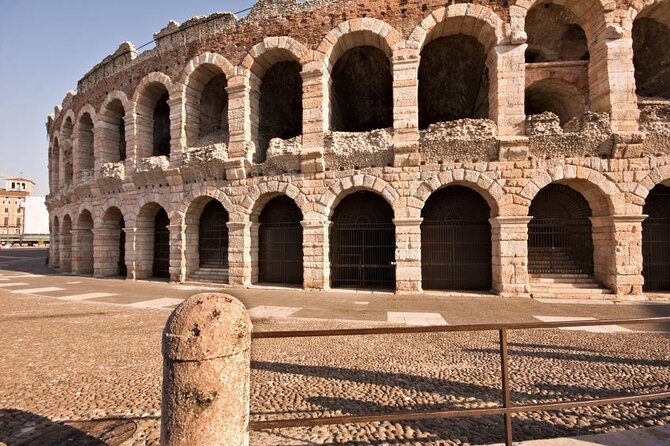
- Roman Arena di Verona in context: built in AD 30, once holding up to 30,000 people
- Castelvecchio area: late-medieval fortress + Scaligero Bridge views across the Adige
- Shakespeare stops with real Verona: Juliet’s House courtyard and Romeo’s house seen from outside
- Verona’s “power squares”: Piazza delle Erbe and Piazza dei Signori
- Scaliger-era funerary art: Arche Scaligere with the arches tied to Cangrande I and more
- Small-group format: max 16 travelers, guided in English, rain or shine
A 2-hour small-group walk that gets Verona right
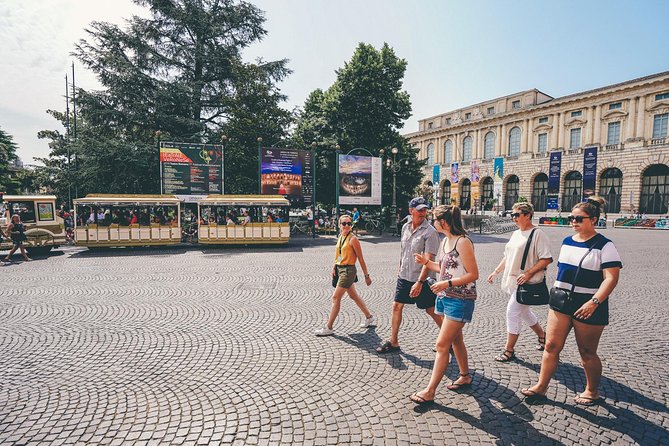
If you’re short on time, you need a plan that does two things: hits the big names and explains what they mean. This tour does both, starting in Piazza Bra and staying centered in Verona’s historic core, which is recognized as a UNESCO World Heritage site. You’ll spend your time seeing churches, palaces, and street-level history—then watch it all click once you reach the Roman Arena.
I like that the pacing is described as relaxed and laid back. You aren’t speed-walking from one monument to another; you’re moving at a pace where you can actually look up, notice details, and hear how the city changed over centuries. And because this is offered in English with a local guide, the information doesn’t feel like generic captions.
One thing to keep in mind: “2 hours” doesn’t mean “gentle.” You’ll be on your feet for most of it, and some parts may be tough for reduced mobility due to how older areas are built.
More of the centro storico on foot with a guide.
Piazza Bra to Castelvecchio: the city’s medieval spine
You’ll meet at Piazza Bra (and finish back there), which is a smart choice if you’re staying nearby or using public transport. From the start, the tour gets you oriented by moving you through the historic center on foot and letting you learn as you go.
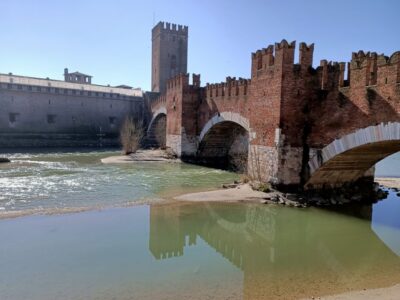
Early on, you’re in the Castelvecchio zone—the late-medieval castle area—and you’ll cross into the world of Verona’s medieval fortification thinking. One stop focuses on the structure that connects the castle to the left bank of the Adige. That bridge was badly damaged in a bombing and then rebuilt to match the original appearance. It’s the kind of detail that changes how you view a bridge: suddenly it’s not just a connector, it’s a reconstruction story.
Then there’s the castle itself. Even if you don’t go inside during this walking route, it sets the tone. Verona’s medieval era wasn’t just architecture—it was strategy, control, and prestige. And the guide’s job is to help you read those choices in stone.
Along the way, you may also pass Roman-era remnants mentioned in experiences tied to this route, including things like the Porta Borsari marble front and the Arch of Gavi. These “in-between” moments are easy to miss if you’re wandering solo. On a guided walk, you learn what to look for before you’re already walking past it.
The Roman Arena di Verona: why it’s still a headline

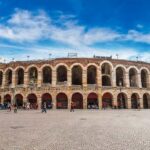
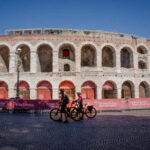
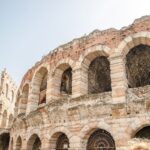
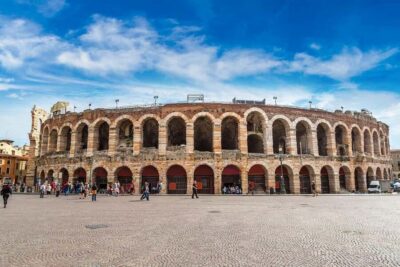
Eventually, you’ll reach the Arena di Verona—the star moment. The numbers are part of what makes this stop land: built by the Romans in the 1st century AD during the Augustan period, and described as very well preserved for a structure about 2,000 years old. The guide will also give you the scale: it once could hold up to 30,000 people.
That’s the point of a tour like this. Without context, the Arena is just impressive architecture. With context, it becomes a timeline. You learn what Roman public space was built to do, and how later generations kept the structure in use long enough for it to survive in the public imagination.
Practical note: an admission ticket is not included for the Arena in this experience, so plan on buying your entry separately if you want to go inside. Also, the Arena is still active today. It hosts concerts and is home to the Verona Arena Festival, a summertime opera celebration that brings classical music lovers to town.
If you’re the type who likes to understand “what I’m standing in,” this stop is worth the price of admission—because you’ll get the why, not just the wow.
Juliet’s House courtyard and the legend of Romeo
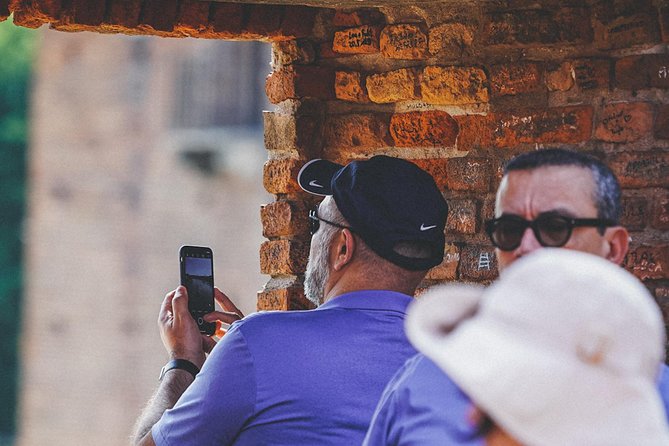
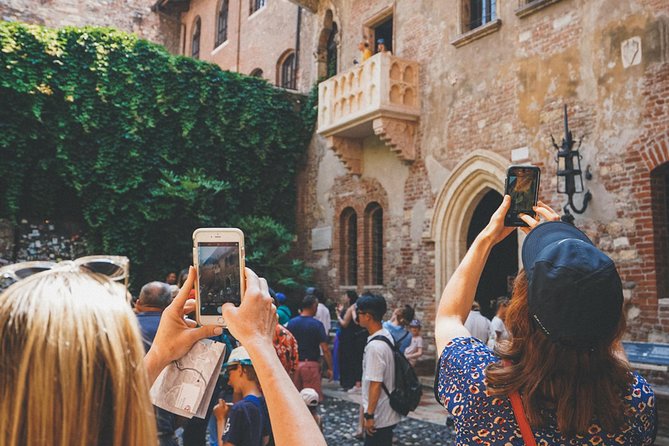
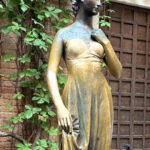
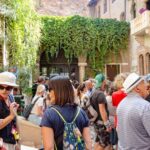
From the Arena, the tour heads toward the next Verona obsession: Juliet. You’ll see the courtyard of the Capuleti’s house, tied to the Romeo and Juliet story that Shakespeare made famous. The stop is timed as a short visit, and admission to Juliet’s House isn’t included, so you should expect to handle entry on your own.
What I like here is that the tour doesn’t just treat Juliet like a theme park. It uses the Shakespeare link as a doorway into the city’s fabric—how Verona turned literature into a landmark people travel for, while still keeping the walk grounded in real neighborhoods.
Next comes Romeo’s house. You’ll see it from the outside. It’s described as a medieval palace in central Verona, connected in legends and literary texts to the Montecchi family. Since it’s private and inhabited, your view is exterior only, which means you’re not trying to cram too much into a short time window.
Important timing detail for future plans: from December 6, 2025 to January 6, 2026, the tour does not include access to Juliet’s Balcony as usual. Access is only possible with a ticket purchased from the city administration, and the tour won’t purchase it for you. If that balcony is on your must-do list, check your dates before you book.
Piazza Bra and the cafés: a square that still feels like Verona
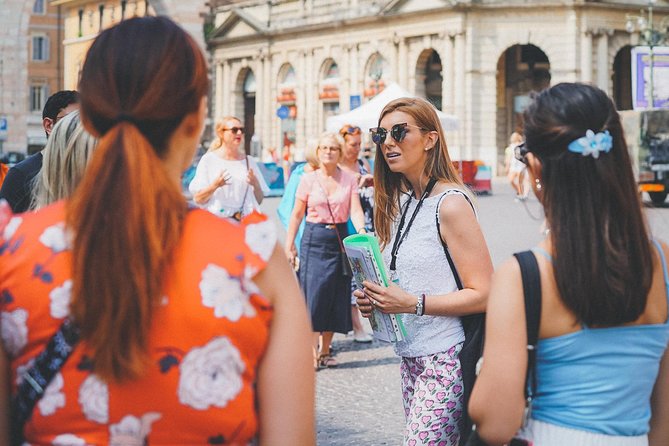
Not every stop is about ruins and ancient architecture. Piazza Bra is one of those living spaces where Verona still hangs out. After the Arena area, the tour brings you to Piazza Bra again as a major open square lined with cafés and restaurants, plus historic buildings around the edges.
This stop is useful even if you don’t buy anything. Squares like this help you understand the “social engine” of the city. Verona isn’t only monuments; it’s also daily routines—people meeting, eating, passing time. If you’ve been sight-hopping all day, this is where you can pause, reset, and soak in how locals use the space.
The stop itself is short, but that works for a two-hour format. You get a quick read of the city rhythm before you move to the power-and-market spaces.



Piazza delle Erbe: Roman forum roots under a living market
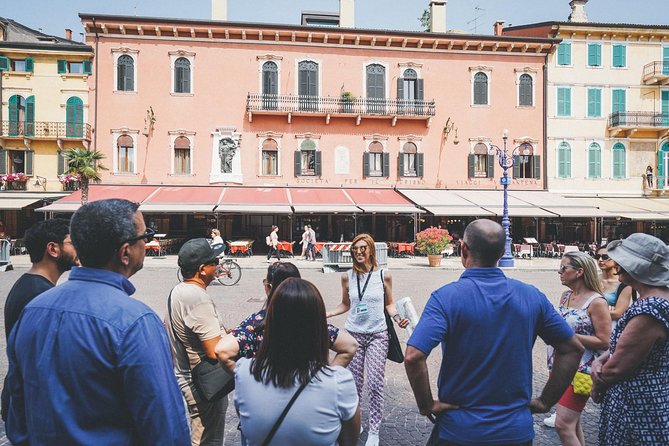
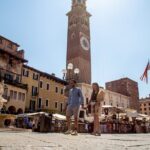
Then you’ll hit Piazza delle Erbe, one of the most important squares in Verona’s center. The tour describes it as the forum—the center of city life during Roman times—with monuments in the middle of the square that represent different rulers across Verona’s history. One key feature is the fountain built during Scaligeri rule.
This is one of my favorite kinds of stops on a walking tour: you’re in a square that still works the way a square works. Even if you’re visiting outside peak market hours, you can sense how this space would’ve been packed with conversation, trade, and politics. The guide’s job is to show you what’s under your feet and what the symbols in the square are trying to tell you.
And because this happens after you’ve already learned about Roman Verona and medieval Verona, the square becomes more than pretty views. It becomes a bridge between eras.
Piazza dei Signori and Dante’s statue: power, culture, and politics
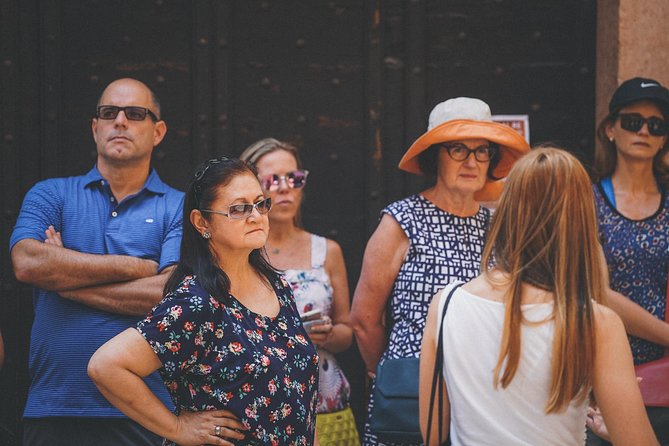
Next is Piazza dei Signori. The tour frames it as a former center of power in Verona, and it’s easy to see why: it’s designed for visibility and authority. The standout detail here is a large statue of Dante Alighieri that’s dominated the square since 1865—giving it the nickname Piazza Dante.
This stop is short, but it’s a good example of how Verona layers meanings onto public spaces. You’re not only learning dates and events. You’re also learning how a city decides what to display, what to honor, and what message to keep in public view.
If you’re a first-timer, these two squares—Piazza delle Erbe and Piazza dei Signori—are where you start to grasp how Verona worked as a city of authority and ceremony, not just tourism.
Arche Scaligere: Scaliger tombs and Gothic drama in stone
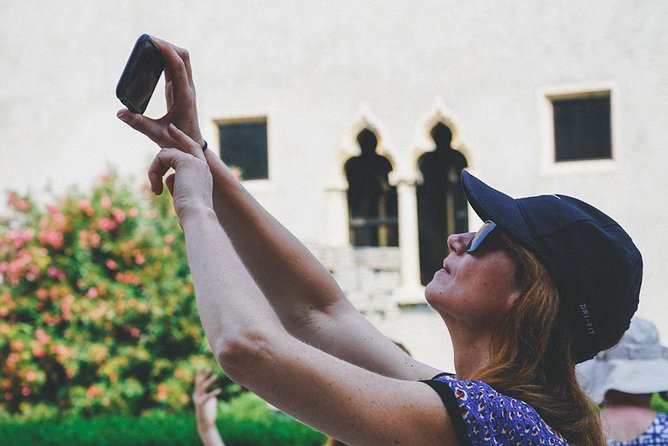
The tour then heads to the Arche Scaligere, described as the Scaliger cemetery. Here, you’ll see sarcophagi and three major arches built for Cangrande I, Mastino II, and Cansignorio.
This is a stop that rewards paying attention. Funeral architecture can sound morbid on paper, but in Verona it turns into a lesson about rank, lineage, and the theatrical nature of medieval power. The arches are the kind of forms you remember even after you leave. They also help explain why Verona’s medieval identity feels so specific—it’s not generic “old Italy,” it’s tied to particular families and particular rulers.
Admission is not included here, so you’ll want to budget time and money if you plan to go in. Even if you keep it to exterior viewing, you’ll still leave with a clearer picture of what you’re looking at.
What you’ll likely pay for (and how to plan your time)
The price of the tour is $42.33 per person for about 2 hours, and it includes a local guide. There’s no hotel pickup and drop-off, so you’ll rely on the central meeting point at Piazza Bra and nearby public transport.
A key practical point: several of the sights on the route have admission tickets not included. That typically applies to the Roman Arena, Juliet’s House, and the Arche Scaligere. In plain terms, you’re paying for the guide, the route, and the “what it means” part. You’re still responsible for monument entry where the tour indicates tickets aren’t included.
If you’re budgeting, don’t just look at the tour price. Think of this as a guided framework that tells you which entrances are worth your time. The guide helps you choose how to spend your limited hours.
Who should book this walking tour
This works best if you want:
- A first-time introduction to Verona’s big landmarks without committing to a full day
- A guided story that connects Roman Verona to the medieval period and then to modern traditions
- A small-group experience where you can ask questions, not just follow along
It’s also a good pick if you like checking boxes fast, because the route packs a lot into a short window: Castelvecchio area, the Roman Arena, Juliet, Romeo’s neighborhood view, and several major squares tied to Roman forum roots and Scaliger power.
Who might want to think twice: anyone who struggles with sustained walking over older streets. The tour notes that some parts may not be easily accessible for reduced mobility, and since the city center is built on old foundations, you may have uneven ground and steps.
Should you book Verona Highlights Walking Tour in Small-group?
I’d book it if you want an organized Verona orientation and you like understanding what you’re seeing. For $42.33 and around 2 hours, you get a concentrated route through the historic center, with stops that cover Roman, medieval, and Shakespeare-linked Verona. The small group size up to 16 makes it feel less like a factory line.
Skip it (or pair it with something else) if you expect a slow, museum-heavy experience with lots of inside time at multiple sites. This tour is structured as a walking overview, and some entries require separate tickets. Also, if your visit timing falls in December 6, 2025 to January 6, 2026, plan around the Juliet’s Balcony limitation unless you’re prepared to buy the required ticket yourself.
If you do book: bring comfortable shoes, keep an eye on ticketed stops (Arena, Juliet’s House, Scaliger arches), and ask your guide questions. Guides like Isabella, Frank, Priscilla, Maria, and Francesco show up in real experiences from this tour, and the common thread is story-led guidance that helps the city make sense fast.
FAQ
How long is the Verona Highlights walking tour?
It runs for about 2 hours.
Where does the tour start and end?
It starts and ends at Piazza Bra in Verona.
Is the tour in English?
Yes, it is offered in English.
Is the tour a small group?
Yes. The maximum group size is 16 travelers.
Do I need to bring admission tickets for the main sights?
Some stops list admission as not included, so you should expect to buy tickets for places like the Arena di Verona and Juliet’s House if you want entry.
Does the tour run in bad weather?
Yes, it runs rain or shine.
What’s the meeting point address?
The meeting point is Piazza Bra, Verona VR, Italy.
Is Juliet’s Balcony included in all dates?
No. From December 6, 2025 to January 6, 2026, access to Juliet’s Balcony is not included as usual. You would need the city-administered ticket, and the tour won’t purchase it for you.
Is the tour suitable for people with reduced mobility?
Some parts may not be easily accessible for reduced mobility or disability. If you’re unsure, you should contact the provider for details.
Is free cancellation available?
Yes. You can cancel up to 24 hours in advance for a full refund.
More Verona Tours

More Verona Walking Tours



More Tour Reviews in Verona
Weighing up other options? More ways to spend a day in Verona and out on Lake Garda







Verona Walking Tours, compared.
 ★ 5.0History and Hidden Gems Guided Walking TourFrom $411,379 reviews
 ★ 4.9Small Group Guided Walking Tour with Arena TicketsFrom $81848 reviews
 ★ 4.9Classic and Hidden Gems Bike TourFrom $33577 reviews
 ★ 5.0Highlights and hidden gems Verona Bike TourFrom $47393 reviews
 ★ 5.0Verona walking tour:food, wine, legends, lunch/dinner & cable carFrom $123386 reviews
 ★ 5.0Verona All in one: Food Walking Tour, Lunch & WineFrom $114342 reviews
 ★ 5.0Verona Small Group Walking Tour with Cable Car and Arena TicketsFrom $71311 reviews
 ★ 4.8The Highlights of Verona Small Group Walking TourFrom $41294 reviews
Browse the lists this tour appears in