
Reviewed · ARENA DI VERONA & OPERA
Verona Arena and Historic Highlights: A Guided Walking Tour
Verona is loud with history. This guided walk strings together the Arena di Verona and key medieval-and-Renaissance stops, so the city feels like one continuous story instead of six separate photo ops. I especially liked the mix of Roman spectacle and medieval power, and I also love how the tour brings those places to life with clear art-and-culture talk, often highlighted by a guide named Frank. One drawback to plan for: it’s about 2 hours of walking through an old city, so good shoes and decent weather really matter.
You’ll get the kind of context that makes you look longer. The Roman amphitheater still works as a performance space thanks to its famous acoustics, and you’ll also move from fortress defenses to Gothic funerary monuments without feeling rushed. The overall value is strong for a short outing because the schedule stacks several major landmarks, and the stops are listed with admission ticket free.
Still, there’s one consideration: the experience requires good weather. If Verona has a rain mood, you’ll need to be flexible with timing, since the tour may be rescheduled or refunded.
In This Review
- Key highlights you’ll actually feel on the ground
- Verona Arena: the Roman showstopper still used today
- Castelvecchio: a castle built like a fortress and restored with care
- Scaliger Tombs and the Gothic Arcs that explain a ruling family
- Piazza dei Signori: where governance and palaces shape the square
- Piazza delle Erbe: the oldest square and a Roman forum in disguise
- Casa di Giulietta: Shakespeare’s legend in the middle of a real city walk
- How the 2-hour format works in your favor
- Price and value: what you’re really paying for
- Who this walk is best for (and who might want to rethink it)
- Quick practical tips before you go
- Should you book this Verona Arena and Historic Highlights walk?
- FAQ
- Where does the tour start?
- Where does the tour end?
- How long is the Verona Arena and Historic Highlights guided walking tour?
- Is this a private tour?
- Is a mobile ticket used?
- Does the tour offer group discounts?
- Is the experience near public transportation?
- What language or style is the guide focused on?
- Is good weather required?
- What is the cancellation policy?
Key highlights you’ll actually feel on the ground
- Verona Arena with real-world acoustics for opera and concerts, not just sightseeing
- Castelvecchio’s seven-tower defense vibe, plus a museum stop for medieval and Renaissance works
- Scaliger Arcs as Gothic funerary art, built for the Scaliger family
- Piazza dei Signori’s political center role, including Venetian-era administrative power
- Piazza delle Erbe’s long life as a forum and market, including Roman-era chariot races
- Casa di Giulietta and the Shakespeare legend that keeps drawing people into the story
Verona Arena: the Roman showstopper still used today
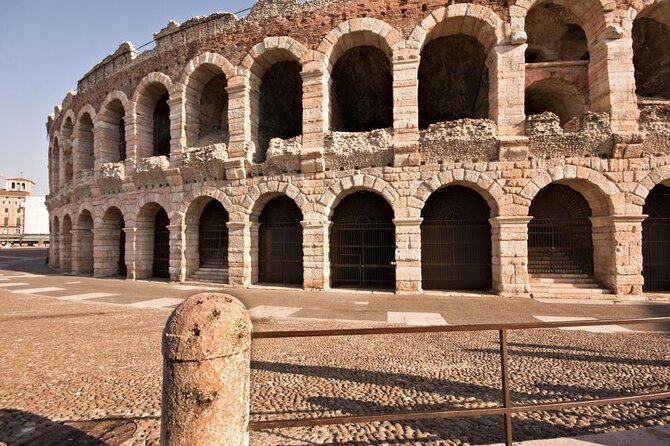
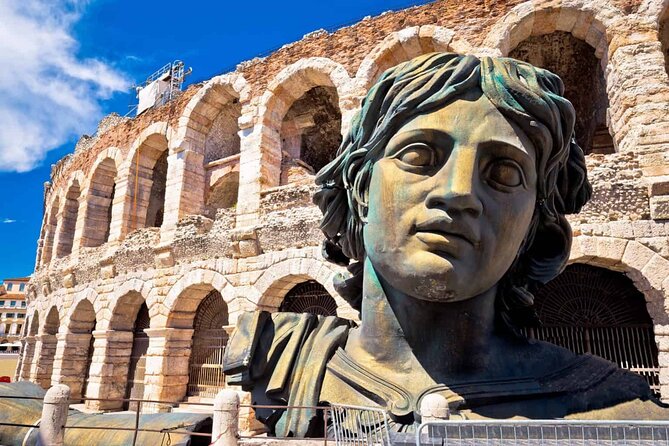
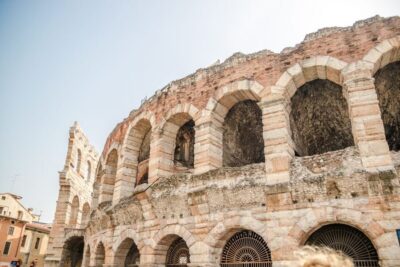
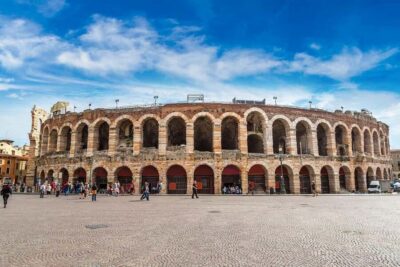
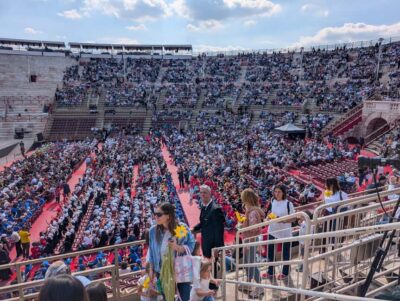
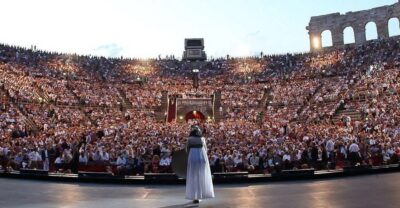
The tour kicks off at the Arena di Verona, at Piazzi Brà 1. This is one of those places where history doesn’t sit still. In Roman times, the amphitheater was built for gladiator shows—basically the Netflix of its era. Today, the building’s design still does what it was meant to do: it carries sound exceptionally well, which is why the Arena is used for famous opera performances and other concerts.
What I love here is how quickly your brain switches modes. You start by noticing the scale, then you start noticing how it would have felt packed with noise, drama, and movement. A guide’s job isn’t to overwhelm you with facts; it’s to help you see the architecture as a machine for spectacle. That’s exactly where this stop shines.
Potential drawback? The Arena is a major landmark, so it’s not a quiet corner. If you’re the type who hates crowds at day one, you might want to treat this as your “big emotional hit” early in the walk and let the smaller medieval spaces cool you down after.
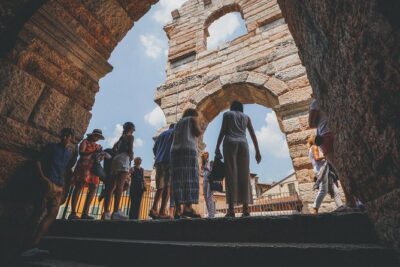
Back under the arches of the Roman arena, opera nights included.

Castelvecchio: a castle built like a fortress and restored with care
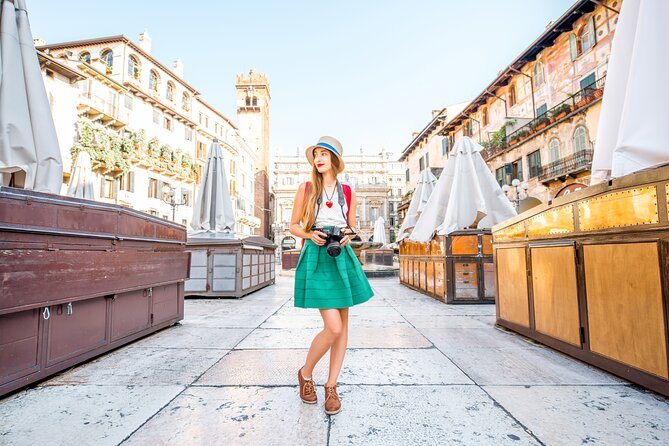
Next you’ll head to Castelvecchio, often described as the old castle. It’s not just charming to look at. The big idea is defense: Castelvecchio was part of a 7-tower system, and water once surrounded the complex. That detail matters because it explains why the place feels enclosed and strategic even now.
The tour includes time for Castelvecchio Museum. This is where the visit gets useful for people who like more than just views. You’ll see collections of Medieval and Renaissance sculptures, paintings, jewelry, weapons, and armor. That “museum variety” is one of the practical strengths of this stop. Instead of wandering through one room and hoping it clicks, you get multiple categories that help you connect art and daily life to politics and conflict.
If you’re traveling with someone who gets restless at museums, this stop can still work because the overall castle setting gives you a mental break between objects. You can look outward, then look inward. That rhythm is a big part of why Castelvecchio is so satisfying in a short tour.
Scaliger Tombs and the Gothic Arcs that explain a ruling family
After the castle, the walk moves to the Scaliger Tombs and the Scaliger Arcs. These are among the clearest examples of Gothic funerary art you’ll see in Verona. The Arcs are a group of five Gothic funerary monuments built to commemorate the Scaliger family, who ruled Verona.
This stop is small in time, but it gives you an important lens. Once you’ve seen Roman engineering at the Arena and fortress thinking at Castelvecchio, the Gothic tombs show a different kind of power: the power of legacy and reputation. The point isn’t just grief. It’s public memory, carved into stone.
A consideration here: if Gothic detail isn’t your thing, you might feel like you’re looking at “pretty monuments” instead of a story. The tour format helps because it frames what you’re looking at as a statement made by rulers, not random decoration.
Piazza dei Signori: where governance and palaces shape the square

Then you’ll reach Piazza dei Signori, one of Verona’s key squares and a place with long political and administrative importance. During the Venetian reign, the square took on even more official weight, partly because major palaces ring the area.
Two names to know here are Palazzo della Ragione and Palazzo di Cansignorio. Even if you don’t go inside, you’ll start to feel how architecture supports authority. This is the kind of stop that helps you understand why the town’s public spaces feel so “serious,” even when tourists are just grabbing gelato.
I also like how the tour ties this square to the idea of civic life. It’s not only about buildings; it’s about the way people gathered and made decisions. That’s the difference between reading about Verona and actually walking through the rooms that shaped it.
Piazza delle Erbe: the oldest square and a Roman forum in disguise
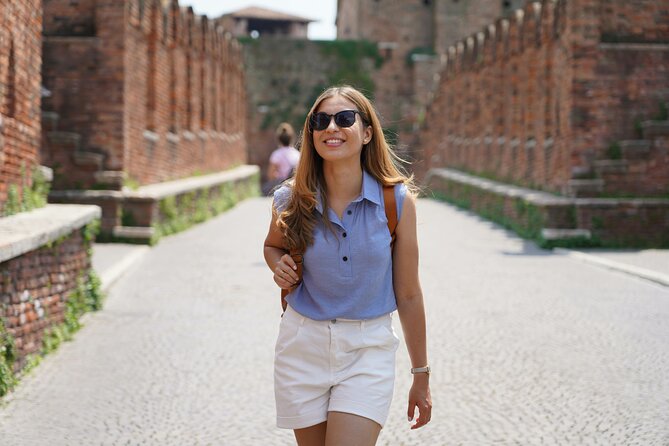
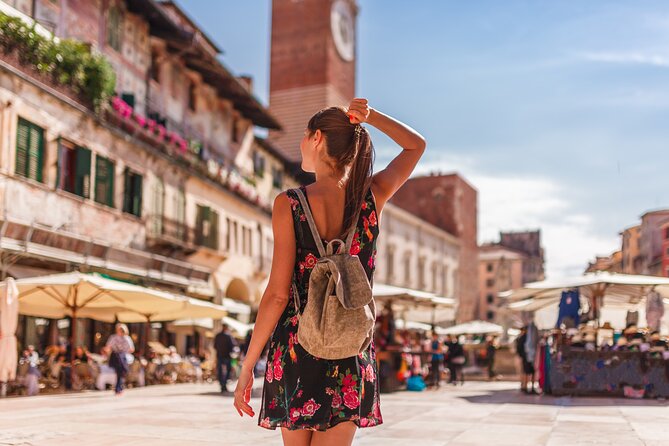
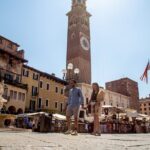
Piazza delle Erbe is next, and it’s the sort of stop that can become your favorite even if you weren’t trying to “shop.” It’s Verona’s oldest square and it has kept its job for centuries: fruit market energy, cozy cafes, and a mix of buildings with different ages and styles.
The practical win is that this is also where you naturally shift from “history mode” to “people mode.” You’ll feel how the square works as a meeting place. That’s the kind of atmosphere you can’t replicate in a museum.
And then the tour adds the kicker: in Roman times, Piazza delle Erbe served as a Roman forum. Even chariot races were hosted there. So when you’re standing among today’s stalls and cafe chairs, you’re also standing on a stage where public spectacle once mattered as much as it does now.
One caution: because this is a lively area, it can be louder than the rest of the walk. If you’re sensitive to noise, pace yourself and use breaks to reset your brain before the final stop.
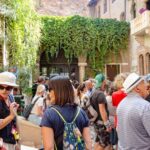
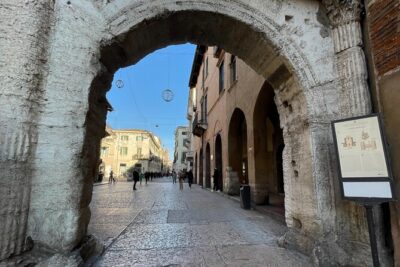
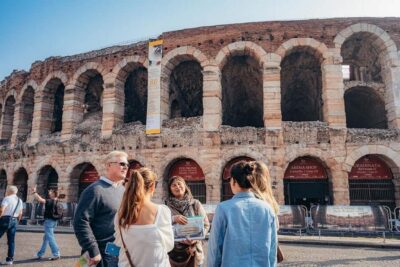
More of the centro storico on foot with a guide.




Casa di Giulietta: Shakespeare’s legend in the middle of a real city walk
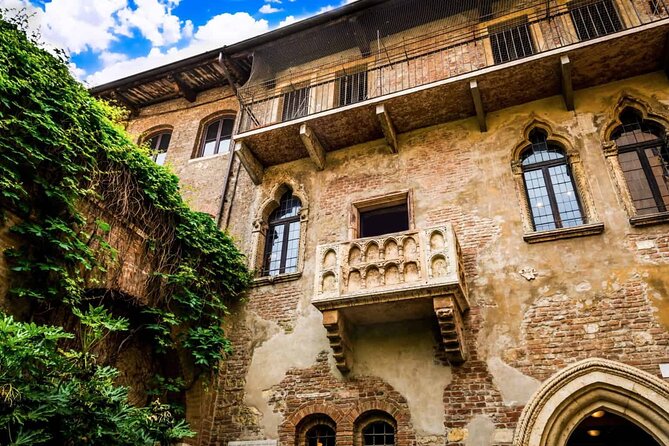
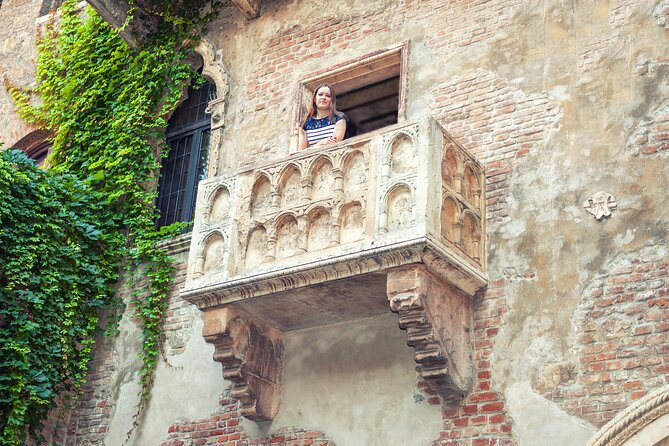
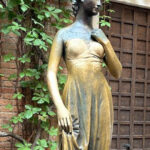
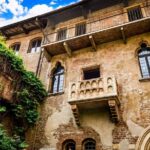
The tour ends at Casa di Giulietta, at Via Cappello 23. This is the stop where Verona’s literary myth hits the street. The house is tied to the Romeo and Juliet story linked to William Shakespeare, and it’s become the magnet that keeps visitors circling back to the same spot year after year.
I like this ending because it works as a mood change. The tour has taken you through Roman engineering, medieval defense logic, and Gothic memorials. Ending with a love legend gives you a softer emotional note before you continue on your own.
That said, this is a famous site, so it may feel busier than the other stops. If your best travel energy comes from quieter places, treat Juliet’s House as an emotional finale, then plan to move away from the crowd soon after your tour ends.
How the 2-hour format works in your favor
This whole experience runs about 2 hours, with short segments at each stop. That structure is smart for a city like Verona because it gives you coverage without turning your day into museum marathons. You’ll bounce between:
- a Roman amphitheater used for performances
- a restored medieval castle complex
- Gothic funerary monuments for a ruling family
- civic squares tied to Venetian-era administration and Roman-era public life
- a famous Shakespeare-linked house to close the loop
Also, the tour is a private experience, which means only your group participates. That matters if you want a guide to adjust the pace, explain more clearly, or keep your group moving as a unit.
The schedule lists “Admission Ticket Free” for each stop. That’s a helpful sign for budgeting, but I’d still treat it as “check your date rules” energy—Rome and Italy often have specific conditions depending on timing. One extra tip: there’s an indication that Arena visits can be free on the first Sunday of each month. If you’re traveling near that window, it can change the economics of doing Verona’s major monuments on your own.
Price and value: what you’re really paying for
The price is $196.66 per person for roughly 2 hours. That’s not cheap, but it can be good value when you consider what you’re getting in one guided package: multiple major sights plus context that helps you understand what you’re seeing.
You’re paying for three things:
- Time savings: several landmarks in a compact walk.
- Interpretation: the guide connects Roman, medieval, and Gothic themes instead of leaving you to connect the dots.
- A smoother experience: the tour is described as near public transportation and uses a mobile ticket, which keeps things simpler on arrival.
If you’re the type who enjoys wandering with zero structure, you could probably build your own Verona loop. But if you want the city to make sense quickly, the guide-led format often pays off.
Who this walk is best for (and who might want to rethink it)
This tour fits well if you want a fast hit of the big Verona highlights without sacrificing context. It’s also a solid pick if you like art, architecture, and the way rulers used public spaces—from amphitheaters to tombs to squares.
It may be less ideal if:
- you dislike busy historic squares and landmark crowds
- you’re extremely limited on walking time
- weather ruins your plans easily (this experience requires good weather)
Quick practical tips before you go
- Wear comfortable shoes. The stops are “short” but Verona walking adds up.
- Plan to enjoy a mix of scenes: performance-ready Roman structure, fortified medieval space, Gothic monuments, then lively market square.
- If you’re chasing the Arena on a budget, remember the note about free visits on the first Sunday of each month and plan around your travel dates.
Should you book this Verona Arena and Historic Highlights walk?
Yes, I’d book it if you want Verona to feel connected fast: Roman spectacle, medieval defense, Gothic memorial art, civic power squares, and a Shakespeare finish. The strongest reason is the way the stops fit together in one story, and the guide style—friendly, art-and-history focused, with examples of guides like Frank who know how to explain the place.
Skip it or swap it only if you’re primarily chasing quiet or you’d rather control your route completely. For most visitors doing Verona for the first time, this is a high-impact, time-friendly way to see the city’s headline landmarks while actually understanding what they meant.
FAQ
Where does the tour start?
The tour starts at Arena di Verona, Piazzi Brà, 1, 37121 Verona VR, Italy.
Where does the tour end?
The tour ends at Casa di Giulietta, Via Cappello, 23, 37121 Verona VR, Italy.
How long is the Verona Arena and Historic Highlights guided walking tour?
It’s approximately 2 hours.
Is this a private tour?
Yes. It’s listed as a private tour/activity, and only your group participates.
Is a mobile ticket used?
Yes. The tour notes a mobile ticket.
Does the tour offer group discounts?
Yes. The tour summary includes group discounts.
Is the experience near public transportation?
Yes, it’s listed as near public transportation.
What language or style is the guide focused on?
The provided reviews highlight guides with good knowledge of art, history, and culture.
Is good weather required?
Yes. The experience requires good weather, and if it’s canceled due to poor weather, you’ll be offered a different date or a full refund.
What is the cancellation policy?
Free cancellation is available. You can cancel up to 24 hours in advance for a full refund. If you cancel less than 24 hours before the start time, the amount you paid is not refunded.
More Verona Walking Tours
More at the Arena di Verona


More Tour Reviews in Verona

Weighing up other options? More ways to spend a day in Verona and out on Lake Garda







Arena di Verona & Opera, compared.
 ★ 4.6Priority Access Arena Guided TourFrom $411,152 reviews
 ★ 4.9Small Group Guided Walking Tour with Arena TicketsFrom $81848 reviews
 ★ 4.6Arena di Verona Opera TicketFrom $55721 reviews
 ★ 5.0Verona Small Group Walking Tour with Cable Car and Arena TicketsFrom $71311 reviews
 ★ 4.5Verona Arena Skip-the-line TourFrom $47208 reviews
 ★ 4.8Highlights Walking Tour with Arena Priority AccessFrom $81201 reviews
 ★ 4.7From Lake Garda: Verona Arena Opera Ticket with TransferFrom $124155 reviews
 ★ 4.7Opera Concert in Verona Palace with ProseccoFrom $77149 reviews
Browse the lists this tour appears in