
Reviewed · ROMEO & JULIET'S VERONA
Fascinating Verona: in the Footprints of Romeo and Juliet
Verona has two loves: history and Shakespeare. This tour gives you both, starting at the Arena and ending near Casa di Giulietta, with a guide who turns streets, towers, and tombs into a story about power, romance, and rivalry. I like the quick way it builds context on what you’re actually seeing. I also like how the guide connects medieval and Roman architecture to the drama people associate with Romeo and Juliet.
One catch: the Romeo and Juliet angle is a small slice of the walk. If you’re hoping for a balcony-only tour, plan for much more than that.
In This Review
- Key things that make this tour work
- From Piazza Bra to the Arena: your Verona story starts with Roman stone
- Juliet’s House: famous balcony views, then back to real Verona
- Herbs Square and the merchant guild story you’ll feel in the streets
- Signori Square: where Roman to Renaissance layers show up close together
- Through medieval courtyards to the Scala family tombs
- Price and logistics: is $83.45 worth it for 90 minutes?
- Who this tour suits best (and who might want a different plan)
- Should you book Fascinating Verona: in the Footprints of Romeo and Juliet?
- FAQ
- How long is the tour?
- Where does the tour start and where does it end?
- What time does it begin?
- Is the tour only in English?
- Do I need to buy tickets for Juliet’s House?
- Is the tour canceled for bad weather?
- What’s the group size?
- Is hotel pickup included?
- Is there free cancellation?
Key things that make this tour work
- Arena meeting point with instant history: You start at Piazza Bra and then get the Roman background before you walk.
- Short, focused walking time: About 1.5 hours of strolling through old neighborhoods.
- Juliet’s balcony area without the heavy ticket burden: You’ll see the famous balcony and statue, but entry tickets are not included.
- Market + merchant guild stop: Herbs Square and the Domus Mercatorum help you understand Verona’s real economic engine.
- Architecture in layers: Roman through Romanesque, Gothic, Renaissance, and later styles show up in one urban route.
- Scala family tombs as the final drama hit: You end with a look at a ruling clan whose feuds match the emotional vibe of Shakespeare.
From Piazza Bra to the Arena: your Verona story starts with Roman stone
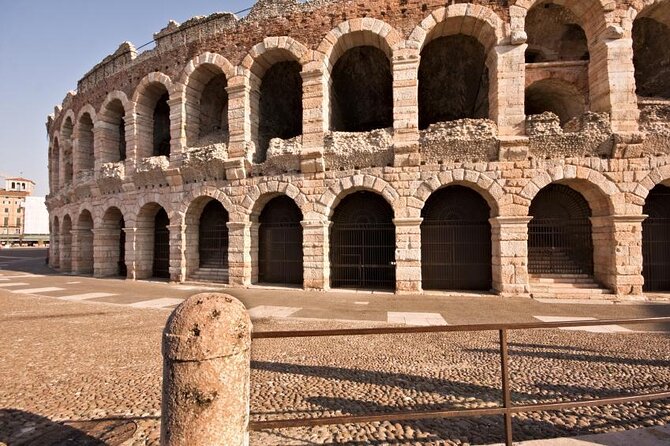
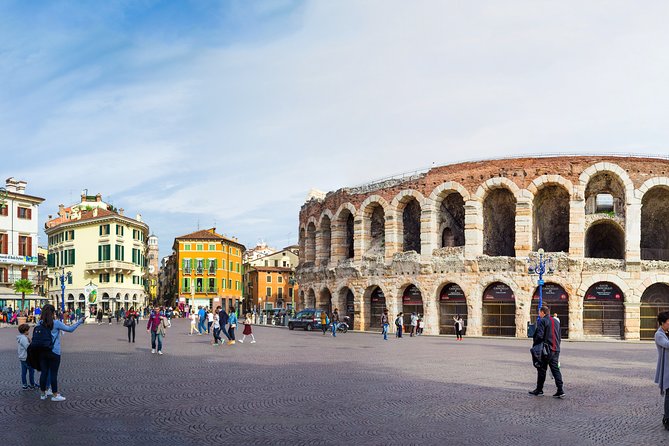
The tour starts at Piazza Bra (P.za Bra), near the Arena amphitheater. It’s a great move, because you’re looking at one of Verona’s biggest “wow” structures right at the beginning. The Arena is ancient Roman, and it predates Rome’s Colosseum. It’s also still in use for cultural events, which matters because it’s not just ruins behind a fence. This is a working landmark.
Your guide sets the tone with what the Arena meant in its day, then pushes you to look at the city with fresh eyes. Instead of treating Verona like a pretty postcard, you start seeing it as a layered place that kept being rebuilt, renamed, and reused across centuries.
Why I like this approach for first-time visitors: you get orientation fast. Once you understand the Roman foundation, everything that follows makes more sense. Towers, churches, palaces, squares, even the narrow streets feel less random.
Practical note: the experience runs rain or shine. That’s helpful in a city where afternoon weather can change fast. Wear shoes that handle cobblestones, and bring a light layer if the wind picks up near open squares.
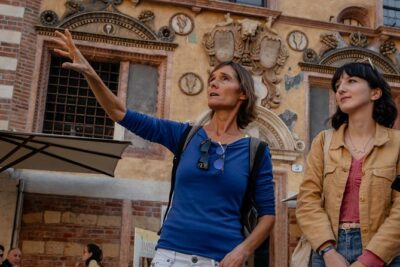
Chasing Romeo and Juliet through the old streets.


Juliet’s House: famous balcony views, then back to real Verona
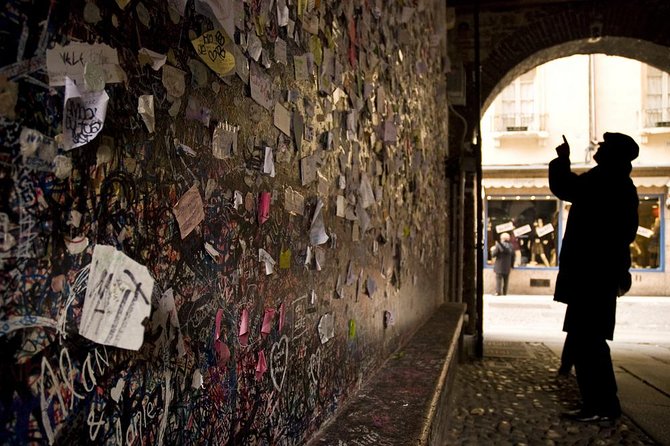
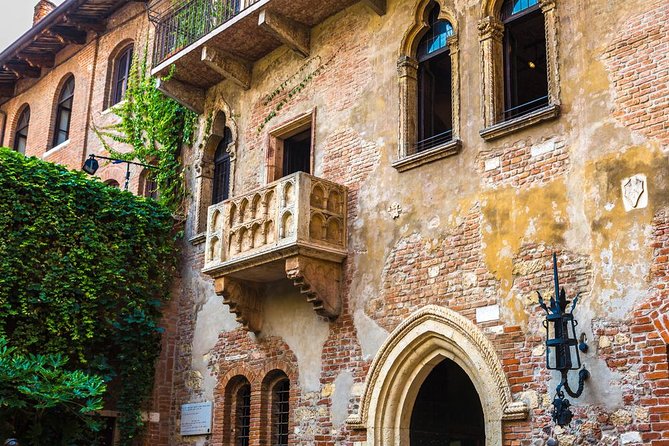
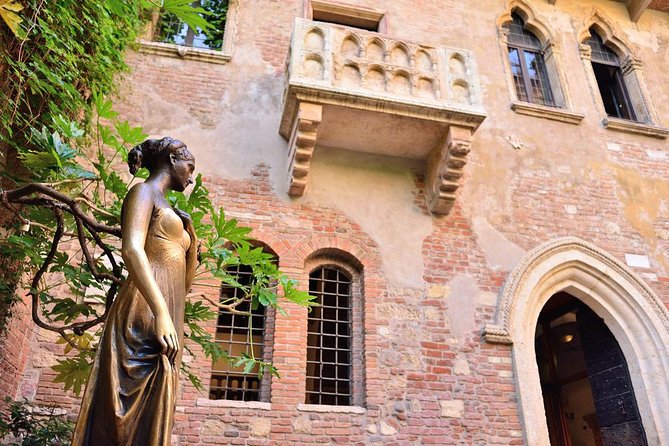
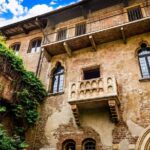
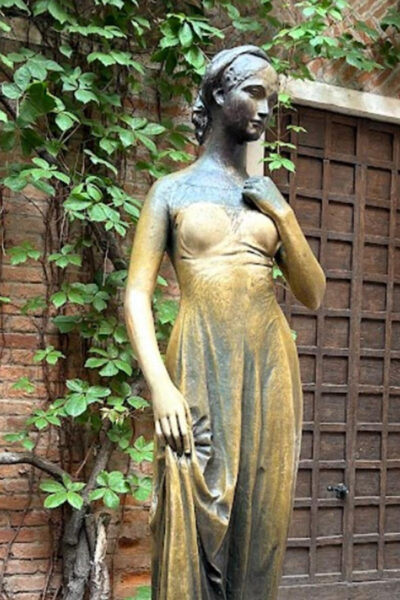
Next comes the walk to Juliet’s House area, where you’ll see the famous balcony and the statue associated with Juliet. This is the part most people picture when they book the tour, but it’s also where you should manage expectations. The tour name points to Romeo and Juliet, yet the deeper payoff is the city around the story.
The tour also takes care to separate myth from certainty. Any Shakespearean connection here is presented as dubious. That’s actually a good thing. It keeps the romance from turning into a history lesson dressed as fan fiction. You get the cultural icon, plus the context for how Verona became a stage for later storytelling.
One more practical detail: Giulietta Home Tickets are not included. So you’ll see the exterior sights connected to the balcony and statue, but if you want to go inside (or do anything ticketed), you’ll need to handle that separately.
This stop is also near the end of the tour route. In practical terms, it works well because you’re already warmed up by the Roman and medieval context. The balcony isn’t the start of the story in your mind anymore; it’s the closing scene that you’re better prepared to interpret.
Herbs Square and the merchant guild story you’ll feel in the streets
From Juliet’s area, the route shifts toward Herbs Square. This is a lively market square, and that matters more than it sounds. Markets are where cities show their everyday life. The guide uses the square to explain Verona’s social and economic history, not just landmark checklists.
Herbs Square is also where you’ll connect to two important threads:
- The Lamberti Tower area, which gives you a sense of height, power, and civic identity.
- The Domus Mercatorum, linked to the merchant guild.
The Domus Mercatorum is a big deal because it represents organized commerce. A merchant guild isn’t romantic like a balcony. But it is exactly the kind of force that pays for architecture, funds public spaces, and shapes city politics. Once you understand that, you start spotting why certain palaces and institutions exist where they do.
I like that this stop helps you read Verona like a living machine. You’re not just learning dates. You’re learning the reasons a city ends up looking the way it does.
If you’re traveling with teens or picky history adults, this is a useful middle ground: you get motion in the square, easy-to-enjoy sights, and then a guide explains why the buildings were built in the first place.
Signori Square: where Roman to Renaissance layers show up close together
Signori Square is the kind of place that can feel like a straight line on a map. On this tour, it becomes the opposite. It’s presented as the spot where Verona’s history is visible through architecture across multiple eras.
You’ll see how Roman, Romanesque, Gothic, Renaissance, and modern influences converge in the same neighborhood. That’s a smart lesson for travelers because it trains your eye. Instead of thinking of history as isolated eras, you start noticing how one age absorbed or replaced another.
This is also where your guide’s storytelling style matters. A good guide helps you notice details you’d normally walk past. You end up thinking, wait, that building style is doing something. That arch isn’t accidental. This is the city speaking in design choices.
Small-group tours help here. With a maximum of 15 travelers, you can ask a question and actually get an answer instead of needing to shout over everyone.
Through medieval courtyards to the Scala family tombs
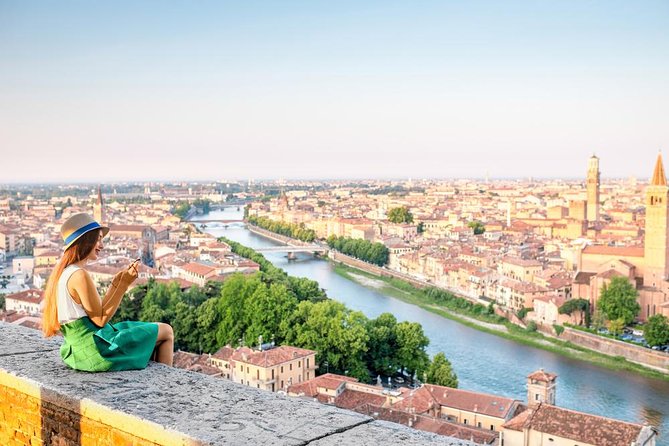
After the bigger squares, the route turns quieter. You’ll pass through medieval courtyards and backstreets to reach the tombs of the Scala family. This is one of the most emotionally satisfying stops on the walk because it connects power and conflict to places you can actually stand in.
The Scaligeri (Scala family) were a ruling clan in the 13th and 14th centuries. Their scandals and power struggles are described as reminiscent of the tangled family feuds behind Romeo and Juliet. Whether you’re a Shakespeare superfan or not, the key is that Verona’s political drama wasn’t invented by playwrights. It had real roots.
The courtyards part is important too. It breaks the rhythm of open squares. You get a different kind of Verona view: narrower, older, and more intimate. That shift helps the last stop land with impact. Tombs aren’t exciting on paper, but the setting plus the story makes it stick.





Price and logistics: is $83.45 worth it for 90 minutes?
At $83.45 per person, this is not a bargain-basement walking tour. But for Verona, it can be a strong value if you want a city primer that saves you time and helps you see more than just the obvious sights.
Here’s how the value math works:
- You’re paying for a local professional guide and a small group format (max 15).
- You’re walking top attractions without needing to connect all the dots yourself.
- You’re getting an interpretive route: Roman foundation first, then medieval squares, then the merchant guild layer, then the tombs.
What you should account for:
- Entrance fees are not included.
- Tips and gratuities are not included.
- Juliet’s House tickets are not included.
The tour also uses mobile tickets, which is convenient because you’re not juggling printed paperwork mid-walk.
Timing matters too. You meet at 1:30 pm at Piazza Bra. The guide waits a maximum of 10 minutes from the departure time, and delays of up to 15 minutes can be accepted. Arrive late and you risk missing the tour completely, since late arrivals can become a no-show.
For pacing, expect moderate walking. The physical level is listed as moderate, and it makes sense given the walking through old neighborhoods and courtyards. Comfortable shoes are the real “ticket” here.
Who this tour suits best (and who might want a different plan)
This tour is best for you if:
- You have limited time in Verona and want a guided route that hits major stops.
- You like architecture and city layout more than you like pure museum time.
- You want Romeo and Juliet as a thread, not the whole story.
It may be less ideal if:
- You only care about Juliet’s balcony and want long time inside or a deep dive focused only on that attraction.
- You dislike walking in older streets and prefer less time outdoors.
For families, it can work well because it doesn’t force you into long lectures. Guides in this format are also known for keeping people engaged with stories and energy. Names that show up repeatedly include Frank and Maria, along with Andrea, Francesco, and Maria Pia, and the pattern is consistent: the best tours are the ones where the guide tells the city like a drama, not a textbook.
Should you book Fascinating Verona: in the Footprints of Romeo and Juliet?
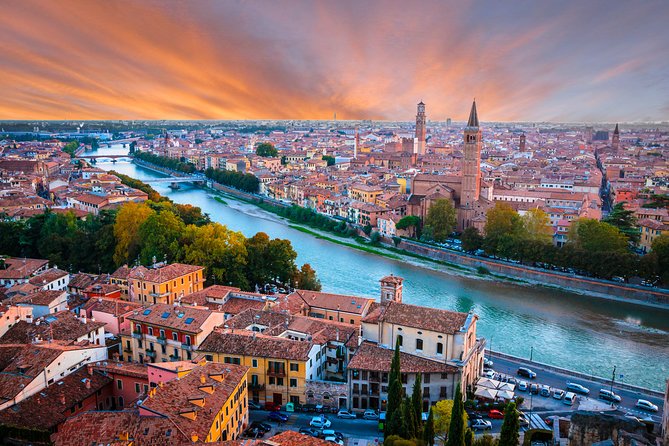
Yes, you should book it if you want a smart afternoon in Verona that helps you see the city’s layers in one compact walk. For the price, the biggest value is not the Shakespeare link by itself. It’s the way the route teaches you what the buildings and squares meant, from Roman times through medieval power, merchant influence, and later styles.
I’d say book it especially if you’re arriving in Verona with limited time and you want your first impressions to be accurate. You’ll come away with a clearer sense of why Verona looks the way it does—and why the romance and drama people associate with Shakespeare fit the city’s history so well.
If you’re planning a longer stay, you can still book this as an opener. Use it to get oriented, then return on your own to linger where the stories pull you.
FAQ
How long is the tour?
The tour is listed at about 1 hour 30 minutes.
Where does the tour start and where does it end?
It starts at Piazza Bra (P.za Bra, Verona) and ends at Casa di Giulietta on Via Cappello, 23, Verona.
What time does it begin?
The start time is 1:30 pm.
Is the tour only in English?
Yes, the tour is offered in English.
Do I need to buy tickets for Juliet’s House?
Julietta Home Tickets are not included, so you’ll need separate tickets if you want entry where required.
Is the tour canceled for bad weather?
No. The tour runs rain or shine.
What’s the group size?
The tour has a maximum of 15 travelers.
Is hotel pickup included?
No. Hotel pick-up and drop-off are not included.
Is there free cancellation?
Yes. You can cancel up to 24 hours in advance for a full refund.
More of Shakespeare's Verona



More Tour Reviews in Verona

Weighing up other options? More ways to spend a day in Verona and out on Lake Garda










Romeo & Juliet's Verona, compared.
 ★ 4.2Juliet’s House Fast-Track Entry Ticket & Audio GuideFrom $281,121 reviews
 ★ 4.5Wine Tasting near Juliet’s House & Arena with ValpolicellaFrom $50118 reviews
 ★ 5.0Passionate Verona: Living Romeo and Juliet’s StoryFrom $6690 reviews
 ★ 4.7Wine Tasting Workshop near Juliet’s BalconyFrom $4776 reviews
 ★ 4.8Romeo and Juliet Guided Walking TourFrom $6772 reviews
★ 3.5Juliet’s House Fast-Track Entry Ticket & Audio GuideFrom $2552 reviews
★ 4.8Romeo and Juliet Guided Walking TourFrom $6772 reviews
★ 3.5Juliet’s House Fast-Track Entry Ticket & Audio GuideFrom $2552 reviews
 ★ 4.5The city of Romeo and Juliet: A self-guided audio tour through VeronaFrom $1128 reviews
 ★ 5.0Verona Juliet’s House & City PRIVATE TOUR with Ticket IncludedFrom $11621 reviews
Browse the lists this tour appears in