
Reviewed · VERONA WALKING TOURS
3-Hour Walking Tour with Guide Discovering Verona
Verona hits fast when you walk it with a good guide. This 3-hour route strings together centuries of the city, from the Arena di Verona to the Romeo-and-Juliet stops, with clear explanations along the way. I love how the guide keeps the pace friendly and checks in so you’re not sprinting from photo spot to photo spot.
Two things I especially like: you get admission included for several major stops, so the tour feels like more than just a walk and a lecture. And the stories lean practical—why these places matter, not just what they look like—so even the short stops feel useful.
One thing to consider: like most walking tours, you’ll cover a lot on foot in a short time. If you dislike crowding around popular sites like Juliet and Romeo, you may want to arrive with realistic expectations for busy streets and quick viewing windows.
In This Review
- Key highlights you’ll feel quickly
- Arena di Verona to Scaligero Bridge: the Roman start you’ll remember
- Piazza dei Signori and San Lorenzo: politics and faith in walking distance
- Piazza delle Erbe: where Verona’s daily life still shows
- Casa di Giulietta and Casa di Romeo: the Shakespeare trail with real context
- Sant’Anastasia, Pisanello frescoes, and the Arches of power
- Arco dei Gavi and the older layers: Roman meets Renaissance
- Piazzale Castel San Pietro: the last stop that ties the day together
- Price and logistics: why $68.67 can feel fair (and when it won’t)
- Pace, weather, and comfort tips that matter on foot
- Who should book this Verona walking tour
- Should you book? My honest call
- FAQ
- FAQ
- What is the duration of the Verona walking tour?
- What language is the tour offered in?
- How much does the tour cost?
- Are tickets included for the stops?
- Is pickup available?
- What happens if the tour is canceled due to weather?
Key highlights you’ll feel quickly
- Most entries are included, so you can spend your time looking instead of calculating ticket costs.
- A tight, 3-hour route through central Verona, built for first-timers.
- Shakespeare locations plus real architecture, so it’s not only Romeo and Juliet.
- Roman to medieval to Renaissance context, explained with clear, simple storytelling.
- Small groups (max 20), which helps questions and pace.
- Guide energy matters, and the best sessions (including guides like Evgeniy) are described as fun and patient.
Arena di Verona to Scaligero Bridge: the Roman start you’ll remember
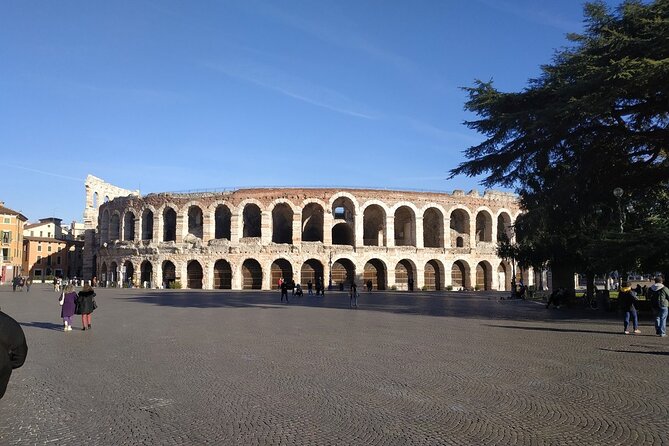
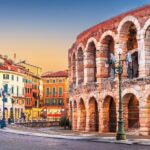
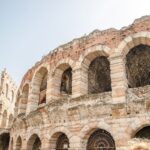
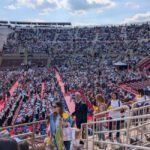
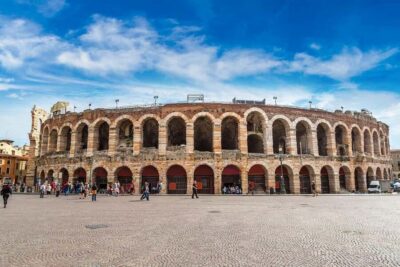
The tour begins where you can’t miss it—Piazza Bra—then moves straight toward the Arena di Verona. This stop is timed to give you a quick feel for the monument’s scale and a behind-the-scenes kind of story, the kind that helps you understand why this place became such a symbol. Even if you’ve seen photos, I think the point here is to learn the story at human speed, not in museum-hours.
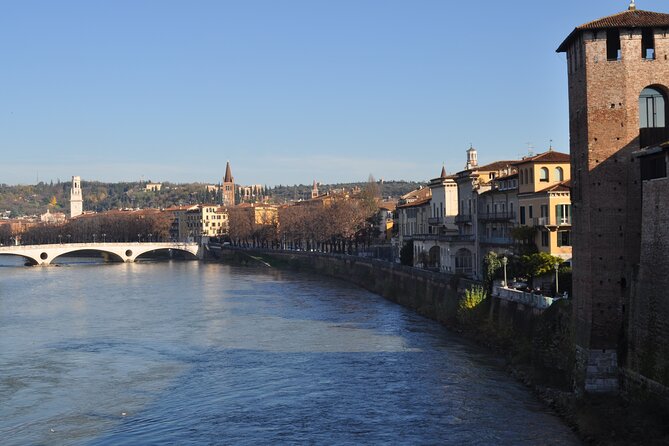
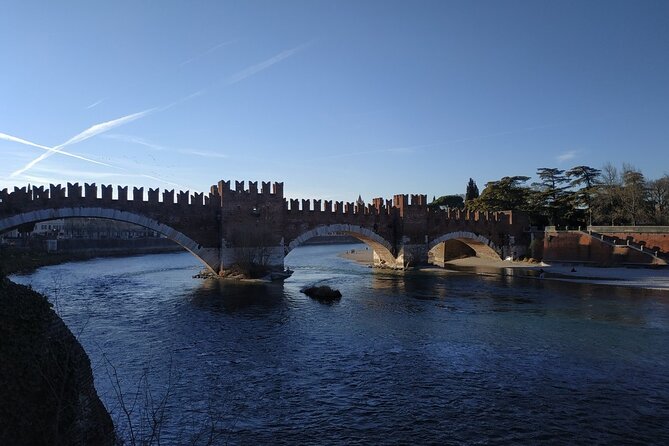
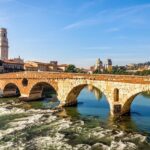
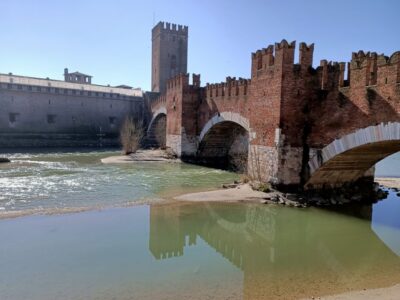
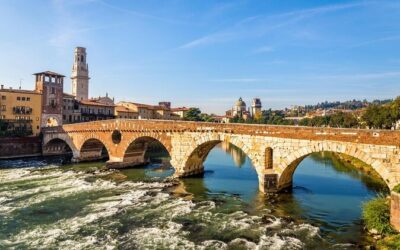
Right after, you head to Scaligero Bridge, where the medieval architecture gets its moment. It’s a short stop, but that works: you get the classic photo angle, then a bit of context that turns the bridge from a backdrop into something with a purpose. Admission is listed as included here, which is a nice bonus because it keeps the flow tight.
How this section feels: You’re building Verona’s timeline in the open air. Roman grandeur first, then medieval craft, with enough time to look up, not just walk past.
Possible drawback: Because these early stops are popular, the best photos may require a bit of positioning. If you’re sensitive to crowds, go with a flexible mindset and focus on the explanations, not only the perfect angle.
More of the centro storico on foot with a guide.
Piazza dei Signori and San Lorenzo: politics and faith in walking distance
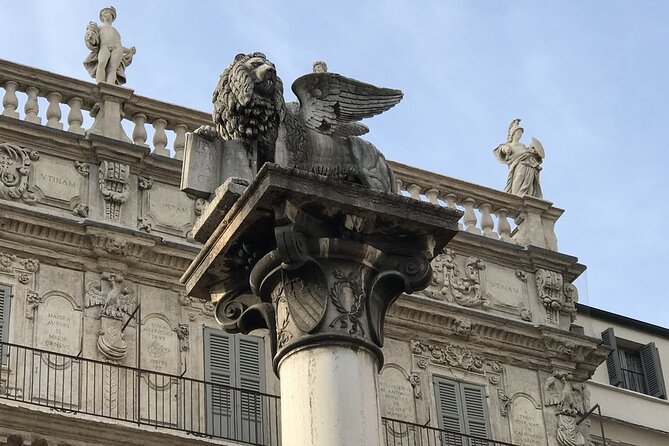
From the Arena area, the route shifts into the political heart of the city at Piazza dei Signori. This stop is framed as the center of Verona’s political life, and that theme matters. Piazza spaces like this aren’t just squares—they’re stages. A guide helps you notice the way the buildings around you create power and visibility.
Next comes the chiesa di San Lorenzo—kept brief at about 5 minutes. That short window can be perfect if you want the “wow” factor without turning your day into a long church marathon. If churches are your thing, you’ll likely want extra time, but as part of a 3-hour plan, it’s a good stop to stretch your legs and reset your brain.
Why it’s good for value: This is a lot of meaning packed into short moments. You’re learning what to look for while still keeping time for the big hitters ahead.
What to watch: Don’t expect deep quiet time inside. The tour is moving, and the stop is short by design.
Piazza delle Erbe: where Verona’s daily life still shows
Piazza delle Erbe is next, timed to about 20 minutes. This is the area that feels like the city’s heartbeat—full of atmosphere and constant motion. The tour frames it as a place where there’s a story around every corner, and you’ll feel that when you start noticing details you would normally skip.
This is one of the strongest “walking tours that don’t feel rushed” stops because it gives you space to re-orient. You also get a mental image of Verona that doesn’t rely on Shakespeare or ancient ruins. It’s the everyday Verona layer, and it makes the later stops hit harder.
Small practical tip: If you’re hungry, this is a smart moment to decide what you’ll do next. You’re in the right place for a quick snack before you move into the more famous landmarks.
Possible drawback: This square is naturally busy, so it’s not the best moment for long introspective photos unless you’re flexible about timing.
Casa di Giulietta and Casa di Romeo: the Shakespeare trail with real context
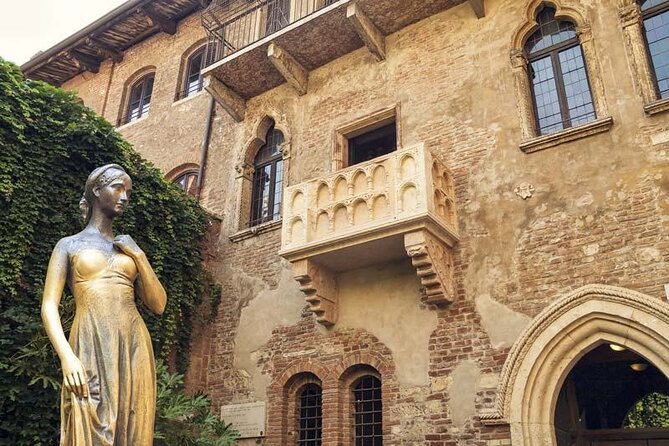
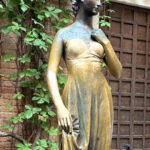
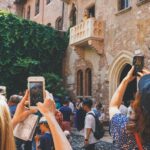
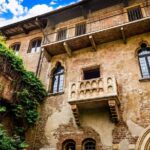
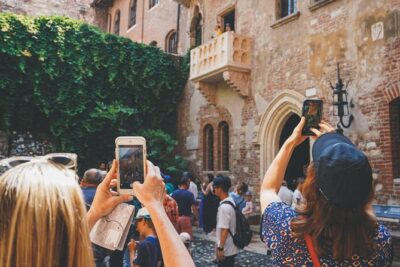
Then the tour leans into the Romeo and Juliet world with Casa di Giulietta. This stop is about 15 minutes, and it’s described as a way to discover the true story behind the tragedy of Shakespeare’s work. Even if you know the play, the value here is that you’ll connect the literature to place—how Verona became linked to the story and what the local sites represent.
After that, you’ll go to Romeo’s House (Casa di Romeo) around the middle, and it shows up again later as a second Romeo pass. Seeing it twice sounds odd on paper, but on foot it can actually help. The first visit often works as a landmark orientation; the second pass is more about catching details you missed the first time—especially street-level context and photo angles.
What to expect: Short visits, lots of storytelling, and a focus on how Verona uses Shakespeare as part of its identity.
Possible drawback: If you’re trying to escape crowds, this section is the toughest part of the route. It’s also where you may feel the 3-hour limit most strongly—lots to see, not enough time for slow browsing.
Sant’Anastasia, Pisanello frescoes, and the Arches of power
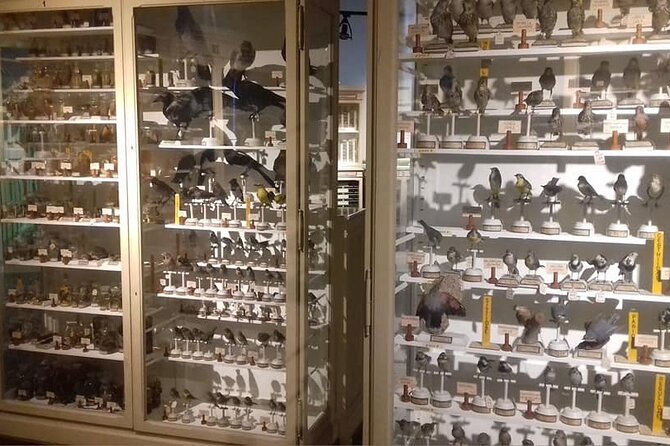
Next is Cattedrale di Sant’Anastasia, described as the largest church in Verona with frescoes by Pisanello. This stop is brief (around 12 minutes), but it’s one of the “stop and actually look” moments. When a tour tells you what’s inside is famous for specific artwork, it helps you focus quickly instead of getting stuck at the door wondering what to notice.
Then comes I Portoni della Bra, listed as one of Verona’s symbols. That kind of stop is great in a walking tour because you’re not only seeing monuments—you’re learning the city’s visual language. It also helps tie earlier sections together: Roman and medieval Verona weren’t separate worlds. They overlap in materials, layout, and symbolism.
The tour also includes Arche Scaligere, framed as the most beautiful place in Verona where the princes of the Middle Ages are buried. This one gets about 20 minutes. It’s timed longer for a reason: tombs and memorial spaces reward attention. A good guide can turn it from a photo stop into a story about power, lineage, and who the city wanted to remember.
Why this middle stretch works: It shifts from “what the site is” to “who mattered and why.” That’s how Verona starts to feel coherent instead of like a checklist.
Possible drawback: If you’re not into churches and tombs, this stretch may feel heavy. But even then, it’s hard to deny the scale and craftsmanship once you’re standing there.
More days out with a Verona local guide.

Arco dei Gavi and the older layers: Roman meets Renaissance
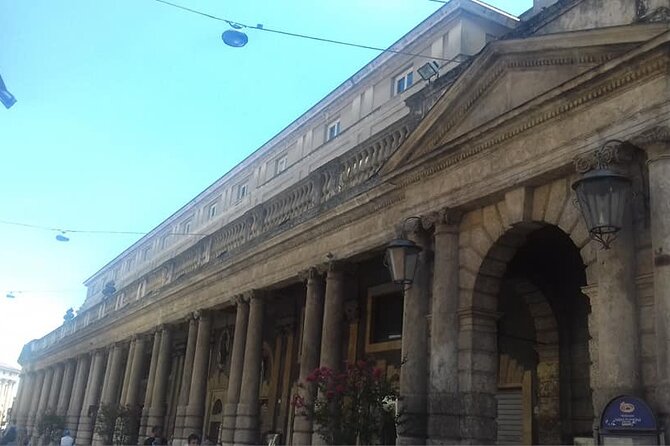
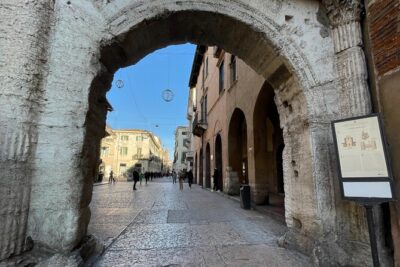
Arco dei Gavi is a short stop (about 10 minutes) described as a piece of ancient Rome immersed in the Veronese Renaissance. That phrase is useful because it tells you to look for the layers. Instead of separating eras, the tour invites you to see continuity—how cities keep reusing, rebuilding, and re-framing their past.
From there, you’ll also visit Chiesa delle Sante Teuteria e Tosca, described as the oldest place of worship in the Veneto. This is another about 10 minutes stop, and it’s a good contrast after the more famous Shakespeare and grand-cemetery energy. You get to step into a different mood: older roots, less pop-culture spotlight.
What you’ll like here: The tour avoids making Verona only about famous stories. It keeps nudging you to see how the city’s identity formed over long time.
Piazzale Castel San Pietro: the last stop that ties the day together
The tour finishes at Porta Leoni (via Leoni), after stopping at Piazzale Castel San Pietro for about 10 minutes. The description links this point to where the tour says our was born, which seems connected to the Romeo saga. Even with the wording a bit messy, the intent is clear: the final stretch gives you a last story beat before you step out of the historic core.
Practical note: Because you end near Porta Leoni, it’s a nice route shape for continuing your day on foot or by public transport. You’re not stranded back at the start square.
Possible drawback: Final stops are always a little rushed, and this one is no different. If you want to linger, plan to come back later on your own.
Price and logistics: why $68.67 can feel fair (and when it won’t)
At $68.67 per person for roughly 3 hours, this tour isn’t cheap for just walking. The value is in what’s included. The itinerary indicates free or included admission at multiple major stops, including Arena di Verona and Scaligero Bridge, plus listed entries at places like Piazza spots, churches, and key landmarks.
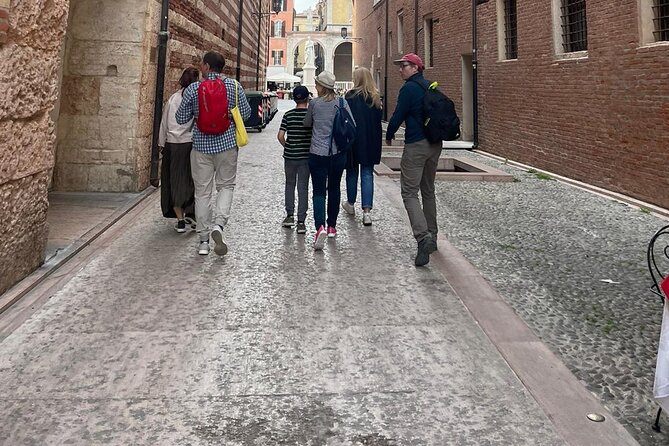
You’re also getting structure: a guide leads you across the centro storico and manages the timing, including short visits that keep the day moving. With a maximum of 20 people, you’re not fighting a huge crowd for listening space.
When it feels like a great deal: If you want to see a lot of central Verona with guided context, and you like history presented in story form, the included entry pieces can make this feel efficient.
When it might not: If you’re mostly interested in one or two sights, you might feel the 3-hour sweep is more than you need. Also, if you hate busy lanes around the Shakespeare locations, you’ll want to treat this as a “see it and learn it” tour, not a slow romantic stroll.
Pace, weather, and comfort tips that matter on foot
This is a walking tour, so comfort is part of the experience. Plan on layers: even in good conditions, you’re outside for the full route. The tour also requires good weather, and if it’s canceled due to poor weather, the policy offers a different date or a full refund. In other words, you can’t always assume the route will run no matter what—have a backup plan if you’re traveling on a tight schedule.
I also like that the guide’s style gets described as patient and flexible. In at least a few instances, the guide offered a fun, simple storytelling approach and adjusted pace checks during the walk. That matters when you’re with kids or just want a tour that doesn’t talk over your head.
Small comfort tip: Bring water. Many stops are timed at 5 to 20 minutes, which makes it easy to forget you’re working up a sweat.
Who should book this Verona walking tour
Book this if you:
- Want a 3-hour overview of central Verona without spending time sorting where to go first.
- Like combining big-name sites with explanation that connects Roman, medieval, and later periods.
- Appreciate guides who make the day feel friendly and not stiff.
- Prefer tours with English guidance and a small group size (max 20).
Skip or reconsider if you:
- Want a slow, quiet visit with long time inside churches or tombs.
- Are only interested in one theme, like only Roman ruins or only Shakespeare.
- Know that crowds around Juliet and Romeo will stress you out.
Should you book? My honest call
I think this is a smart pick for first-timers who want to get oriented fast and learn why Verona’s landmarks matter. The big draw is the mix: major monuments, included entries, and story-driven context that helps the day feel like a timeline instead of random stops.
If you can handle short visits and a crowd-friendly route, you’ll likely come away with a clear picture of Verona from ancient roots to the Shakespeare myths that made the city famous worldwide.
FAQ
FAQ
What is the duration of the Verona walking tour?
The tour is listed as about 3 hours.
What language is the tour offered in?
The tour is offered in English.
How much does the tour cost?
The price is $68.67 per person.
Are tickets included for the stops?
The itinerary notes admission tickets as free or included for multiple stops, including Arena di Verona and Scaligero Bridge, and several other listed sights.
Is pickup available?
Pickup is offered.
What happens if the tour is canceled due to weather?
The experience requires good weather. If it’s canceled due to poor weather, you’ll be offered a different date or a full refund.
More Verona Tours
More Verona Walking Tours
More Tour Reviews in Verona
Weighing up other options? More ways to spend a day in Verona and out on Lake Garda





Verona Walking Tours, compared.
 ★ 5.0History and Hidden Gems Guided Walking TourFrom $411,379 reviews
 ★ 4.9Small Group Guided Walking Tour with Arena TicketsFrom $81848 reviews
 ★ 4.9Classic and Hidden Gems Bike TourFrom $33577 reviews
 ★ 5.0Verona Highlights Walking Tour in Small-groupFrom $42493 reviews
 ★ 5.0Highlights and hidden gems Verona Bike TourFrom $47393 reviews
 ★ 5.0Verona walking tour:food, wine, legends, lunch/dinner & cable carFrom $123386 reviews
 ★ 5.0Verona All in one: Food Walking Tour, Lunch & WineFrom $114342 reviews
 ★ 5.0Verona Small Group Walking Tour with Cable Car and Arena TicketsFrom $71311 reviews
Browse the lists this tour appears in