
Reviewed · VERONA WALKING TOURS
Verona: Private 2-Hour Walking Tour
Verona can feel like a movie set, but this tour keeps it real. You start in the Roman heart at Piazza Brà, then move through arches, squares, and river views with a private guide who helps the city’s layers make sense fast. I especially like how this walk links big icons—like the still-active amphitheater—to the smaller street details that explain how Verona actually worked.
My other favorite part is the Romeo and Juliet stop, where Shakespeare’s legend meets the stone and shadows of the old lanes. One thing to think about: the live guide is German, and the info also says it’s wheelchair accessible while separately stating it’s not suitable for people with mobility impairments—so it’s worth double-checking based on your needs before you book.
In This Review
- Key highlights worth your time
- Where the walk starts on Piazza Brà (and why it matters)
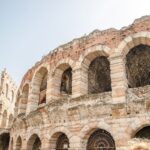
- The Roman amphitheater on Piazza Brà: the big wow moment
- Porta Borsari: a Roman arch that shortens the distance between eras
- Following the Corso to Piazza Erbe: where civic life shows up
- Piazza dei Signori and Café Dante: politics, stone, and a named stop
- Walking the narrow streets: the non-mainstream part you’ll feel
- Castelvecchio and Ponte Scaligero over the Adige: medieval strength meets river views
- Juliet’s house and balcony: Shakespeare in a real alley setting
- How a private 2-hour format changes the experience
- Price and value: $335.32 per group up to 15
- What to bring (and the rules that affect your comfort)
- Language and guide experience: German live tour
- Who this Verona walk suits best
- Should you book this Verona: Private 2-Hour Walking Tour?
- FAQ
- How long is the Verona private walking tour?
- Is the tour private or shared?
- What language is the live tour guide?
- Where do we meet, and where does the tour end?
- What sights are included in the 2-hour walk?
- What is included, and what is not included?
- Can I cancel for a full refund?
- Is there a reserve and pay later option?
- Is the tour wheelchair accessible, and is it suitable for mobility impairments?
- What should I bring, and what are the restrictions?
Key highlights worth your time
- Piazza Brà amphitheater focus: See one of Rome’s most intact monuments and understand why it still matters.
- Porta Borsari on the Roman wall line: A quick stop that helps you picture Verona’s original boundaries.
- Piazza Erbe and Piazza dei Signori: Two squares that show how civic life shaped the city.
- Castelvecchio and Ponte Scaligero: Medieval fortress energy plus river-and-bridge viewpoints.
- Juliet’s house and balcony: The Shakespeare moment, grounded in the alleyway approach.
Where the walk starts on Piazza Brà (and why it matters)
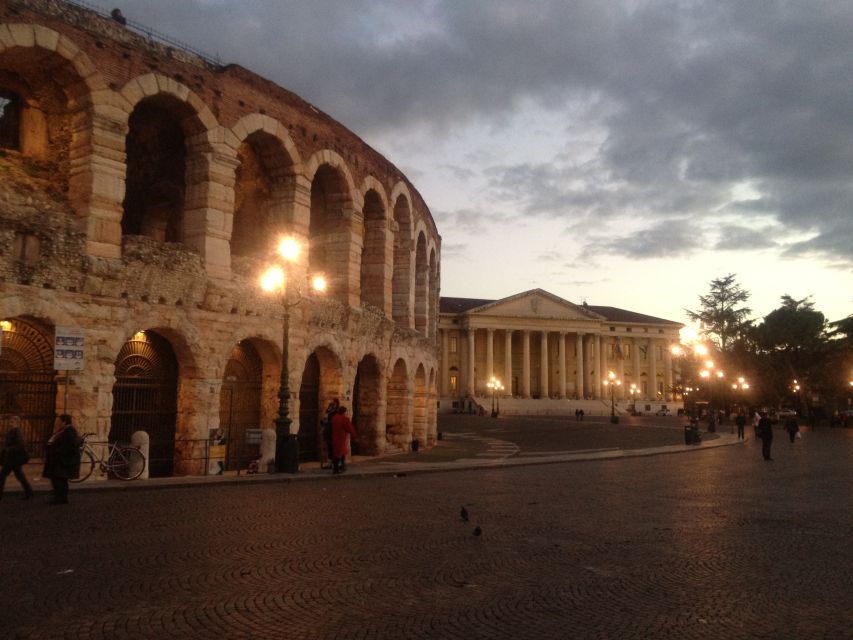
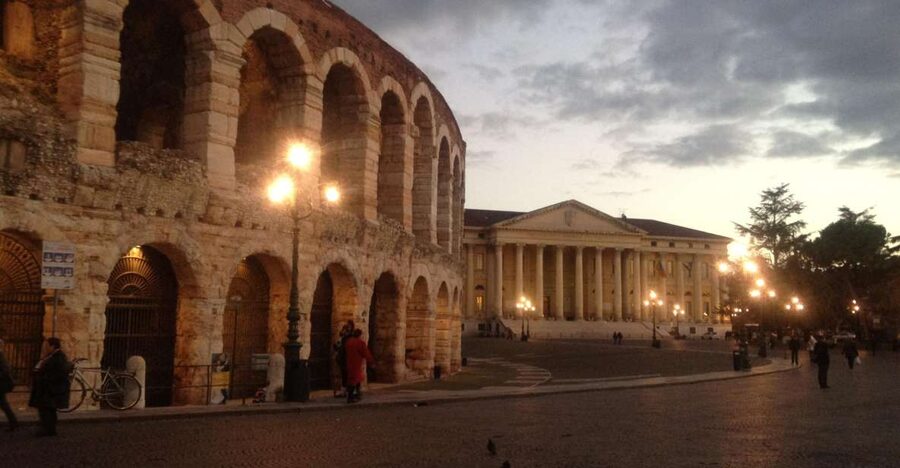
Your tour meets at the statue of King Vittorio Emanuele II on a horse, on Piazza Brà. It’s a great launch point because you’re standing right where Verona’s Roman side announces itself, before you spend the rest of the walk chasing medieval corners and storybook details.
From the start, you’ll have a clear route: you’ll head through key zones of the old city and end back at the meeting point. That makes the whole experience feel efficient, not like you’re wandering around hoping to find the right streets in the right order.
More of the centro storico on foot with a guide.
The Roman amphitheater on Piazza Brà: the big wow moment
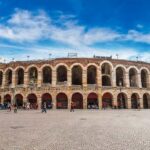
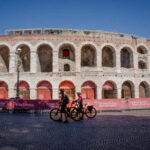
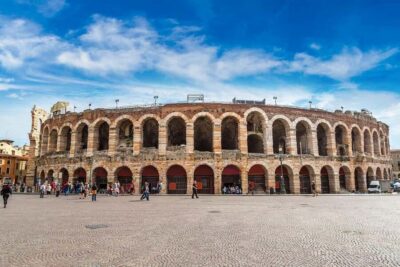
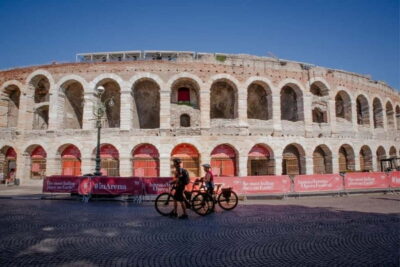
The main star here is the monumental Roman amphitheater on Piazza Brà, built in the 1st century AD and still in use today. Even if you’ve seen other Roman remains, what hits you in Verona is the scale and the sense of continuity—this wasn’t just a ruin that survived, it remained part of the city’s life.
Your guide helps you connect what you’re looking at with how Roman entertainment worked, so the amphitheater feels more than a photo backdrop. In a short 2-hour format, this kind of guided framing is where a private tour earns its keep: you’re not just staring, you’re understanding.
Tip for your photos: aim to look at the amphitheater from the square side first, then take a quick moment to scan what you can see from your walkway position. It’s an easy way to read the monument’s shape without walking miles.
Porta Borsari: a Roman arch that shortens the distance between eras
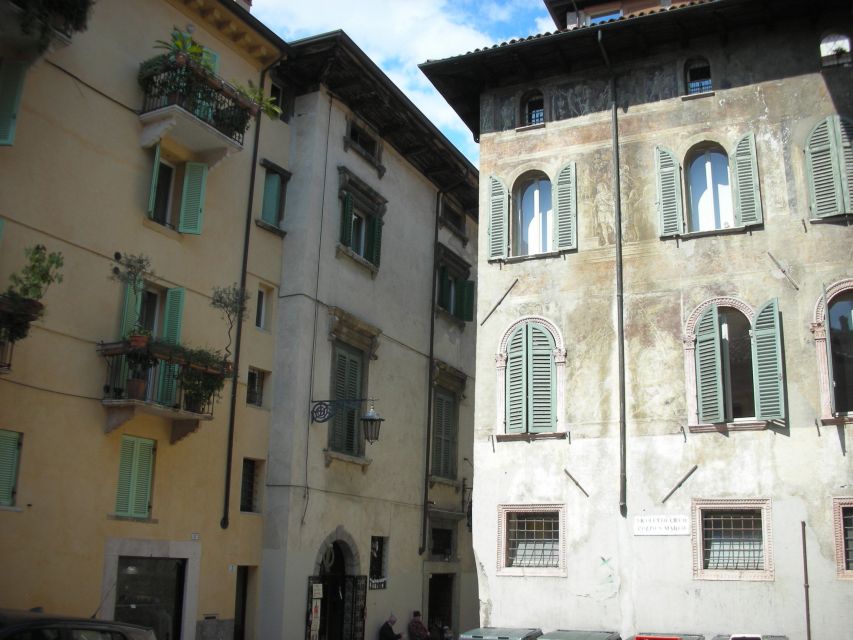
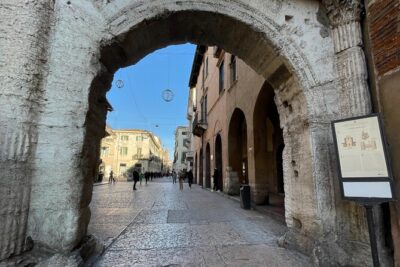
Next comes the Porta Borsari archway, a 3rd-century gateway that formed part of the original Roman walls. It’s not the biggest stop on paper, but it’s useful because it turns “Roman Verona” from a vague concept into something specific you can point to.
Standing under an arch like this helps you visualize how people entered and moved through the city back when the walls still defined daily life. And since you’re on foot, the guide can show you how the arch fits into the path you’ll take down the old center.
Following the Corso to Piazza Erbe: where civic life shows up
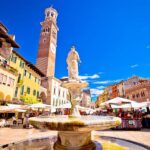
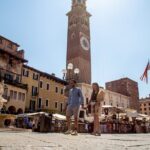
From the Roman gateway, you continue along the Corso toward Piazza Erbe, the heart of the Roman city. This is one of those places where a guided walk changes everything—without context, it’s just another beautiful square. With context, it becomes a map of how power, trade, and daily life clustered in the same spot for centuries.
Piazza Erbe also gives you a natural “slow down” moment. You can watch how the square feels right now while still keeping the Roman layout in your head. It’s a smart contrast: ancient planning, modern foot traffic, and a feel for where people gather.
Piazza dei Signori and Café Dante: politics, stone, and a named stop
Then you head to Piazza dei Signori, where the historical Café Dante sits as a recognizable landmark. The guide’s job here is to connect the place to what the square represented for the city—less about coffee and more about the setting where Verona’s public life took form.
You’ll also admire the medieval Palazzi Scaligeri and the Scaliger Tombs, which commemorate the family that ruled Verona from the 13th to the late 14th century. This is where the tour earns extra points for “medieval charm,” because the power story isn’t just told—it’s visible in the architecture you’re standing in front of.
If you’re a little tired from walking, this is a good place to pause and look up. The details are in the height and stonework, not only at street level.
More private tours, just your group and a guide.



Walking the narrow streets: the non-mainstream part you’ll feel
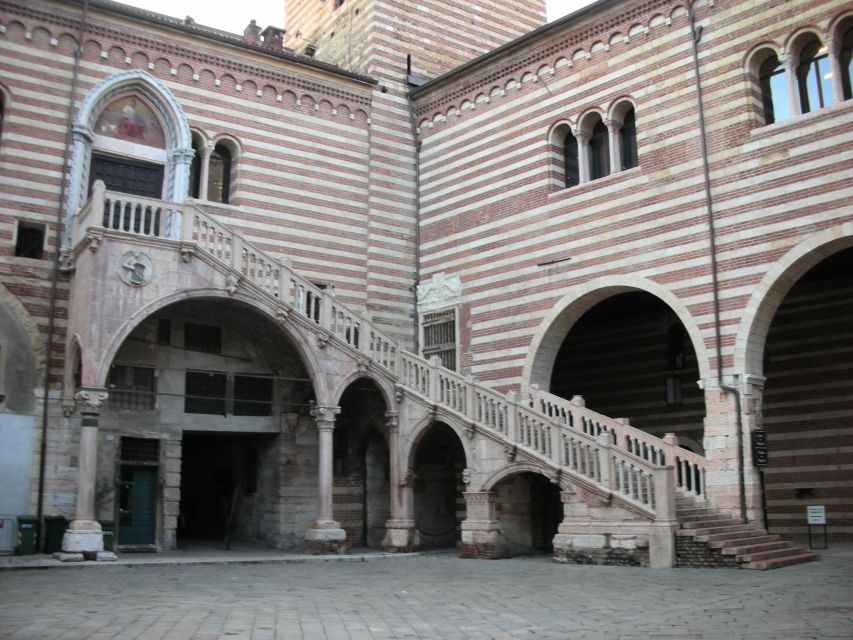
One of the tour’s strengths is that it doesn’t treat Verona as a straight line of postcards. You’ll walk through non-mainstream streets, including narrow alleys that change the pace and the feel of the city.
That matters because Verona’s best moments often come when you’re not walking in the most obvious pedestrian corridor. A private guide can steer you away from the “just follow the crowd” version of sightseeing, while still keeping the route coherent.
This also makes the tour easier on your brain: in just 2 hours, you’re not trying to figure out where everything is. You’re being guided from one meaningful stop to the next.
Castelvecchio and Ponte Scaligero over the Adige: medieval strength meets river views
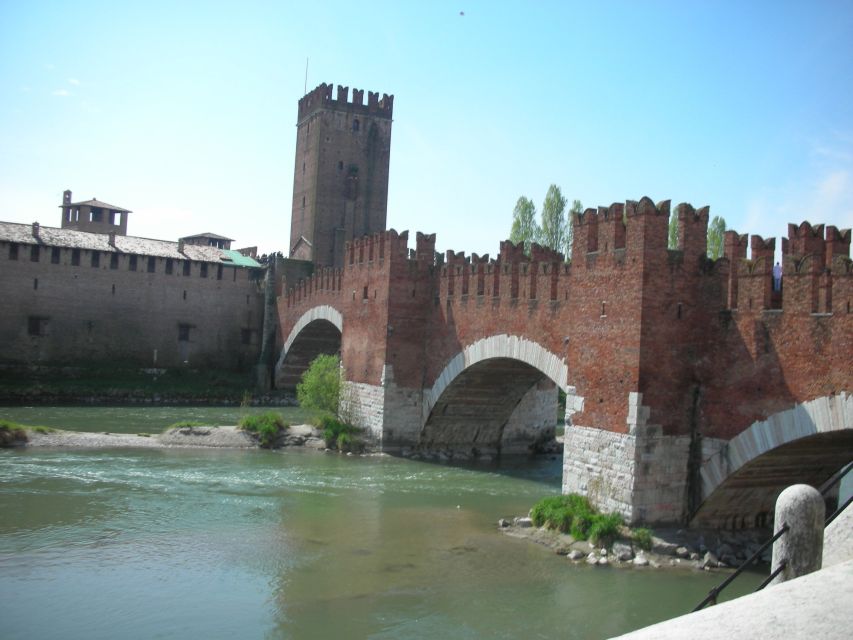
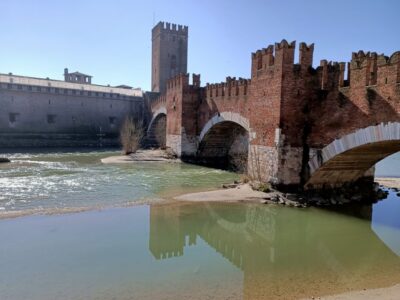
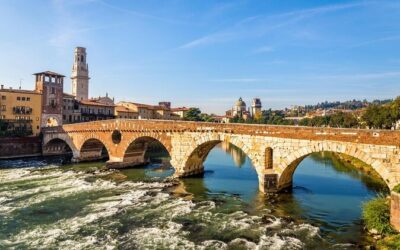
You’ll stroll down to the River Adige area to see the Castelvecchio fortress and the historic Ponte Scaligero (Castelvecchio Bridge). This section works well because it shifts the tone: instead of dense square energy, you get movement, space, and a clearer sense of how the river shaped the city.
Castelvecchio is a medieval fortress, so it naturally carries a different vibe than the Roman amphitheater and archways. It’s about defense and control, not entertainment. Standing there, you get a sense of why Verona needed walls and why bridges mattered so much for movement and security.
Ponte Scaligero adds the practical sightseeing layer: it gives you a place to look at the river and the surrounding area while you still stay inside the tour’s storyline. It’s a good “reset” between the civic squares and the final romance stop.
Juliet’s house and balcony: Shakespeare in a real alley setting
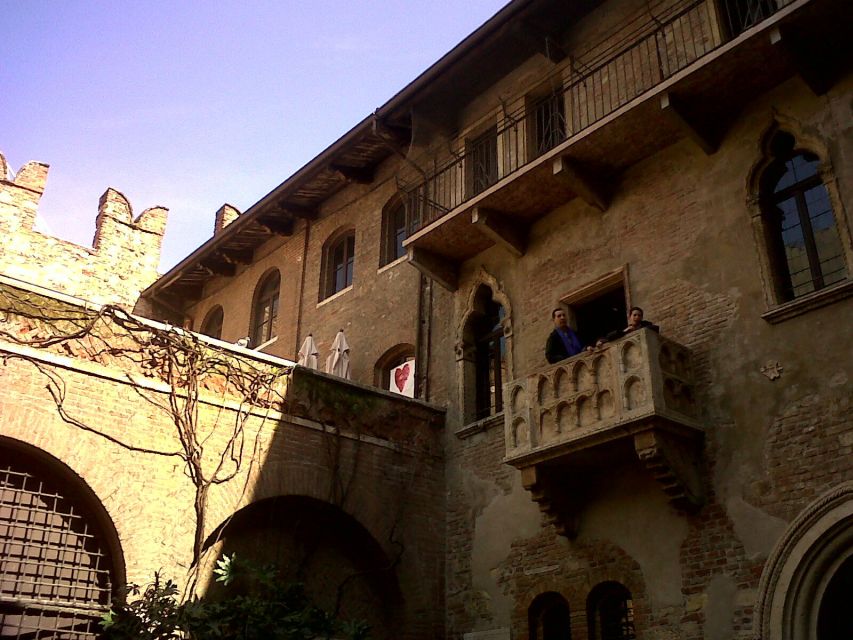
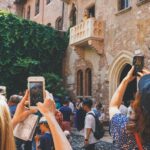
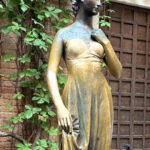
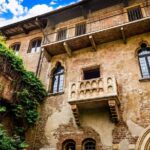
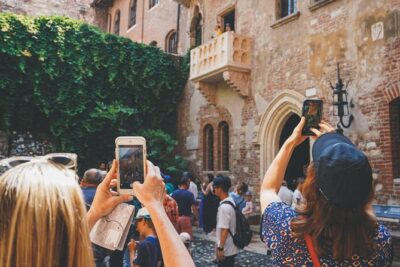
The tour finishes with a walk into the story: you’ll go down a narrow alleyway to stand in front of the house and balcony where Romeo declared his love for Juliet, according to Shakespeare’s tale. This isn’t just about the legend—it’s about the way Verona packages romance into the street plan.
What I like here is that the approach matters. Reaching the balcony from a tight alley feels different than seeing it from an open square. The guide’s context helps you understand why this spot is so powerful for visitors and why Verona leans into the myth so confidently.
If you’re thinking, yes, it’s a famous story—true. But in this walk, it lands after Roman walls, medieval tombs, and a fortress by the river, so it doesn’t feel random. It feels like one more way Verona tells you what it is: layered, theatrical, and human.
How a private 2-hour format changes the experience
A big part of the value is that this is a private group with a private guide. In 2 hours, a guide doesn’t have time to do long lectures, so they focus on the “you’re going to remember this” details: what each place meant, how it connects to the next stop, and what to notice when you look up or step sideways.
You also get flexibility in how you experience it. If your priority is the Roman amphitheater, you’ll get help framing that first stop. If your priority is the Scaliger period or the Juliet scene, you can spend more attention there without the tour feeling like a rigid checklist.
The downside of a short tour is obvious: you won’t cover everything in Verona. But for first-time visitors, that can be a feature. You’ll leave with a map in your head, so your later self-guided wandering becomes smarter.
Price and value: $335.32 per group up to 15
The price is $335.32 per group up to 15, for 2 hours with a private guide. That number can look steep if you’re thinking solo, but it becomes more reasonable when you’re sharing the cost with friends or family.
Here’s how I’d think about it: you’re paying for someone to (1) keep the route tight, (2) explain each stop’s meaning in short time windows, and (3) guide you through less obvious streets. If you’d otherwise spend time figuring out what to see and where to go, the guide saves mental effort as much as walking.
Also, note what’s not included: admissions to monuments. That can affect the final total if any of the stops require paid entry during your visit. If you want everything inside to be ticketed, plan for that cost. If you’re happy with exterior views and guided context, you’ll likely feel the value more strongly.
What to bring (and the rules that affect your comfort)
Wear comfortable shoes. This is walking through old streets and along the river area, and you’ll want a shoe that handles uneven surfaces and quick changes in direction.
Bring your passport or ID card. The tour also mentions a face mask or protective covering, so it’s smart to carry one even if you think you won’t need it.
Two practical restrictions:
- No luggage or large bags
- No sleeveless shirts
Those aren’t just “rules for the sake of rules.” They affect what you can carry and what you feel comfortable wearing in the final alleyway and square stops.
Language and guide experience: German live tour
The live tour guide is listed as German. If you speak the language, great—you’ll likely get the full benefit of the guide’s storytelling and on-the-spot explanations.
If you don’t speak German, the tour still may be doable, but your experience will depend on how much you can catch from context and visuals. A private setup helps because you can ask a few targeted questions, but you shouldn’t assume full translation support.
Who this Verona walk suits best
I’d recommend this tour if you want a fast, high-impact overview without turning Verona into a marathon. It’s especially good for:
- First-timers who want Roman + medieval highlights in one loop
- Couples who want the Juliet moment with context, not just a quick stop
- Small groups who want a guide to shape the route and pace
It’s less ideal if you’re hoping for heavy monument interiors with lots of ticketed time. The tour is built around exterior landmarks and guided walking, plus a storyline that connects them.
One more accessibility note: the info says wheelchair accessible, but also says it’s not suitable for people with mobility impairments. That’s conflicting enough that you should contact Veronatours before booking to confirm what “accessible” means for this exact route and pace.
Should you book this Verona: Private 2-Hour Walking Tour?
Book it if you want a structured, story-driven walk through Verona’s key layers—Roman amphitheater, Roman gateway, major squares, river-and-fortress views, and the Juliet stop—without spending your whole trip figuring out directions. The private guide format is where you get the value: you’ll look at the same stone and squares, but with clearer meaning.
Skip or reconsider if you need a language you don’t speak, want lots of paid monument entry time, or have mobility needs that might not match the actual walking route. For everyone else, this is a smart way to get oriented fast and still feel like you saw the real Verona, not just the obvious highlights.
FAQ
How long is the Verona private walking tour?
The tour duration is 2 hours.
Is the tour private or shared?
It’s a private group tour.
What language is the live tour guide?
The live tour guide language is German.
Where do we meet, and where does the tour end?
Meet your guide at the statue of King Vittorio Emanuele II on a horse on Piazza Brà, Verona. The activity ends back at the meeting point.
What sights are included in the 2-hour walk?
You’ll see Piazza Brà (Roman amphitheater), Porta Borsari, Piazza Erbe, Piazza dei Signori (including Café Dante), the Palazzi Scaligeri and Scaliger Tombs, Castelvecchio and Ponte Scaligero (Castelvecchio Bridge), and the house and balcony connected to Romeo and Juliet.
What is included, and what is not included?
Included: a private guide. Not included: admissions to monuments.
Can I cancel for a full refund?
Yes. You can cancel up to 24 hours in advance for a full refund.
Is there a reserve and pay later option?
Yes. You can reserve now and pay later, which lets you book your spot without paying today.
Is the tour wheelchair accessible, and is it suitable for mobility impairments?
The tour is listed as wheelchair accessible, but it also notes it is not suitable for people with mobility impairments. Check with the provider to confirm it fits your specific needs.
What should I bring, and what are the restrictions?
Bring your passport or ID card, comfortable shoes, and a face mask or protective covering. Luggage or large bags are not allowed, and sleeveless shirts are not allowed.
More Verona Tours


More Verona Walking Tours


More Tour Reviews in Verona

Weighing up other options? More ways to spend a day in Verona and out on Lake Garda







Verona Walking Tours, compared.
 ★ 5.0History and Hidden Gems Guided Walking TourFrom $411,379 reviews
 ★ 4.9Small Group Guided Walking Tour with Arena TicketsFrom $81848 reviews
 ★ 4.9Classic and Hidden Gems Bike TourFrom $33577 reviews
 ★ 5.0Verona Highlights Walking Tour in Small-groupFrom $42493 reviews
 ★ 5.0Highlights and hidden gems Verona Bike TourFrom $47393 reviews
 ★ 5.0Verona walking tour:food, wine, legends, lunch/dinner & cable carFrom $123386 reviews
 ★ 5.0Verona All in one: Food Walking Tour, Lunch & WineFrom $114342 reviews
 ★ 5.0Verona Small Group Walking Tour with Cable Car and Arena TicketsFrom $71311 reviews
Browse the lists this tour appears in