
Reviewed · VERONA WALKING TOURS
Verona Classic Walking tour
Verona in a couple hours sounds tight, but this walking route is built for exactly that. I like how you hit major landmarks without getting lost in logistics, and I also like the storytelling angles that connect the Roman Arena, the Scaliger tombs, and Shakespeare’s Verona in one tidy loop. You’ll get a mobile ticket and an English-speaking guide, but you should know entry fees for some stops are not included.
Here’s the practical catch: while most tours run as planned, there has been at least one reported case of a guide not showing up at the meeting point. I’d still book if you’re comfortable with a quick plan B—just don’t arrive late and hope for the best.
In This Review
- Key Highlights Worth Your Time
- The Big Idea: A Fast Verona Intro That Stays Walkable
- Before You Go: What This Tour Includes (and What It Doesn’t)
- Stop 1: Arena di Verona and Why It Still Matters
- Stop 2: Piazza dei Signori and the Power of a Public Square
- Stop 3: Arche Scaligere and the Scaliger Tombs’ Gothic Detail
- Stop 4: Casa di Giulietta and Shakespeare’s Verona Angle
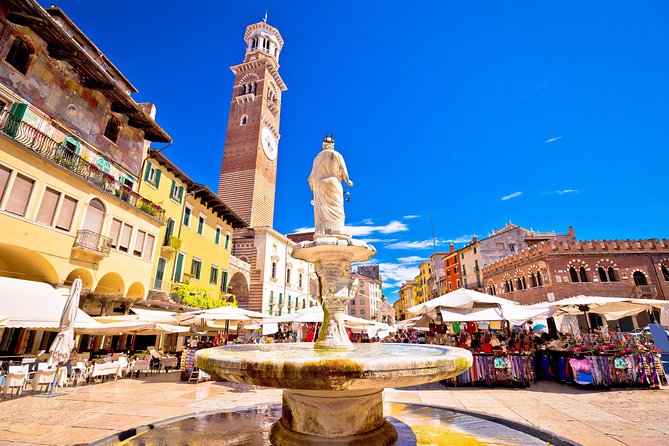
- Stop 5: Piazza delle Erbe and a Smart Place to Finish
- Group Size, Pace, and Who This Tour Fits Best
- Money Talk: Is $58.88 Good Value?
- A Practical Warning: When Things Go Wrong
- My Verdict: Should You Book the Verona Classic Walking Tour?
- FAQ
- What is the duration of the Verona Classic Walking Tour?
- Where does the tour start?
- Where does the tour end?
- What time does the tour start?
- Is the tour offered in English?
- How much does the tour cost?
- Are admission tickets included?
- What is the maximum group size?
- How does cancellation work?
- Are service animals allowed?
Key Highlights Worth Your Time
- Five big sights in ~2 hours so you get a proper Verona sampler fast
- Small group size (max 16) which keeps the walk less crowded
- Arena di Verona perspective on a Roman amphitheater still used today
- Scaliger Tombs (Arche Scaligere) Gothic detail in a focused stop
- Juliet’s House context tied to Shakespeare and the 1300s setting
- Piazza delle Erbe market square energy with weekday shopping possibilities
The Big Idea: A Fast Verona Intro That Stays Walkable
This Verona Classic Walking tour is designed like a good city orientation: you start in central Verona, you walk, you stop often, and you leave with a mental map you can reuse later. With an overall duration of about 2 hours and multiple short stops, it’s best for days when you want the highlights without spending half your holiday in line.
The price point—$58.88 per person—makes sense if you treat it as buying time and clarity. You’re not paying to access every site (tickets aren’t included). You’re paying for guided context at the exact places that usually feel confusing if you’re doing it alone.
Group size matters here. With a maximum of 16 people, you’re less likely to feel like you’re part of a moving crowd that can’t pause. That helps at stops like Piazza dei Signori and the Arche Scaligere, where the details are easy to miss if you’re trying to keep up.
More of the centro storico on foot with a guide.
Before You Go: What This Tour Includes (and What It Doesn’t)
A few basics make planning easier:
- The tour runs in English and uses a mobile ticket.
- It’s offered on a daily schedule with a start time of 10:00 am.
- You’ll be walking on foot between stops, with each stop lasting about 10 minutes.
- Admission tickets are not included at the stops listed as requiring them—most notably if you want entry to the Arena di Verona.
Also note the end point: the tour finishes at Piazza delle Erbe. That’s a smart place to land because it’s a natural hub for your next meal, coffee, or wander session.
If you’re sensitive to tight schedules, remember the structure is “short stop, key takeaway, keep moving.” This isn’t the kind of tour where you linger for an hour on one monument—so you’ll want to choose your personal follow-up sights after the walk.
Stop 1: Arena di Verona and Why It Still Matters
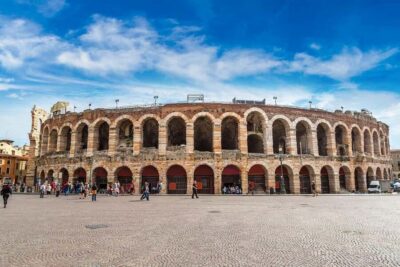
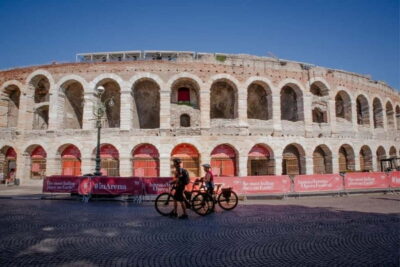
You begin at Via Teatro Ristori, 7, and your first major landmark is Arena di Verona. Built in the first century, it’s an open-air Roman amphitheater that still hosts events today, including opera and concerts. Seeing it first sets the tone for the whole tour: Verona isn’t just pretty streets. It has a deep, physical “layer” you can still stand inside.
What I like about starting here is the way it gives you context quickly. The scale hits fast—this place once seated around 30,000 people. Even if you don’t go inside on a given day, understanding the Arena’s continued use helps the building feel less like a museum object and more like a working cultural space.
One practical thing: admission is not included for the Arena stop. So if you specifically want to enter, plan to buy that separately. If you don’t, you can still get a strong payoff from the outside views and the guide’s explanation.
Stop 2: Piazza dei Signori and the Power of a Public Square
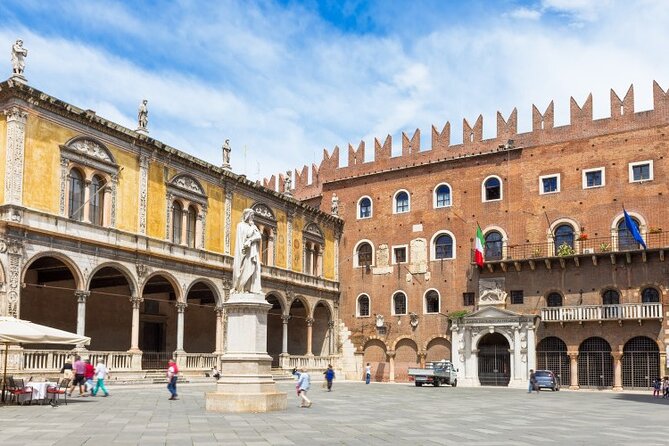
Next you move to Piazza dei Signori, one of Verona’s most recognizable plazas. You’ll see elegant Renaissance palazzi ringing the square, and the stop comes with a useful reminder: this is not a dead postcard. During the day, it still serves political and administrative functions.
Then there’s the human side. In the early evening, the square often becomes a hangout point for the university crowd—think meeting place, social energy, and people-watching. The guide helps you connect the architecture to the way the space is actually used now.
In terms of value, I find this stop works because it teaches you how to read a city square. When you understand what a place does in real life, you start noticing things on your own afterward: where people pause, where they flow, and how locals use space.
If you prefer quiet sightseeing, plan your timing. Squares can be lively, especially later in the day. This tour stop is short, so you’ll get the essentials without turning the plaza into your whole afternoon.
Stop 3: Arche Scaligere and the Scaliger Tombs’ Gothic Detail
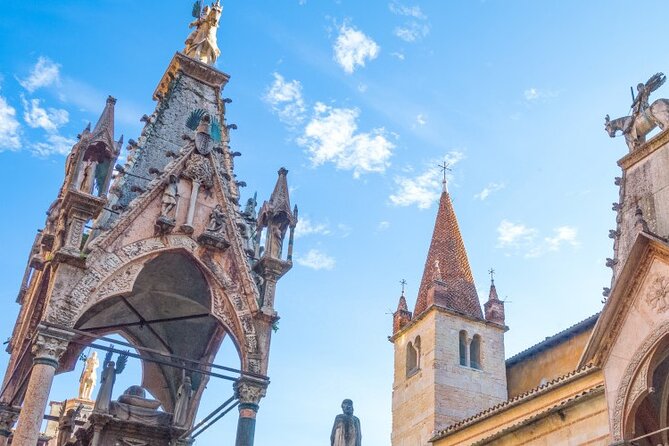
At Arche Scaligere, you’re looking at the funerary tombs that commemorate the Scaliger family, who ruled Verona in the 13th and 14th centuries. These monuments are often described as a strong example of Gothic art, and the guide’s focus on specifics helps you notice things you’d otherwise breeze past.
What I like here is the way the enclosure itself tells a story. The tombs sit behind wrought iron grilles decorated with a stair motif. That detail matters because it connects the design to the family name: della Scala means “of the stairs” in Italian.
This stop is also a nice change of pace after the open square earlier. You get a more contained, detail-driven experience. It’s the kind of place where you want to keep your eyes moving: scan the ironwork, then look at how the monuments sit within their space.
The only caution is time. With about 10 minutes here, you’re getting a guided highlight, not a long, slow study session. If you love tomb architecture, you’ll likely want to return later on your own with extra time.



Stop 4: Casa di Giulietta and Shakespeare’s Verona Angle
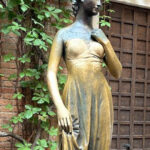
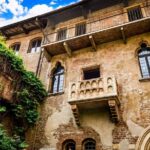
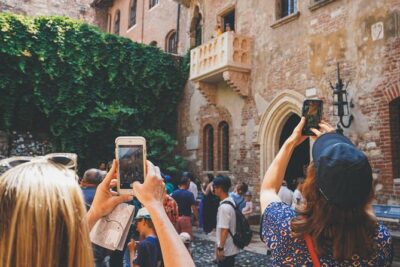
Then comes the stop most people bookmark in Verona: Casa di Giulietta. This is where the atmosphere shifts into romantic (and slightly tragic) storytelling. The tour frames Juliet’s story using Shakespeare’s inspiration, tied to Verona’s setting in the 1300s, and the themes of family rivalry and forbidden love.
Even if you’re not a hardcore literature person, this stop helps you understand why the name Verona and the name Juliet so often travel together. The guide’s job here is to put the “myth” into a real city context—so you’re not just chasing a famous legend, you’re learning how Verona sold itself through stories.
One practical note: admission ticket not included at this stop. If you want to go in and see the site as an attraction, you’ll need to plan for an entry fee separately. If you’re just after the context and a photo, you can still get value from the exterior and the guide’s explanation.
Also, set your expectations. This is a famous stop, so it can be crowded. The good news: the tour stop is timed, so you won’t get stuck here for hours. You can always return later if you want a deeper look.
Stop 5: Piazza delle Erbe and a Smart Place to Finish
The tour ends at Piazza delle Erbe (your final destination is in that square). This plaza has Roman roots—it originally served as a forum—and today it’s surrounded by cafes and some of Verona’s most impressive buildings. It feels like the city’s living room.
What makes this ending particularly useful is that the square is good for immediate follow-on plans. You finish here, so you’re not stranded far from food or a relaxing pause. After a 2-hour walk, that’s exactly what you want: a place where you can reset with an espresso and decide what to do next.
If your visit lands Monday to Friday, you may also catch shopping: there’s a fruit and vegetables market in the morning. That weekday detail matters if you like local textures—fresh produce, everyday vendors, and the sort of scene that makes a historic square feel current.
Group Size, Pace, and Who This Tour Fits Best
This is a walking tour, but it’s not a marathon. With about 2 hours total and short stops, it’s a good choice for:
- First-timers who want Verona highlights fast
- People who like guided context more than long museum time
- Visitors who want to build an itinerary for later (the walk helps you decide what’s worth extra hours)
You might not love it if you want slow travel. The stop lengths are tight, so there’s limited time for deep photos or long questions at each site. The value is in the route and the guide’s quick, targeted explanations.
For families, it can work since most travelers can participate and the group is capped at 16. For anyone who needs extra time at stops, you’ll want to consider arriving early to get situated and to keep the pace from feeling rushed.
Money Talk: Is $58.88 Good Value?
At $58.88 per person, this tour sits in the “mid-range guided sightseeing” zone. Here’s the honest way to judge value:
You’re paying for:
- An English guide
- A structured 2-hour route connecting key Verona sights
- Short stops at the most important locations so you don’t waste daylight guessing where to go first
You’re not paying for:
- Admission tickets at the listed stops (Arena di Verona is the big one to remember)
So if your goal is to enter multiple paid attractions, you’ll likely spend extra on top. If your goal is to get oriented, understand what you’re seeing, and then choose what to pay for later, the price feels more reasonable.
Also factor in the end location: finishing in Piazza delle Erbe means you can keep momentum. That reduces the friction of planning the rest of your day.
A Practical Warning: When Things Go Wrong
One reported issue in the available feedback involves a guide no-show at the meeting point, followed by a long wait before the tour was abandoned and a refund was issued. I can’t predict whether that will happen to you, but I can help you protect your day.
Do this:
- Arrive a few minutes early at Via Teatro Ristori, 7 so you’re not stuck at the back of the line of people waiting to start.
- If anything feels off, act quickly rather than assuming it will sort itself out.
- Keep your expectations flexible—especially on busy days when Verona has lots happening.
A good tour experience depends on a smooth start, and your best defense is showing up on time and staying alert.
My Verdict: Should You Book the Verona Classic Walking Tour?
If you want a fast, guided overview of Verona’s most famous stops—Roman Arena, Renaissance square, Scaliger Tombs, Juliet’s House, and Piazza delle Erbe—this tour is a solid way to get your bearings fast. The small group size and the focused stop lengths make it realistic for a short visit, and the route makes it easy to build the rest of your day afterward.
I’d skip it only if you hate tight timing or you’re determined to spend a long time inside paid attractions during the tour itself. If that’s your style, you might prefer a more flexible self-guided plan plus targeted paid entries.
If you’re okay with a structured walk and you arrive early, this is a worthwhile Verona primer at a price that’s fair for what you actually get: guided context at the heart of the city.
FAQ
What is the duration of the Verona Classic Walking Tour?
It runs for about 2 hours.
Where does the tour start?
The meeting point is Via Teatro Ristori, 7, 37122 Verona VR, Italy.
Where does the tour end?
The tour ends at Piazza delle Erbe (Piazza Erbe), 37121 Verona VR, Italy.
What time does the tour start?
The start time is 10:00 am.
Is the tour offered in English?
Yes, the tour is offered in English.
How much does the tour cost?
The price is $58.88 per person.
Are admission tickets included?
Admission tickets are not included for the stops listed as requiring them.
What is the maximum group size?
This tour/activity has a maximum of 16 travelers.
How does cancellation work?
Cancellation is free if you cancel up to 24 hours before the experience start time for a full refund.
Are service animals allowed?
Yes, service animals are allowed.
More Verona Tours

More Verona Walking Tours


More Tour Reviews in Verona
Weighing up other options? More ways to spend a day in Verona and out on Lake Garda







Verona Walking Tours, compared.
 ★ 5.0History and Hidden Gems Guided Walking TourFrom $411,379 reviews
 ★ 4.9Small Group Guided Walking Tour with Arena TicketsFrom $81848 reviews
 ★ 4.9Classic and Hidden Gems Bike TourFrom $33577 reviews
 ★ 5.0Verona Highlights Walking Tour in Small-groupFrom $42493 reviews
 ★ 5.0Highlights and hidden gems Verona Bike TourFrom $47393 reviews
 ★ 5.0Verona walking tour:food, wine, legends, lunch/dinner & cable carFrom $123386 reviews
 ★ 5.0Verona All in one: Food Walking Tour, Lunch & WineFrom $114342 reviews
 ★ 5.0Verona Small Group Walking Tour with Cable Car and Arena TicketsFrom $71311 reviews
Browse the lists this tour appears in