

Reviewed · VERONA WALKING TOURS
Verona: City Highlights Private Tour
Verona can feel like a movie set. This private 2.5-hour walk gives you big Roman drama at the Arena and the legend-loaded stops around Juliet’s house, with a licensed guide to tie it all together. I love that the route hits the city’s power centers—Roman, medieval, and Renaissance—in a logical order. One possible drawback: the timed highlight stops (like Juliet) can feel short if you want to linger longer than the tour schedule allows.
You’ll get a true private experience for up to 2 people, guided in English, with a mobile ticket provided. In particular, guides like Cecilia and Priscilla have been praised for being warm and engaging, which makes the walking stops more than just photo ops. Also, the tour can be adjusted to suit your needs, which is a big deal when you’re trying to balance seeing a lot with staying comfortable.
You start in the liveliest historic core near Piazza Bra and finish right by Casa di Giulietta, so you’re set up to keep exploring right after the tour without playing guess-the-direction for an hour. The whole point is to help you get your bearings fast and understand what you’re looking at while you’re still nearby.
In This Review
- Key highlights worth planning for
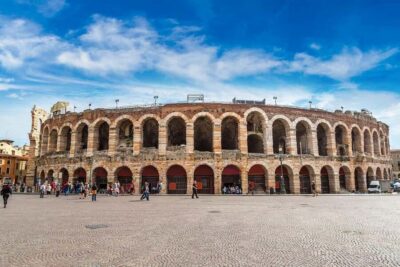
- Starting at Piazza Bra and the Arena’s 30,000-seat scale
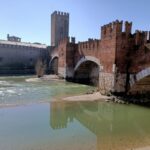
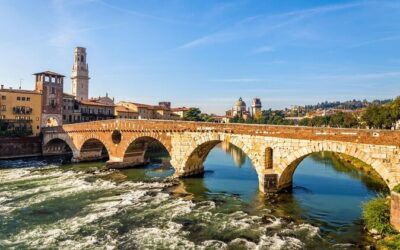
- Castelvecchio and Ponte Scaligero: medieval Verona’s military mindset
- The white-marble Roman arch that got dismantled, dumped, and rebuilt
- Piazza delle Erbe: where Roman forum energy never really left
- Arche Scaligere and Piazza dei Signori: tombs and Dante’s square
- Casa di Giulietta: Shakespeare legend with the Dal Cappello link
- Price and value: $279.98 for up to 2 (what you’re really paying for)
- What you can do after the tour (so it doesn’t end too fast)
- Should you book this Verona highlights private tour?
- FAQ
- Is this a private tour?
- How long is the Verona City Highlights private tour?
- What language is the tour offered in?
- Where do we meet, and where does the tour end?
- What’s included in the price?
- Is lunch included?
- Are admissions needed for the main stops?
- What are the cancellation rules?
- Is it suitable for most travelers, and is it accessible for animals?
Key highlights worth planning for

- Arena first, for instant context: You see why Verona’s Roman past matters before you wander into later eras.
- Scaliger power on display: Castelvecchio and Ponte Scaligero explain medieval Verona’s military brain.
- A story about an arch that was dismantled and rebuilt: Learn why a Roman monument ended up reassembled where it is today.
- Piazza delle Erbe as a living city stage: Markets, administration, and monuments all in one square.
- Arche Scaligere and Gothic funerary art: Scaliger tombs show craftsmanship and symbolism beyond the obvious.
- Juliet’s house, but with the real backstory: The Dal Cappello connection helps the Shakespeare myth make sense.
Starting at Piazza Bra and the Arena’s 30,000-seat scale

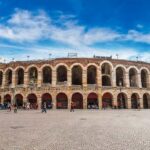
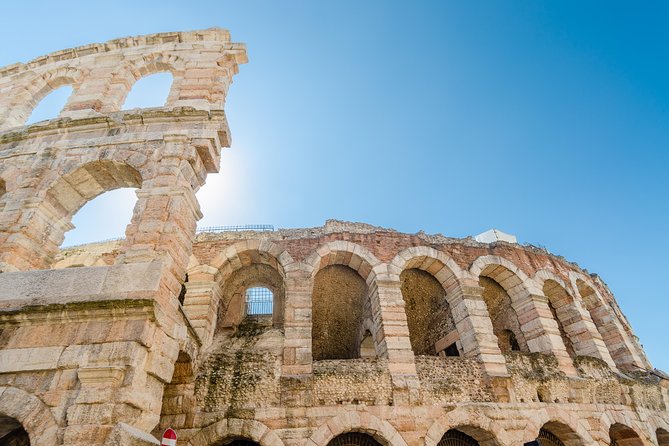
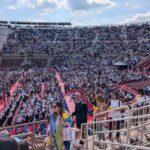
You kick off at Piazza Bra, and within minutes you’re staring at the Arena’s scale. It’s hard to overstate how dominant this Roman amphitheater is—about 140 meters long and 110 meters wide—with seating for roughly 30,000 people. Even today, its great acoustics are part of why it still connects Verona to music and entertainment.
I like starting here because it solves a common problem. If you visit Verona without context, you can get lost in pretty streets and miss how the city’s layout grew around major structures. Seeing the Arena early gives you a mental map: this was a public, noisy, Roman-era hub, not a quiet side street.
Practical tip: plan for photos, but also plan to look slowly. The guide can point out how the amphitheater anchors Piazza Bra and how that open square makes sense when you understand the Arena’s size.
This stop is also a reminder that Verona isn’t just charming buildings. It’s a layered city, and the Arena is the first big layer.
More of the centro storico on foot with a guide.
Castelvecchio and Ponte Scaligero: medieval Verona’s military mindset
Next you move into the medieval story, and the focus shifts from Roman spectacle to Scaliger power. The castle connected to this area—associated with the Scaliger dynasty—was the most important military construction of the period when this family ruled Verona. That’s not just trivia. It explains why the architecture feels built for control, not comfort.
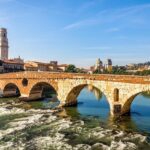
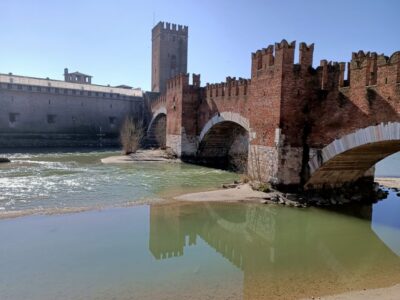
Then there’s Ponte Scaligero, the fortified bridge linking the castle area to the left bank of the Adige River. The bridge is famous for a structural superlative: when it was completed in 1356, it had the largest supporting arch span in the world. That kind of fact makes the bridge feel more than a crossing. It becomes evidence of ambition and engineering muscle.
Why this matters for you: Verona’s “pretty” corners can hide the fact that this town was once a fortress city. When you understand that, your eyes change. You start noticing defensive logic—where you’d watch, where you’d guard, and why certain routes were controlled.
A small consideration: if you’re expecting a long stop where you fully explore every angle, this is more of a guided walk-through with key stops. You’ll get the storyline, but you may still want to return later for deeper wandering.
The white-marble Roman arch that got dismantled, dumped, and rebuilt

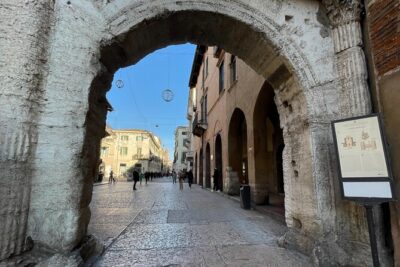
One of the most memorable moments in this route is the Roman arch story. Built in white veronese marble and dedicated to the Gavia family in the 1st century, it once stood in the middle of Corso Castelvecchio—connecting the city’s movement toward Rome.
Then history does what it often does: the French dismantled it because it was considered a traffic hindrance, and the pieces were dumped under the arches of the Arena. Later, in 1932, the monument was reassembled piece by piece where it stands now.
I love this stop because it turns a monument into a timeline you can read. You’re not just looking at a carved structure. You’re seeing how different eras treated old power—and how modern Verona decided to restore and reposition it.
For you, this is especially useful if you like “how did we get here?” moments. You’ll leave with a better sense of why the city’s layout looks the way it does today.
Piazza delle Erbe: where Roman forum energy never really left

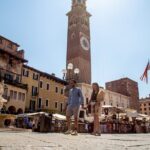
Piazza delle Erbe is one of those places where you understand instantly that time didn’t erase daily life—it just changed who ran the show. The square served as the Roman center of city life, and it kept that role for centuries as a meeting place, a market hub, and an administrative center.
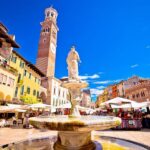
The monuments here are tied to rulers and changes in power, and you see them as part of one big outdoor classroom. In the middle sits the famous fountain, built using a Roman statue during Scaliger rule, later known as Madonna Verona. On one side you’ll spot the 14th-century Gardello Tower, and nearby is the Baroque Palazzo Maffei.
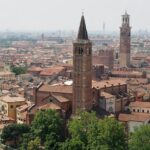
Up the chain of civic buildings, the courtyard of the Palazzo del Comune leads toward the Lamberti Tower, known for panoramic city views. Even if you don’t climb, the guide’s explanation helps you understand the square’s vertical importance: it wasn’t only where people gathered, but where authority could look out.
This is also a good stop to use your senses. You’re in a real square with continued city rhythm, not a museum hallway. That’s a big part of why the tour works as a “get oriented” experience.
If you want a little extra time, you might come back after the tour—this square is often at its best when you’re not moving on schedule.
Arche Scaligere and Piazza dei Signori: tombs and Dante’s square

The Arche Scaligere are funerary tombs that commemorate the Scaliger family from the 13th and 14th centuries. These monuments are a standout example of Gothic art in Verona, and the way they’re placed matters: the tombs sit within an enclosure of wrought iron grilles, decorated with a stair motif.
That stair motif connects to the family name. Della Scala means of the stairs, so the detail isn’t decorative fluff. It’s identity, carved into the setting where power met memory.
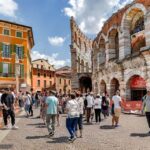
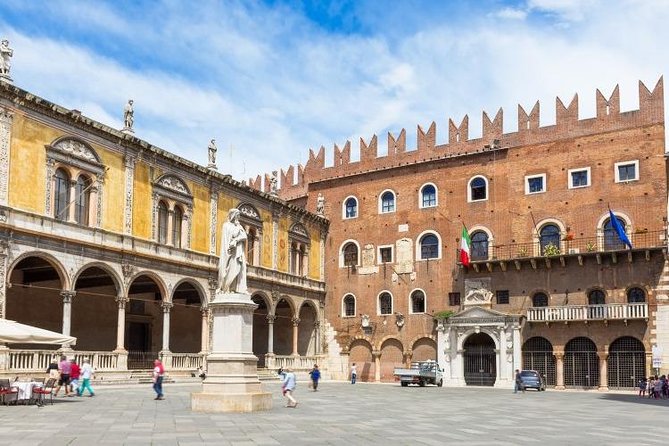
Then the tour shifts again into what feels like Verona’s refined living room: Piazza dei Signori. This square is also called Piazza Dante because of the statue of Dante Alighieri in the center. The buildings ringing the square include Renaissance landmarks such as Palazzo della Ragione, Palazzo del Capitano, Palazzo del Governo, the Loggia del Consiglio, and Domus Nova.
One useful detail here: during the day, the square still serves political and administrative functions. So it’s not just a stage for photos. It’s part of real city life. At the same time, the area is known for student and university crowd energy, which changes the vibe depending on when you arrive.
If you’re the kind of person who likes “architecture with a job,” this pairing is strong. Tombs explain how a ruling family wanted to be remembered. Piazza dei Signori shows how city governance and culture lived side by side.
More ways to take the measure of the city.


Casa di Giulietta: Shakespeare legend with the Dal Cappello link
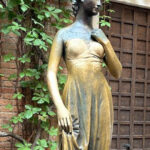
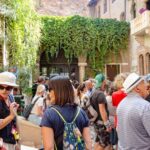
Casa di Giulietta is why most people book Verona in the first place. The connection to Shakespeare’s Romeo and Juliet is front and center, and it’s hard not to feel the pull when you’re standing there.
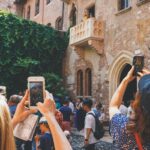
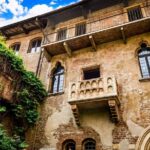
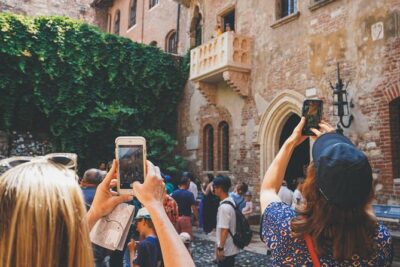
But what makes this stop genuinely satisfying is the backstory behind the belief. The building dates to the 12th century and was owned for a long time by the Dal Cappello family. Their coat-of-arms is carved into the keystone of the courtyard’s inner archway. Over time, the association between the name Cappello and Capuleti helped fuel the idea that the play drew from a real family rivalry and a tragic love story.
That context helps you enjoy the site without getting trapped in the fantasy. You can appreciate the myth and still understand how legends attach to places.
Time is the tradeoff. The Casa di Giulietta stop is brief in the tour flow, so you’ll get the key facts and a quick look, then you’re pointed toward Juliet’s Balcony area nearby. If your goal is to read every plaque slowly or linger for photos, plan to come back later the same day.
Price and value: $279.98 for up to 2 (what you’re really paying for)
At $279.98 per group for up to 2 people, you’re paying for a private guide rather than a seat on a big group bus. For two people, that can actually be strong value in a city like Verona where walking between eras takes time and where context makes a big difference.
What you’re buying with this price:
- A licensed guide in English, who can explain how the Arena, Scaliger sites, and civic squares connect.
- A route that covers a lot of recognizable Verona landmarks without turning the day into a scavenger hunt.
- The option to adjust the itinerary to fit what you care about.
You’re not paying for lunch or for added surprises that inflate the total, which keeps things clean. Also, some stops are marked as free admission within the tour flow (like Piazza delle Erbe, Arche Scaligere, Piazza dei Signori, and Casa di Giulietta), so the value isn’t just the guide—it’s also practical access to the highlights.
One caution for budget-minded travelers: if you’re traveling solo, this is still priced per group, so you might be paying the “private” premium rather than the per-person cost of a larger walking tour.
But if you want a smoother, more personal experience where you can ask questions and get the story attached to what you’re seeing, this is a pretty reasonable way to do Verona highlights without wasting your limited time.
What you can do after the tour (so it doesn’t end too fast)
Because the tour finishes near Juliet’s Balcony, you can keep momentum immediately. The best approach is to use the tour as your orientation layer, then decide what Verona part you want to return to in your own time.
Here’s the smart way to do that:
- If you loved the Roman scale, head back toward Piazza Bra and look at how the city opens around the Arena area.
- If medieval power grabbed you, plan a second pass through Castelvecchio surroundings, focusing on the bridge and river-side views.
- If you enjoyed civic squares, spend extra time in Piazza delle Erbe or Piazza dei Signori when the square feels more like a neighborhood scene.
I also like doing a short “repeat walk” the same day. You’ll notice things you missed the first time because the guide gave your brain a map and a set of names. That’s how the city starts to feel less like scenery and more like a place with a story you can follow.
Should you book this Verona highlights private tour?
If your goal is to see the main Verona landmarks—Arena, Scaliger sites, the big squares, and Casa di Giulietta—without spending your vacation flipping between guidebooks, you’ll likely be happy with this. The private format (up to 2), the English licensed guide, and the ability to adjust the route are exactly what you want when you’re trying to make two and a half hours count.
If you’re the type who needs long museum-style time at one site, know that several of the key stops are short highlight moments. In that case, consider booking for the orientation value, then plan a second visit to whichever spot pulls you in most.
FAQ
Is this a private tour?
Yes. It’s a private tour/activity, and only your group participates.
How long is the Verona City Highlights private tour?
It lasts about 2 hours 30 minutes.
What language is the tour offered in?
The tour is offered in English.
Where do we meet, and where does the tour end?
You start at Piazza Bra in Verona and the tour ends near Casa di Giulietta on Via Cappello, close to Juliet’s Balcony.
What’s included in the price?
A licensed guide is included. The tour also uses a mobile ticket.
Is lunch included?
No, lunch is not included.
Are admissions needed for the main stops?
The stops listed for Piazza delle Erbe, Arche Scaligere, Piazza dei Signori, and Casa di Giulietta are marked as admission ticket free within the tour details.
What are the cancellation rules?
Cancellation is free up to 24 hours in advance for a full refund.
Is it suitable for most travelers, and is it accessible for animals?
Most travelers can participate. Service animals are allowed, and the tour is near public transportation.
More Verona Tours


More Verona Walking Tours

More Tour Reviews in Verona
Weighing up other options? More ways to spend a day in Verona and out on Lake Garda





Verona Walking Tours, compared.
 ★ 5.0History and Hidden Gems Guided Walking TourFrom $411,379 reviews
 ★ 4.9Small Group Guided Walking Tour with Arena TicketsFrom $81848 reviews
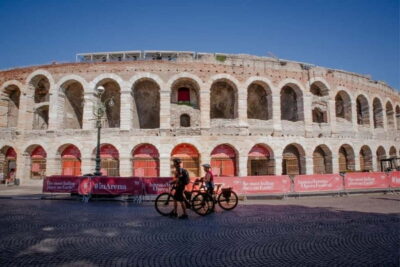 ★ 4.9Classic and Hidden Gems Bike TourFrom $33577 reviews
 ★ 5.0Verona Highlights Walking Tour in Small-groupFrom $42493 reviews
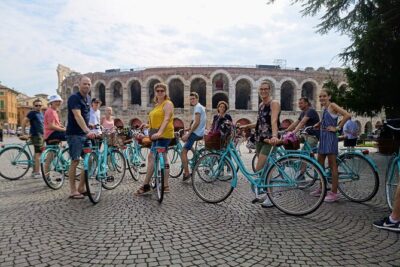 ★ 5.0Highlights and hidden gems Verona Bike TourFrom $47393 reviews
 ★ 5.0Verona walking tour:food, wine, legends, lunch/dinner & cable carFrom $123386 reviews
 ★ 5.0Verona All in one: Food Walking Tour, Lunch & WineFrom $114342 reviews
 ★ 5.0Verona Small Group Walking Tour with Cable Car and Arena TicketsFrom $71311 reviews
Browse the lists this tour appears in