
Reviewed · VERONA WALKING TOURS
Peschiera Walking Tour- Passeggiata nella storia
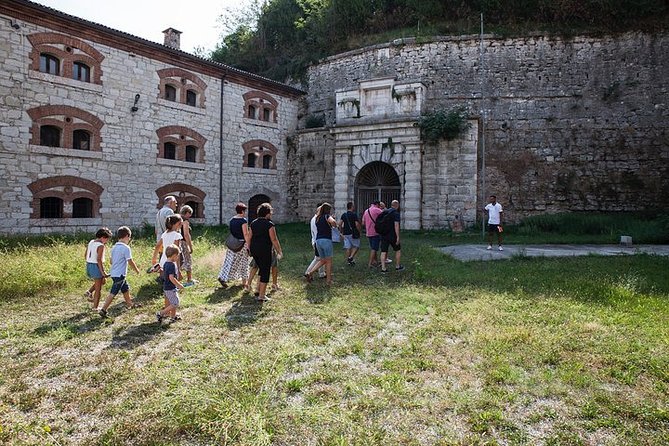
Fortress walls in a calmer Lake Garda town.
This guided UNESCO fortress walk turns Peschiera del Garda into your classroom, moving from Venetian ramparts to the Austrian-era military district (all within one easy outing). I like that it’s a short, practical stop—about 35 to 45 minutes—so you can fit it between lake strolls and other Verona-area plans. I also like that you get the story behind what you see: defensive design, shifting powers, and small surprises inside the walls. One consideration: it’s still a walking circuit inside the fortress, so on hot days the pace and exposure can feel like a lot.
You’ll start at the Tourism Peschiera Infopoint on Piazzale Cesare Betteloni and finish near Piazza Ferdinando di Savoia, which is handy if you want to keep exploring on your own right after. The route stays focused and photo-friendly, but don’t expect a long walking epic. This is a focused introduction—great if you want history without sacrificing your day.
In This Review
- Key things to know before you go
- Why Peschiera del Garda’s Fortress Makes a Great Quick Stop
- Entering the UNESCO Venetian Fortress: What You’ll See and Why It Matters
- The Austrian Empire Military District: When the Fort’s Story Changes
- Roman Ruins Inside the Walls: The Small Detail That Adds Big Perspective
- Palazzina storica Admission: Turning Talking Into Seeing
- Photos, Timing, and Pacing (35 to 45 Minutes) in Real Life
- Where You Start and Finish: A Route That Fits Into Your Day
- Price and Value: Is $51.59 Worth It?
- Who This Tour Suits Best (And Who Might Want Another Option)
- Weather and Day-Planning Reality
- Should You Book Passeggiata nella storia in Peschiera?
- FAQ
- FAQ
- How long is the walking tour?
- Where does the tour start?
- Where does the tour end?
- What’s included with the ticket?
- Is a mobile ticket used?
- How many people are in the group?
- Is the tour dependent on weather?
- Can I cancel for a full refund?
- Are service animals allowed?
- Is the meeting point near public transportation?
Key things to know before you go
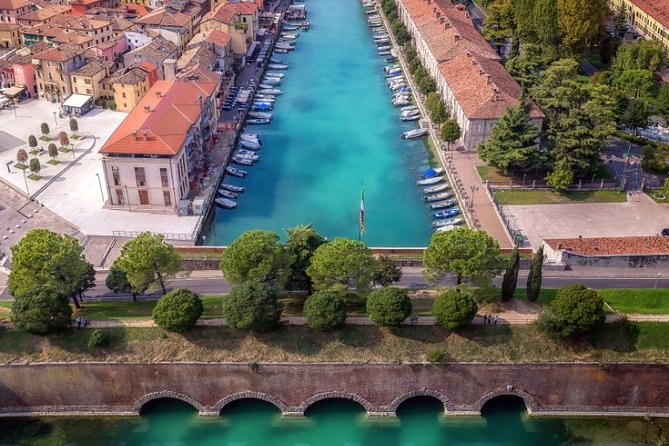
- UNESCO Venetian fortress focus: you’re walking the pentagonal defensive structure, not just the town streets
- Austrian Empire military district included: the story changes as the fortress changes hands
- Roman ruins inside the perimeter: you’ll see how layers of control overlap in one spot
- Entrance included for Palazzina storica: your ticket buys more than narration
- Small-group feel (up to 25): easier to hear the guide and keep track of the route
- Easy “pairing” tour: short enough to combine with other Lake Garda sightseeing
Why Peschiera del Garda’s Fortress Makes a Great Quick Stop
Peschiera del Garda is one of those Lake Garda towns that works well as a base. It has pretty water views, and it also has a defense-minded shape you can spot right away. The big win here is that you’re not just looking at walls—you’re walking them with context.
This walk is designed for people who want history that actually connects to what’s in front of you. You’ll move along the fortress areas where design matters: angles, ramparts, and the layout that helped keep an attacker outside. If your day includes buses, boats, or hopping between towns, this kind of time-efficient tour is a lifesaver. You get a “main course” of meaning without a multi-hour commitment.
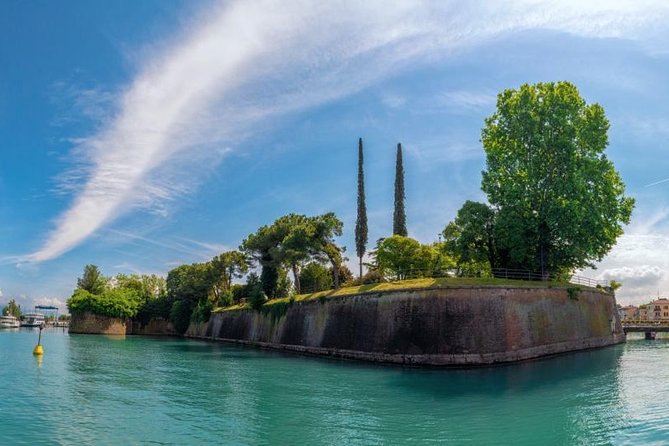
And because it’s inside a fortress, the setting gives you constant visual payback. Even when you’re standing still to hear a point, there’s usually something worth photographing: the river edge, the moat-like surroundings, and the geometric layout of defenses.
More of the centro storico on foot with a guide.
Entering the UNESCO Venetian Fortress: What You’ll See and Why It Matters
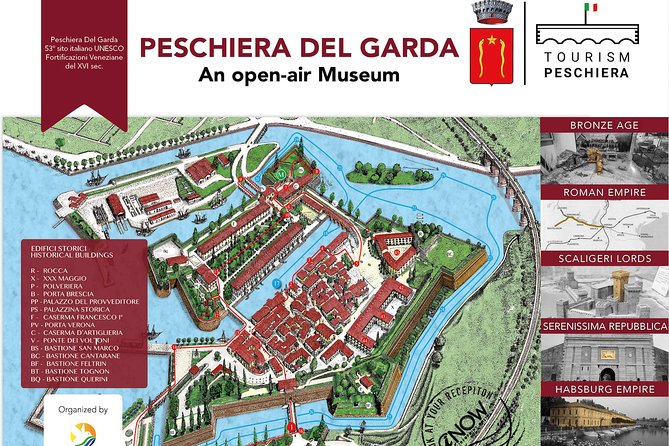
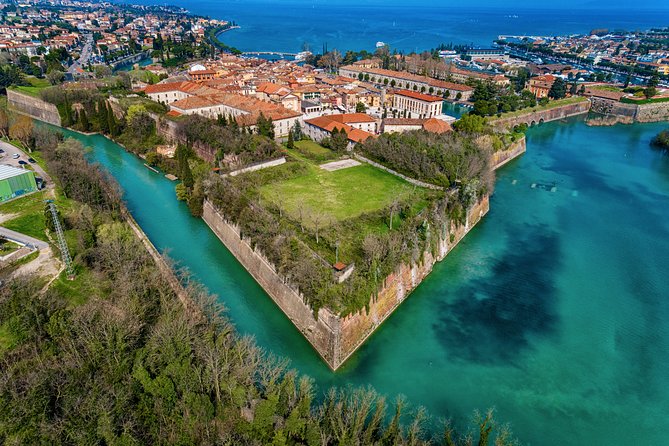
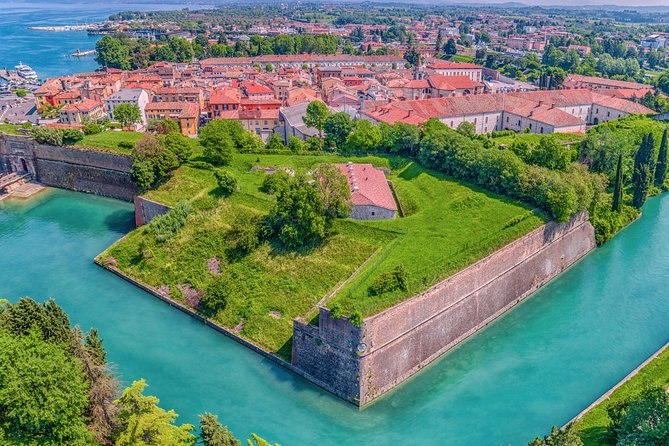
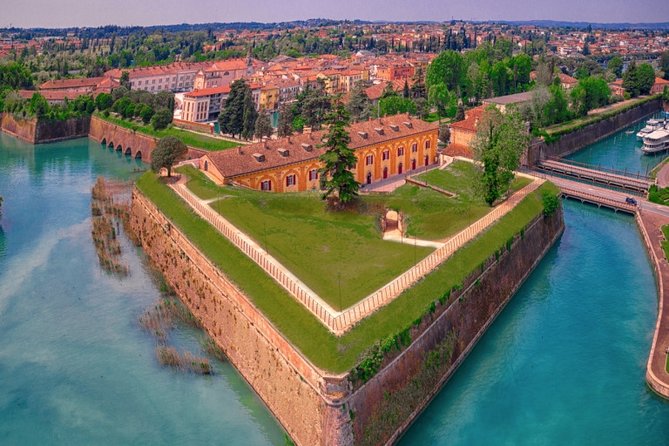
The core of the experience is a guided walk inside the pentagonal fortress. You’ll follow the line of the Venetian ramparts, where the protection isn’t random—it’s engineered. This matters because many European fortifications look similar from the outside. Up close, you can start to understand what you’re looking at: defensive thinking in stone, brickwork, and layout.
Expect the guide to connect the dots between structure and function. You’ll cover the defensive perimeter and the broader military design, then shift into areas where history changes tone. The pentagonal layout gives you a natural sense of how defenders planned to cover approaches and control movement around the perimeter.
This is also where the “short tour” format is a plus. In 35 to 45 minutes, you get oriented fast. You’re not wandering alone trying to figure out which wall goes with which story. You’ll leave with mental map—so if you want to return later, you’ll know where to look and why.
Practical note: the walk stays focused. If you’re the type who likes wandering for an hour with no agenda, this might feel brief. If you prefer clear structure and a fast education, it’s an ideal size.
The Austrian Empire Military District: When the Fort’s Story Changes
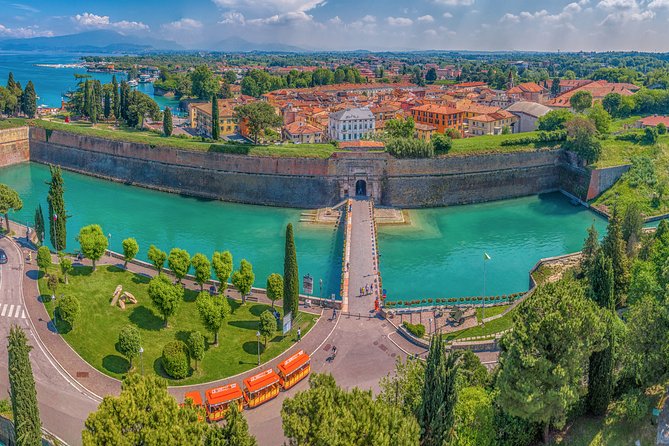
One of the strongest parts of this walk is the way it moves beyond the Venetian chapter. The fortress includes areas connected to the Austrian Empire era, which adds a second layer to what you’re seeing.
That shift is important because it helps you understand why the same walls can feel different in different time periods. Even when buildings and fortifications look static, the purpose and the approach to defense can change with new rulers and new priorities. The guide’s job here is to keep those transitions clear, so you don’t end up with “cool walls” but no narrative.
This also makes the tour more interesting than a straight rampart tour. It gives you a sense of continuity—how a strategic location keeps getting reused and reinterpreted. You’ll get practical context for what might otherwise seem like just another section of stone corridors.
Roman Ruins Inside the Walls: The Small Detail That Adds Big Perspective
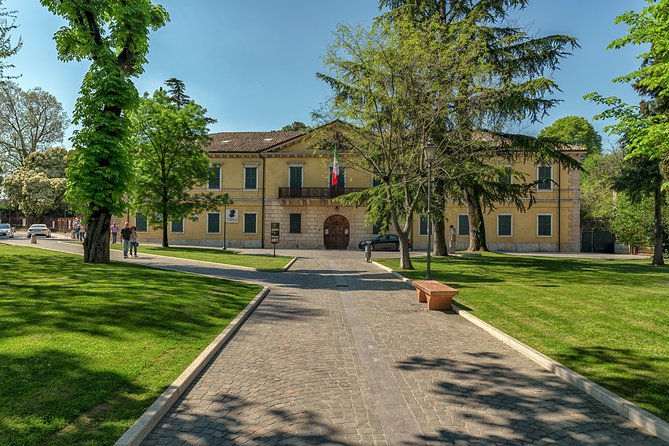
Another highlight is the stop around ancient Roman ruins located within the fortress area. This is the kind of detail that makes you slow down—because it reframes the fortress. The point isn’t that the fortress is Roman (it isn’t). The point is that the location mattered long before the later defensive era.
Seeing Roman remnants in the same overall fortified setting gives you a layered timeline. It helps you recognize that strategic sites—waterways, crossings, defensible positioning—get reused across centuries. Even if your tour time is short, this part adds emotional weight to the visit: you’re not only looking at medieval or early modern defenses, you’re seeing evidence of much older settlement priorities.
If you like architecture and want your photos to have context, this is where you’ll appreciate the guidance. You’ll understand what you’re pointing at, instead of just shooting random textures.
Palazzina storica Admission: Turning Talking Into Seeing
Your included ticket doesn’t stop at sightseeing. It also includes admission to the national monument Palazzina storica. That’s a big value add because it gives your ticket a “you entered something” moment, not only narration while standing outdoors.
Even if you’re not an architecture fanatic, this is the kind of stop that helps history click. Seeing interior or dedicated monument space can make the defensive story feel more human: how people lived and worked around a fort, what spaces were used, and how the fortress functioned beyond walls.
What makes this inclusion especially useful for your day planning is certainty. You know you’ll have both outdoor visuals and an indoor/monument component. If weather turns or sunlight fades, you still have a meaningful part of the experience to rely on.



Photos, Timing, and Pacing (35 to 45 Minutes) in Real Life
This tour is short, which is exactly why it works. You’ll spend about 35 minutes in the walking portion, with the whole experience around 35 to 45 minutes total. That means you can schedule it without clearing your entire morning or afternoon.
Here’s how I’d plan it: aim to do it earlier in the day if you can, especially in warm months. Fortress spaces can feel warm because you’re walking and standing in enclosed or reflective stone surroundings. When it’s hot, you’ll want your breaks to happen after, not during, the most exposed sections.
The route is also a good option for “photo people.” It’s structured enough that you’ll hit viewpoints rather than wandering for them. If you’re traveling with kids or someone who doesn’t want a long tour, a fixed 35–45 minutes is easier to manage.
The one drawback is that it’s not designed to be leisurely. It’s a guided walkthrough, so you’ll move from point to point. If you want to linger for 20 minutes at one spot, you’ll probably need to plan an independent return afterward.
Where You Start and Finish: A Route That Fits Into Your Day
You’ll meet at the Tourism Peschiera Infopoint at Piazzale Cesare Betteloni, 15, 37019 Peschiera del Garda. The walk ends at Piazza Ferdinando di Savoia.
That end point matters because it helps you keep momentum. After a guided tour, you usually have two moods: either you want to go back to streets and cafés, or you want to keep exploring with a new map in your head. Finishing at a public square makes both options easy.
It’s also useful that the experience is near public transportation. If you’re basing yourself in one town and bouncing to other areas, this helps keep your schedule realistic.
Price and Value: Is $51.59 Worth It?
At $51.59 per person, the price sits in the “paid but not crazy” category for a short guided experience. The value comes from three things working together:
- A guided walk through a UNESCO-listed site, not just self-guided roaming
- Included admission to a specific monument stop (Palazzina storica)
- A manageable duration that makes it easy to combine with the rest of your day
If you’re only interested in photos and don’t care about explanations, you might feel the cost. But if you want history tied to what you’re seeing, a guide can make the difference between walking past walls and actually understanding the plan behind them.
For people doing a busy Lake Garda itinerary, this is also a smart use of time. One good 45-minute guided stop can save you hours of figuring out where to go and what to look for on your own.
Who This Tour Suits Best (And Who Might Want Another Option)
This experience is a good match if you:
- want a short history stop that doesn’t swallow your day
- like architecture, fortifications, and how empires leave physical clues
- want structure and guidance inside a big site
- plan to keep exploring on your own right after
It may not be the best match if:
- you strongly prefer long, slow tours with lots of free time
- you need a very step-free or fully flexible walking route (one participant indicated it wasn’t suitable for physically impaired people, so think carefully about your own needs)
- you’re traveling strictly for town vibes and don’t care about monuments
Weather and Day-Planning Reality
This tour requires good weather. If it gets canceled due to poor conditions, you’ll be offered a different date or a full refund. That’s practical, because fortress paths can become unpleasant when conditions are bad.
Also, because it’s a walking experience, I’d treat midday plans with caution during hot seasons. Even if the tour is short, the sun and stone can add up. If you’re booking, pick a time when you can handle walking comfortably.
Should You Book Passeggiata nella storia in Peschiera?
I think you should book it if you want a high-signal, short guided walk that makes the fortress make sense. The combination of UNESCO ramparts, Austrian military-era areas, Roman ruins, and included entry to Palazzina storica is the kind of “all in one” value that’s hard to replicate with DIY wandering.
Hold off (or choose a different format) if you need a lot of time to linger, or if mobility needs make fortress walking a concern. For everyone else, it’s a smart way to see Peschiera at its most meaningful—without sacrificing your afternoon.
FAQ
FAQ
How long is the walking tour?
It runs about 35 to 45 minutes.
Where does the tour start?
The start point is the Tourism Peschiera Infopoint at Piazzale Cesare Betteloni, 15, 37019 Peschiera del Garda VR, Italy.
Where does the tour end?
It ends at Piazza Ferdinando di Savoia, 37019 Peschiera del Garda VR, Italy.
What’s included with the ticket?
You get a guided tour of the fortress and entrance to the national monument Palazzina storica.
Is a mobile ticket used?
Yes, it’s listed as a mobile ticket.
How many people are in the group?
The maximum group size is 25.
Is the tour dependent on weather?
Yes. It requires good weather. If it’s canceled due to poor weather, you’ll be offered a different date or a full refund.
Can I cancel for a full refund?
You can cancel up to 24 hours in advance for a full refund.
Are service animals allowed?
Yes, service animals are allowed.
Is the meeting point near public transportation?
Yes, it’s described as near public transportation.
More Verona Tours

More Verona Walking Tours



More Tour Reviews in Verona
Weighing up other options? More ways to spend a day in Verona and out on Lake Garda








Verona Walking Tours, compared.
 ★ 5.0History and Hidden Gems Guided Walking TourFrom $411,379 reviews
 ★ 4.9Small Group Guided Walking Tour with Arena TicketsFrom $81848 reviews
 ★ 4.9Classic and Hidden Gems Bike TourFrom $33577 reviews
 ★ 5.0Verona Highlights Walking Tour in Small-groupFrom $42493 reviews
 ★ 5.0Highlights and hidden gems Verona Bike TourFrom $47393 reviews
 ★ 5.0Verona walking tour:food, wine, legends, lunch/dinner & cable carFrom $123386 reviews
 ★ 5.0Verona All in one: Food Walking Tour, Lunch & WineFrom $114342 reviews
 ★ 5.0Verona Small Group Walking Tour with Cable Car and Arena TicketsFrom $71311 reviews
Browse the lists this tour appears in