
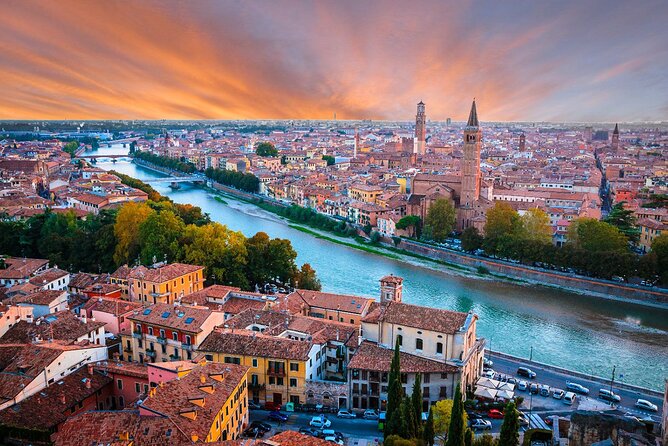
Reviewed · ARENA DI VERONA & OPERA
3 Hour Walking tour of Verona and Arena
Verona can be a lot at first—this route keeps it manageable. In just three hours, you’ll hit the Arena di Verona and some of the city’s most important medieval and Roman landmarks, with a guide keeping things clear. I like the small-group pace (up to 16) and the way the commentary stays balanced instead of info-dumping. The main downside is the price at $171.52, so it’s best if you truly want a licensed guide plus the Arena museum entry.
The walking plan moves through the center in a logical order, from the Castelvecchio fortress area to Roman gates, then into the squares, and finally ending at the Arena. Guides named in feedback—like Frank and Maddy—were praised for being knowledgeable without drowning you in dates, and for keeping it friendly and interactive (even offering practical tips on what to do next). One thing to consider: this is a shared tour, so you’re not getting a private, slow stroll.
Plan for real walking, real weather, and real sunshine. The tour keeps going in all conditions, so I recommend you bring water and anything you need to stay comfortable (sunscreen, hat, and an umbrella), and wear shoes made for uneven old-stone streets.
In This Review
- Quick hits before you go
- Why this 3-hour Verona and Arena walk works so well
- Castelvecchio: where Verona’s power shows up in stone
- Ponte Scaligero: a bridge that was built like a fortress
- Arch of the Gavi and Porta Borsari: Roman Verona at street level
- Piazza delle Erbe and Torre dei Lamberti: the city’s original meeting point
- Piazza dei Signori: Scaliger power and a name change into Dante
- Arena di Verona: the Roman amphitheater plus the museum ticket
- Price and value at $171.52 per person
- What to expect on the ground: walking comfort and timing
- Who this Verona walk suits best
- Should you book this 3-hour Verona and Arena walk?
- FAQ
- How long is the Verona and Arena walking tour?
- What language is the tour offered in?
- Is a ticket included for the Arena di Verona?
- Where does the tour start, and when?
- Is the tour shared? How big are the groups?
- Does the tour run in bad weather?
- What should I wear or bring for the walk?
Quick hits before you go
- Short, high-impact loop: big Roman and medieval sites packed into about three hours.
- Licensed English guide: commentary aimed at helping you understand what you’re seeing.
- Arena di Verona museum included: you’re not paying extra just to connect the dots.
- Most other stops are free on the plan: Castelvecchio, the bridge, Roman arch/gate, and the squares are listed with no admission charge.
- Mostly level walking: the route is designed for an easier rhythm rather than steep climbs.
- Small group size (max 16): enough attention from the guide without a chaotic crowd.
Why this 3-hour Verona and Arena walk works so well
If you only have a morning to get your bearings, this style of tour makes sense. You start and end at Via Teatro Ristori, 7, and you’re back at the same meeting point when you finish. With a start time of 10:00 am, it also gives you the rest of the day for lunch and wandering on your own.
I like that the itinerary feels like a clean “spine” through the center. You begin at Castelvecchio, cross the Ponte Scaligero area, then move toward Roman-era Verona with the Arch of the Gavi and Porta Borsari. After that, it opens into the civic life of the city—Piazza delle Erbe, the Lamberti Tower, and Piazza dei Signori—before ending at the Arena.
The pace matters here because it’s shared and designed for a group that can keep moving. Feedback praising guides like Frank and Maddy points to a steady rhythm: enough time to look around, and enough explanation to make the places click. If you love travel with context but hate lecture mode, this is the kind of tour that usually lands well.
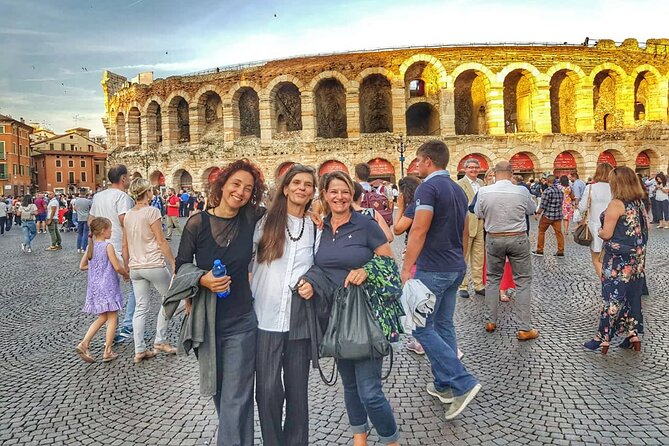
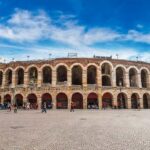
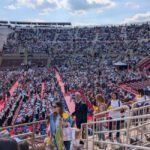
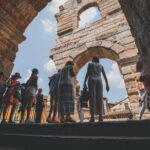
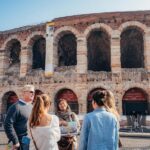
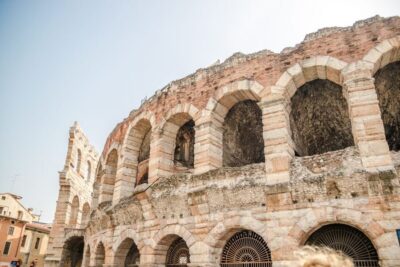
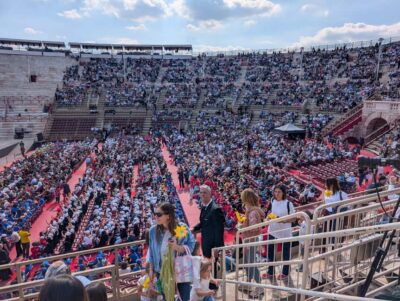
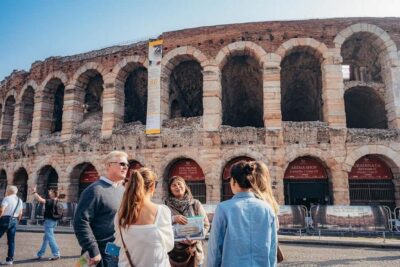
Back under the arches of the Roman arena, opera nights included.
Castelvecchio: where Verona’s power shows up in stone
Your first stop is Museo di Castelvecchio, tied to a medieval fortress originally known as the Castle of San Martino in Aquaro. Today it serves as the headquarters of the civic museum, and it’s described as the most important military monument of the Scaliger Signoria. In plain terms: this is one of those places where the architecture tells you who ran Verona and how they defended it.
You’ll get about 25 minutes here, which is enough to take in the overall fortress look and understand why it’s such a major statement piece. Since the plan lists the admission as free for this stop, it’s a good “value moment” early in the walk. I’d use that time to notice the fortress context—this isn’t just an isolated building, it’s part of the historic defense system of the city.
A guide’s job at this point is making it understandable fast. In feedback, guides were singled out for keeping history readable and not overwhelming, which matters at Castelvecchio because there’s a lot to interpret if someone explains it well.
Ponte Scaligero: a bridge that was built like a fortress
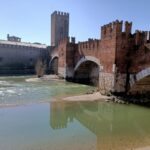
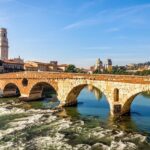
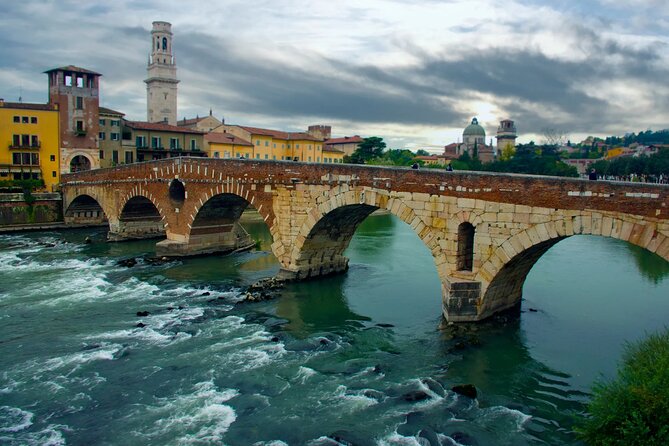
Next up is Ponte Scaligero, also called the Castelvecchio Bridge. It sits along the Adige River as part of the larger Castelvecchio fortress system, and it’s described as a daring and admirable work of Veronese medieval times. Even if you don’t go deep on engineering details, the takeaway is clear: this bridge wasn’t only about getting across—it had military purpose.
You’ll have about 25 minutes, which is ideal for a walking pause plus photos. I like treating this stop as a visual reset: you’re moving from one defensive structure to another, and now you see how the fortress connects to the river area. That connection helps you understand why Verona’s “old” looks so purposeful, not random.
Because the bridge is open to the public, there’s no admission pressure. It’s also a nice change of pace from museum walls and lets you feel how the city is laid out around water.
Arch of the Gavi and Porta Borsari: Roman Verona at street level
After the medieval fortress area, the tour brings you into Roman-era Verona with two stops.
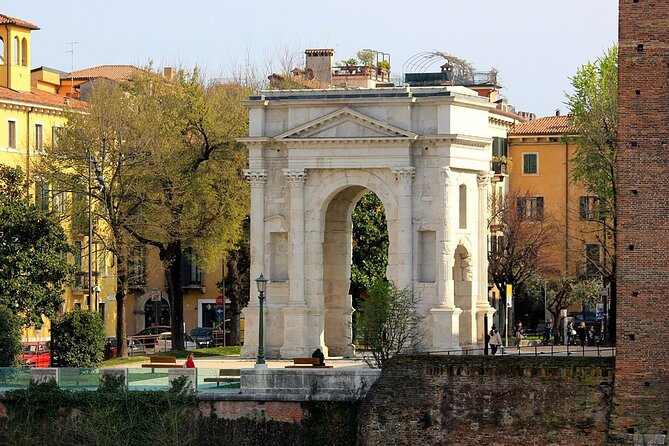
First is the Arco dei Gavi, an honorary arch tied to the Via Postumia, just outside the walls of the Roman city. It’s rare because it was built for private use, celebrating the Gavia family around the middle of the 1st century. This is the kind of monument that can look like a nice photo spot unless someone explains what it meant in Roman civic life. With a guide, you start seeing these Roman structures as messages in stone.
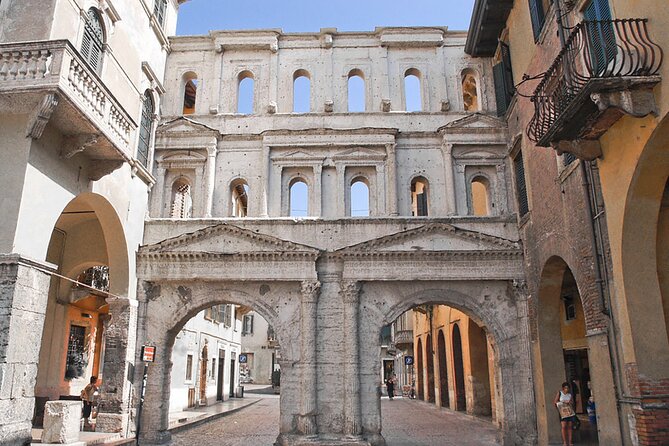
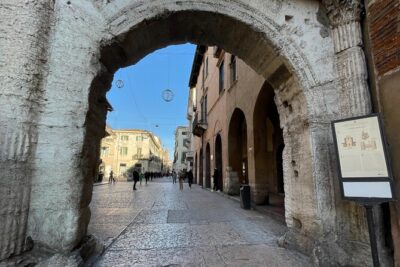
Then you move to Porta Borsari, a gate from the Roman walls of Verona. In antiquity it was known as Porta Iovia, linked to a nearby temple dedicated to Jupiter Lustralis. The big practical value of this stop is orientation: once you see a major gate like this, the rest of the Roman city logic feels more real.
Both of these stops come with about 25 minutes each, and the plan lists them as free-admission stops. That means you’re paying for the guiding and the context, not for a pile of extra entries. For me, it’s one of the smartest ways to “get Roman” in a short time.
Piazza delle Erbe and Torre dei Lamberti: the city’s original meeting point
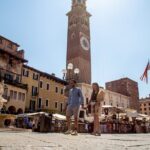
Now the tour shifts from defense and emperors to everyday life. Stop 5 is Piazza delle Erbe, Verona’s oldest square, located above the Roman Forum area. In Roman times, it served as the center of political and economic life, and over time the Roman buildings gave way to medieval structures. This layered feel is exactly why this square is such a good anchor stop—there’s a sense of continuity even as styles change.
The plan gives you about 20 minutes here. I’d use that time to look at the square as a whole, not only at one building. If you can picture it as a forum in one era and a civic market in another, the place stops being just scenery.
Then you walk a short distance to Torre dei Lamberti, a medieval tower near Piazza delle Erbe. You get another 20 minutes at this point, which is enough for orientation and a classic “spot the tower” moment to help you navigate the rest of your self-guided wandering. It’s also a handy way to connect the dots between the squares around the center.
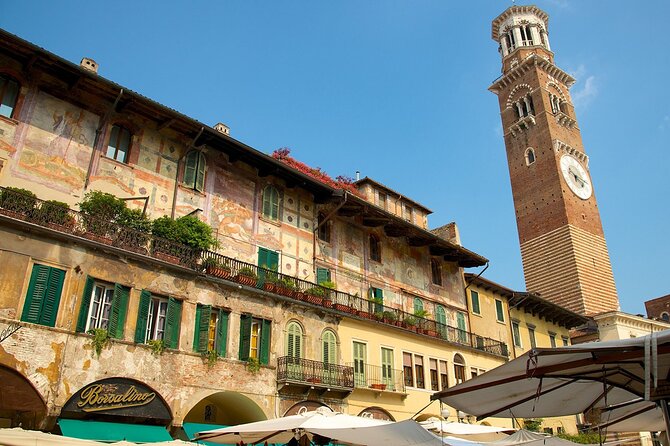
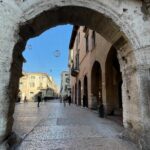
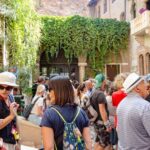
More of the centro storico on foot with a guide.

Piazza dei Signori: Scaliger power and a name change into Dante
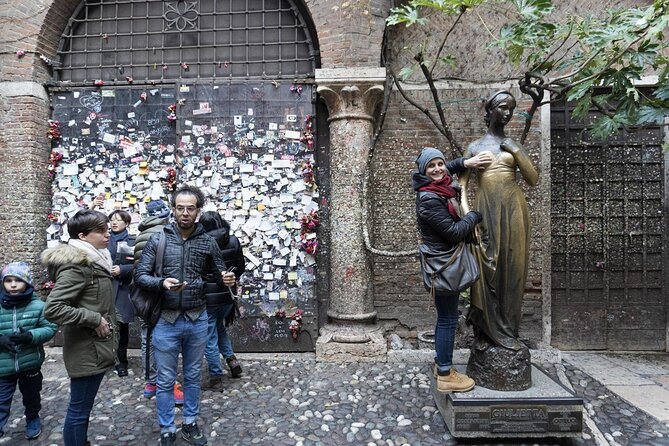
Stop 7 is Piazza dei Signori, also known as Piazza Dante. This square emerged in the Middle Ages alongside the development of Scaliger palaces and has carried political, administrative, and representational functions. Translation: it was built for showing authority and making decisions, not just for strolling.
This stop is framed by monumental buildings connected by arches and loggias. You’ll get about 20 minutes, and that’s a good window to appreciate the architecture without feeling rushed. I like this part of the walk because it turns the earlier defensive story into a civic story: Verona’s power shifts from fortress walls to public spaces where decisions were made.
If you like places that feel theatrical—where the architecture guides where you look—this square usually delivers. It’s one of those stops that makes your later evening wandering make more sense, because you start recognizing the style and the function of what you see.
Arena di Verona: the Roman amphitheater plus the museum ticket
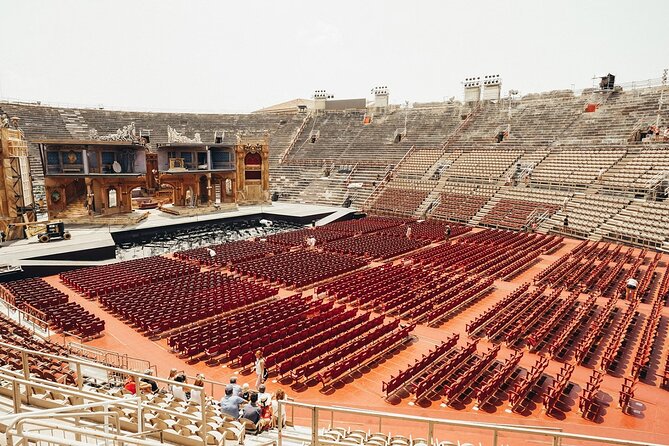
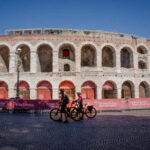
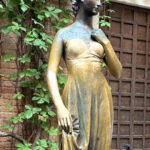
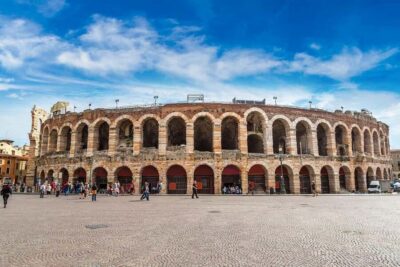
Finally, you reach Arena di Verona, a Roman amphitheater in Verona’s historic center. It’s presented as an icon of the city along with the famous Romeo and Juliet figures, which is a good reminder: even if you’re not a “fan of theatrical history,” the Arena itself is worth understanding on Roman terms.
You’ll spend about 20 minutes here, and the tour includes the Arena museum entrance ticket. That museum entry is where the guide can help you connect what you’re seeing to how the amphitheater worked and why it matters. Without that context, you can still enjoy the building, but with it, you tend to notice more details in less time.
I also like that the tour doesn’t end with a random stop. By finishing at the Arena, you end with a landmark most people recognize, then you can decide what you want to do next with your afternoon—stick around, take more photos, or continue walking nearby streets.
Price and value at $171.52 per person
Let’s talk money honestly. At $171.52 per person, this isn’t the cheapest way to see Verona. You’re paying for three things: a licensed English guide, a structured route that keeps you oriented, and the included Arena museum entry.
The smart value angle is that many stops on the plan are listed as free admission (Castelvecchio, Ponte Scaligero, the Arch of the Gavi, Porta Borsari, and the squares/tower). So the cost isn’t only going into “paying for tickets everywhere.” It’s going into guide time and interpretation, plus the one ticketed component that’s explicitly included.
That also explains the best fit. This tour tends to be a strong buy if you:
- want an organized walk through multiple eras (medieval and Roman)
- prefer a guide who keeps it balanced
- plan to visit the Arena museum anyway
- don’t want to spend your first morning sorting out where you are
If you already know the basics and you’re happy building your own route, you might feel the price more. But if you’re visiting for the first time and want the city to make sense quickly, this pricing starts to feel more reasonable.
What to expect on the ground: walking comfort and timing
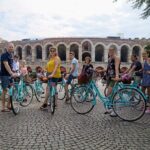
This tour is about three hours and is shared. With a maximum of 16 travelers, it usually stays in a manageable size for a guide to keep the group together. You’ll also be in and out of public spaces where it’s normal to stop for photos and explanation.
The tour continues in all weather conditions, so you should plan for Verona’s surprises. The practical checklist given for this kind of walk is straightforward: mineral water, sunscreen, a hat, and an umbrella. In cooler months, dress warmly. And if your route brings you near a church interior, the guidance says to carry a cape over bare shoulders during warmer months.
Also, wear comfortable shoes. Even when a route is mostly level, Verona’s center includes cobblestones and uneven pavement. If you show up in soft flats you regret, you’ll feel it before the Arena.
One timing tip that helps: start your day with hydration and a light plan for food afterward. The tour doesn’t include food or drink, so you’ll want to have an easy next step for lunch.
Who this Verona walk suits best
This is a great option if you want Verona highlights without turning your day into a scavenger hunt. It works well for first-timers, people visiting with limited time, and anyone who likes history but doesn’t want a heavy lecture style.
The strongest praise in feedback focused on how guides struck a good balance—informative, but not overwhelming—and how they were kind and interactive. If you like asking questions and getting clear answers, this format tends to deliver.
It can also be a good “starter tour” for families or mixed-age groups since the itinerary keeps the movement focused and the walking is described as mostly level. As always, comfortable shoes matter more than you’d think.
Should you book this 3-hour Verona and Arena walk?
Book it if you want a guided hit list of Verona’s medieval fortress sites, its key Roman markers, and the Arena, all tied together in one route. The included Arena museum ticket is a tangible value piece, and the pacing suits people who want to see a lot without rushing themselves to exhaustion.
Skip or reconsider if you’re the type who prefers to wander without structure, or if you already plan to tour the Arena museum on your own and you don’t care much about guided context. And if your schedule is tight, don’t stack tours back-to-back—there’s a helpful reminder not to book multiple tours the same day with very close schedules.
If you’re aiming for your first real day in Verona to feel organized, this walk is a smart way to get there.
FAQ
How long is the Verona and Arena walking tour?
It runs for about 3 hours.
What language is the tour offered in?
The tour is offered in English.
Is a ticket included for the Arena di Verona?
Yes. The tour includes an entrance ticket to the Arena museum.
Where does the tour start, and when?
It starts at Via Teatro Ristori, 7, 37122 Verona VR, Italy, at 10:00 am, and it ends back at the meeting point.
Is the tour shared? How big are the groups?
It is a shared tour with a maximum of 16 travelers.
Does the tour run in bad weather?
Yes, the tour continues in all weather conditions.
What should I wear or bring for the walk?
Wear comfortable shoes. Bring mineral water, sunscreen, a hat, and an umbrella. Dress warmly in colder temperatures, and carry a cape over bare shoulders if you enter a church in warmer months.
More Verona Walking Tours
More at the Arena di Verona
More Tour Reviews in Verona
Weighing up other options? More ways to spend a day in Verona and out on Lake Garda





Arena di Verona & Opera, compared.
 ★ 4.6Priority Access Arena Guided TourFrom $411,152 reviews
 ★ 4.9Small Group Guided Walking Tour with Arena TicketsFrom $81848 reviews
 ★ 4.6Arena di Verona Opera TicketFrom $55721 reviews
 ★ 5.0Verona Small Group Walking Tour with Cable Car and Arena TicketsFrom $71311 reviews
 ★ 4.5Verona Arena Skip-the-line TourFrom $47208 reviews
 ★ 4.8Highlights Walking Tour with Arena Priority AccessFrom $81201 reviews
 ★ 4.7From Lake Garda: Verona Arena Opera Ticket with TransferFrom $124155 reviews
 ★ 4.7Opera Concert in Verona Palace with ProseccoFrom $77149 reviews
Browse the lists this tour appears in