Reviewed · VERONA
Explore Verona in 60 minutes with a Local
Verona in 60 minutes sounds fast. It’s actually a smart way to grab the big sights—Roman scale, medieval walls, Shakespeare vibes, and skyline views—without burning a whole day. With a local guide and a group capped at 8, the pace stays human, and the route can shift based on weather and what you care about.
I especially like two things. First, you get a true guided “storyline” through the city, not just a list of stops. Second, the local leaves you with personalised recommendations for what to do next, based on your interests and how fast you walk.
One thing to consider: entry tickets for museums/monuments aren’t included, and that one-hour plan includes a climb. If you have mobility limits, this is not the best fit.
In This Review
- Key highlights you’ll feel right away
- A one-hour Verona sprint with real guidance
- Price and what you’re really paying for
- Meet at Chiesa di San Luca Evangelista (and start walking)
- Stop 1: The Roman amphitheater and why opera matters here
- Stop 2: A medieval fortress with art and historical artifacts
- Stop 3: Juliet’s House, balcony photos, and the story behind the statue
- Stop 4: Verona’s oldest square and the day-to-day pulse
- Stop 5: Climb the medieval tower for panoramic Verona
- Group size and pacing: why it works for a short trip
- The local touch: Andrea’s kind of guiding
- What’s included (and what to plan for)
- Who this tour suits best
- Practical tips to get more out of the hour
- Should you book this one-hour Verona with a local?
- FAQ
- How long is the Verona with a Local experience?
- How much does the tour cost?
- How big is the group?
- What language is the tour offered in?
- What’s included in the price?
- Are entry tickets included for museums, monuments, or transport?
- Where does the tour meet and end?
Key highlights you’ll feel right away
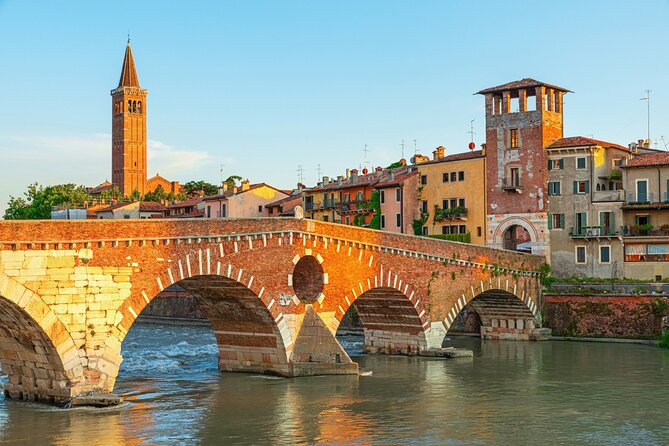
- Small group (up to 8) keeps questions and photo stops from turning into a traffic jam
- Roman amphitheater stop connects Verona to opera and the ancient world in one go
- Medieval fortress with art and artifacts helps you see how the city defended itself—and what it collected
- Juliet’s House balcony and statue gives you the Shakespeare landmark moment, up close
- Oldest square walk mixes historic buildings with market-stall energy and café breaks
- Tower climb for panoramas is the payoff at the end—views that make the walk worth it
A one-hour Verona sprint with real guidance
Verona is the kind of city that rewards slowing down. But sometimes you have limited time, and that’s where this one-hour format makes sense. You’re not trying to “do everything.” You’re getting the key scenes that explain Verona: Roman power, medieval survival, and the stories people still line up to see.
The structure is simple: a small group, a knowledgeable local guide, and five themed stops that build on each other. If you like cities that make sense—rather than just look pretty—this style works. And since the route can adapt to your pace and interests, you’re not stuck on a rigid script.
Still deciding how to fill your days in Verona? Here are a few more tours and tastings worth a look before you book.

Price and what you’re really paying for
At $119.72 per person for about an hour, you’re buying three things more than walking time:
- a local guide who can connect the dots between the sights
- a small group format (up to 8) so you can ask questions
- personalised suggestions after the walk so you can plan the rest of your day better
What’s not included is important. Entry tickets for museums/monuments and transport costs for any parts that require them are on you. That means your final cost depends on what you choose to pay for at each stop—especially if you want to go inside the fortress areas or take in tower access.
Still, for a short trip, paying for guidance usually saves you stress. You spend your limited time looking at the places, not figuring out the order.
Meet at Chiesa di San Luca Evangelista (and start walking)
The tour starts and ends at Chiesa di San Luca Evangelista, Corso Porta Nuova, 12, Verona. That’s a practical base because it’s near public transportation, so you can arrive without a long commute.
Plan to arrive a few minutes early. Even a one-hour walk needs a smooth start. Once you meet your group, you’ll keep moving—fast enough to feel productive, not so fast that you lose the plot.
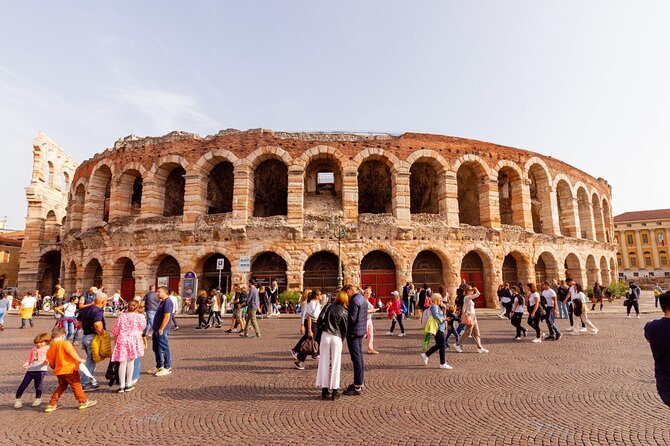
Stop 1: The Roman amphitheater and why opera matters here
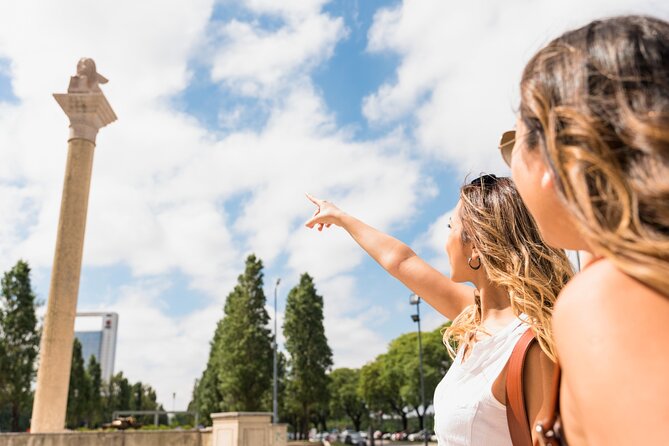
Your first major stop is the ancient Roman amphitheater—famous for its opera and for being a heavyweight piece of Verona’s past. This is a great opening because it frames the whole city. You’ll see scale first, then meaning.
What I like about starting with a Roman site is that it changes how you read the rest of the walk. The medieval buildings you’ll see next feel less random. They start to look like chapters that grew out of the same geography and historical momentum.
This stop is also a good test of weather. If it’s cold or rainy, you’ll still get value from an outdoor monument-based beginning. If it’s clear, you get the best photo angles right away.
Stop 2: A medieval fortress with art and historical artifacts
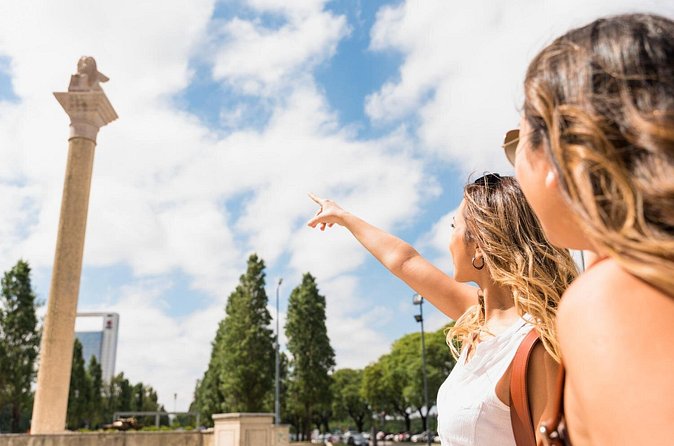
Next comes a medieval fortress housing an impressive collection of art and historical artifacts. Even if you only get part of the area’s story on this short walk, the point lands: Verona wasn’t just about romance and scenery. It was about defense, control, and power—then later, about preserving culture.
A fortress setting also changes your perspective. The architecture is functional, so when your guide explains what you’re looking at, you start seeing details you’d normally miss: defensive layouts, surviving sections, and the way buildings borrow strength from their position.
Potential drawback: because this stop is connected to museums/monuments, entry tickets may be required if you want the full internal experience. If you’re trying to keep costs down, you can still learn a lot from what you see without paying extra—just know that the deeper parts cost extra.



Stop 3: Juliet’s House, balcony photos, and the story behind the statue
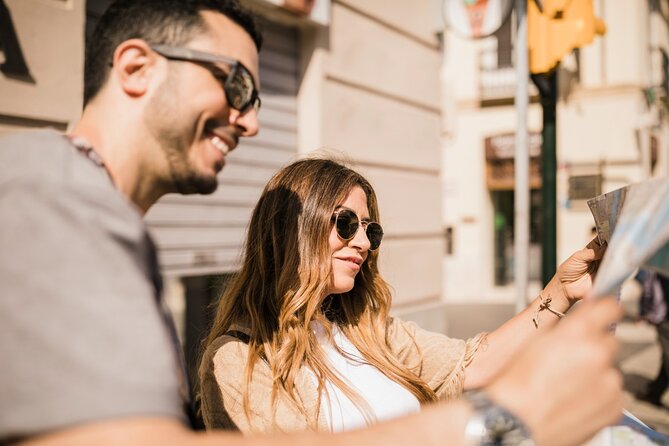
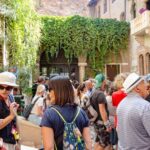
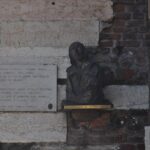
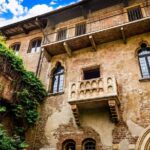
Then you hit Juliet’s House, the inspiration for Shakespeare’s famous play. You’ll get the iconic balcony moment and see the statue of Juliet. This stop is pure cultural theater in the best way: people come for the story, but what you learn from a local is how the landmark became a lasting symbol.
Here’s the practical tip: if your goal is photos, keep your expectations realistic. This is a famous stop with lots of attention, and the one-hour structure means you’ll spend enough time to see it, not to camp out for the perfect angle.
Still, this is one of the best places in Verona for understanding how fiction and place can stick together. Even if you’re not a Shakespeare superfan, you’ll leave with a clearer sense of why people care.
Stop 4: Verona’s oldest square and the day-to-day pulse
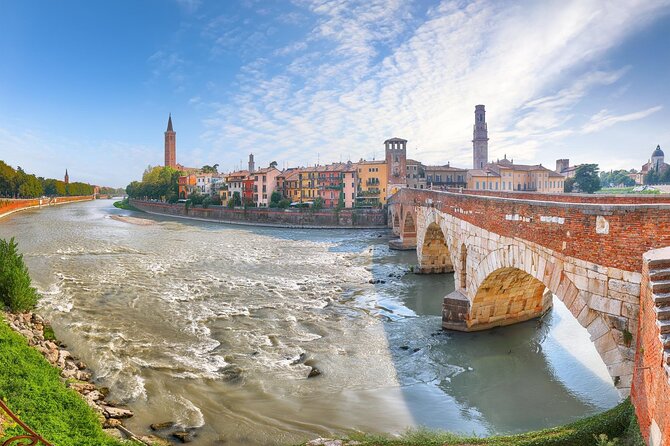
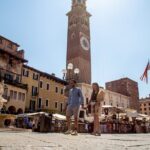
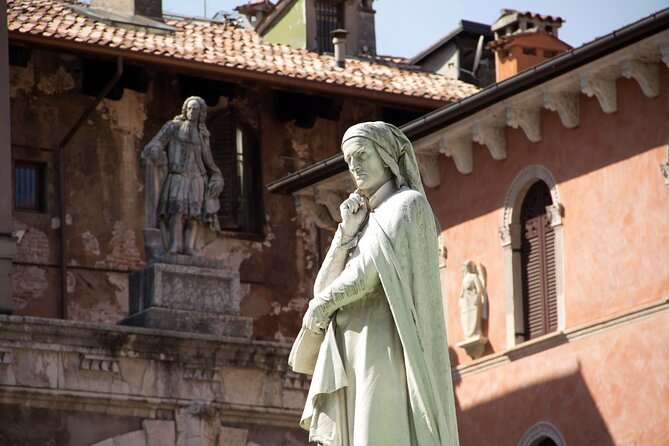
Your next stop is Verona’s oldest square, surrounded by historic buildings, market stalls, and charming cafés. This is where the city stops being an “attraction run” and becomes a lived-in place again.
I like this kind of stop because it tells you what Verona looks like when people actually use it: stalls, casual hangs, and the kind of café stops that turn a walk into a day. If you’re the type who enjoys planning your next meal, this is the moment to note where you’d like to return.
One consideration: because this area includes markets and cafes, you may want a few extra minutes for a break, but the group tour timing is fixed. If you’re craving a longer pause, ask your guide for a quick plan—like where to grab a drink after the walk.
Stop 5: Climb the medieval tower for panoramic Verona
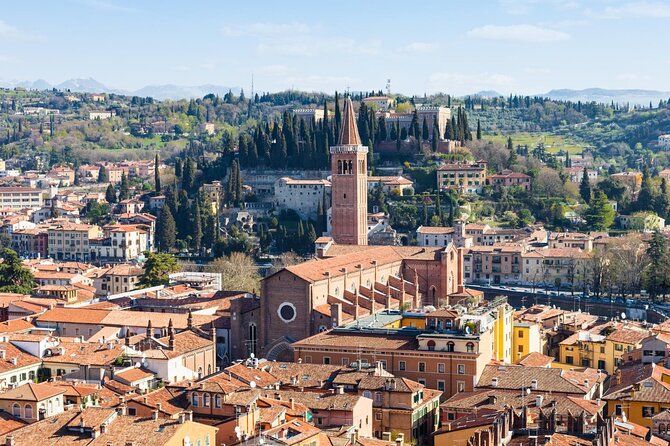
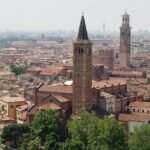
Finally, you climb a medieval tower for panoramic views of Verona’s skyline and the surrounding landscape. This is the payoff stop. After all the stories and buildings at street level, you get the city’s layout and geometry—how the areas connect, how the rooftops relate, and why Verona is shaped the way it is.
The climb is also a built-in filter. If you have trouble with stairs or steep steps, this won’t be comfortable. And remember: the tower access may involve entry fees depending on what’s required on-site. The tour itself is short, but the vertical effort is real enough to matter.
If you can handle the climb, it’s exactly the kind of ending that makes the whole hour feel like more than a checklist.
Group size and pacing: why it works for a short trip
This is a small group experience with a maximum of 8 travelers. That detail matters. In a big group, you’d spend most of your time waiting. In a small group, you can keep up, ask questions, and get recommendations that fit your pace.
Also, the itinerary adapts to travelers’ interests and walking pace, and stops may vary with weather. That means the walk isn’t just a rigid loop. Your guide is managing time in real life, not just on paper.
The local touch: Andrea’s kind of guiding
The best kind of guide doesn’t just tell facts. They make you see. One standout comment praised Andrea specifically, saying he was the perfect guide and so well-versed in Verona’s history. That’s exactly what I’d look for in a one-hour format: someone who can compress a city’s meaning without turning it into a lecture.
In practice, you’ll feel this as better explanations at each stop and more useful next-step suggestions. That’s the part that usually makes a paid walking tour feel worth it.
What’s included (and what to plan for)
Included:
- a local guide
- small group experience
- personalised recommendations
Not included:
- personal expenses
- entry tickets for public transportation, museums and monuments
So you should treat this as a guided highlights walk, with optional-cost add-ons depending on what you want to access fully at each stop. If you already know you want to pay for entry at certain places, budget that ahead of time.
Also note: it’s offered in English, and service animals are allowed. Most people can participate, but it’s not recommended for impaired mobility.
Who this tour suits best
This walk is a strong choice if:
- you want the highlights fast without feeling rushed in a huge group
- you like history explained in plain language, tied to real places
- you want guidance to plan what to do next after the walk
It’s also a good option when you’re using Verona as a stop on a bigger Italy trip and want to leave with a sense of the city rather than just photos.
If you want slow, deep museum time, this won’t replace that. It’s designed to point you in the right direction, not to fully cover every interior detail.
Practical tips to get more out of the hour
- Wear shoes you’re comfortable walking in. It’s a tour with multiple stops and a tower climb.
- Bring a small water bottle if you tend to get dry quickly.
- If you care about one specific stop (Juliet, Roman ruins, tower views), tell your guide early so they can manage the timing with your interests.
- Decide in advance if you’re likely to pay for any entrance tickets. Because the tour doesn’t include them, your total cost can change fast.
Should you book this one-hour Verona with a local?
Yes—if you want an efficient way to understand Verona’s main stories in a single stretch. The small group size, the focused stop sequence, and the personalised follow-up suggestions are the combo that makes this feel like more than sightseeing.
Book it especially if:
- you’re short on time
- you prefer guided context over wandering alone
- you like ending with views from above
Skip or think twice if:
- tower climbing is an issue for you
- you strongly want full museum interiors and long time in each site (because entry isn’t included and the tour is short)
If your goal is to leave Verona feeling oriented—Roman to medieval to literary to skyline—this is a solid use of an hour.
FAQ
How long is the Verona with a Local experience?
It runs for about 1 hour.
How much does the tour cost?
The price is $119.72 per person.
How big is the group?
It’s a small group with a maximum of 8 travelers.
What language is the tour offered in?
It’s offered in English.
What’s included in the price?
Included items are a knowledgeable local, a small group experience, and personalised recommendations.
Are entry tickets included for museums, monuments, or transport?
No. Entry tickets for public transportation, museums, and monuments are not included.
Where does the tour meet and end?
It meets and ends at Chiesa di San Luca Evangelista, Corso Porta Nuova, 12, 37122 Verona VR, Italy.