Reviewed · VERONA
Dante in Verona: From Inferno to Paradise
Dante in Verona turns the streets into a living reading. In just 1.5 hours, you’ll walk Verona with a Dante-focused expert and hear pieces connected to the Divine Comedy, including a short live acting moment. I particularly like how the guide connects Dante’s ideas to specific corners of the city, not just famous landmarks, and how the experience treats Dante as a real human traveling through Verona.
Two more reasons I think you’ll enjoy it: the pace is easy enough to actually look around, and the guide’s explanations make symbolism feel usable, even if you’re not deep in the text. One consideration: this is still a walking tour in the open air, so comfortable shoes matter, and it’s not listed as suitable for pregnant women.
In This Review
- Key Things I’d Book This For
- Verona as More Than a Backdrop
- The 1.5-Hour Route That Doesn’t Rush You
- Finding the Start at Piazza San Fermo
- Porta Leoni: A City-Story Opening Stop
- Verona Street Sightseeing: Where the Meaning Begins
- Juliet’s House as a Contrast Point
- Arche Scaligere and Lamberti Tower: Power in Stone
- Piazza dei Signori: Civic Space Meets Storytelling
- Ponte Pietra: Seeing Verona’s Crossing as a Finale Thread
- Duomo and the Finish at Cattedrale di Santa Maria Matricolare
- The Live Acting Moment and the Inferno-to-Paradise Arc
- Price and Value: Is $45 a Good Deal?
- Who Should Book This (and Who Might Skip It)
- Before You Go: Small Tips That Make It Better
- Should You Book Dante in Verona?
- FAQ
- How long is the Dante in Verona tour?
- How much does it cost?
- Where does the tour start?
- Where is the meeting point exactly?
- Where does the tour finish?
- What landmarks are included?
- What languages is the tour offered in?
- Is the tour wheelchair accessible?
- Is it suitable for pregnant women?
- What should I bring?
- Final Thought
Key Things I’d Book This For
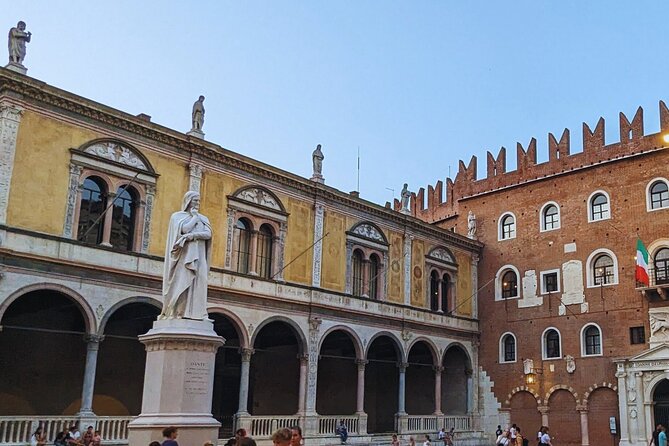
- Inferno, Purgatory, and Paradise pieces tied to where Dante was in Verona
- A live acting Dante moment that makes the story land fast
- Expert storytelling that connects 12th–13th century life and symbols to real sites
- Sightseeing stops that include major Verona anchors and Dante-adjacent places
- A pace that gives you time to ask questions and catch your breath in shaded spots
Verona as More Than a Backdrop

Verona isn’t presented as scenery here. It’s presented as context. Dante’s words were shaped by the world around him, and this tour leans into that by focusing on places linked to his time and the power structures of medieval Verona.
You’ll also get a clearer sense of why the city mattered to him. The Scaligeri family isn’t treated like a footnote; they’re part of the stage Dante moved through, the same family that built castles, arch bridges, palaces, and decorated street walls with frescos. When you see those kinds of traces in the city, the Divine Comedy stops feeling like something sealed in a book.
Still deciding how to fill your days in Verona? Here are a few more tours and tastings worth a look before you book.
The 1.5-Hour Route That Doesn’t Rush You
The tour is designed as a relaxed walking experience, priced at $45 per person for 1.5 hours. That length is a sweet spot: long enough to connect ideas to multiple sites, short enough that you’re not stuck marching all afternoon.
You’ll get a guided visit of key Verona landmarks, and the guide keeps it moving between points of interest without turning it into a speed-walk. Also, the tour runs in English and Italian, which matters if you want the story explained cleanly rather than pieced together from signage.
Logistically, it’s also fairly straightforward. It starts at Piazza San Fermo, and the finish is at Cattedrale di Santa Maria Matricolare. Along the way, the stops are short and focused, so you spend most of the time listening and looking rather than transferring between far-flung sights.
Finding the Start at Piazza San Fermo
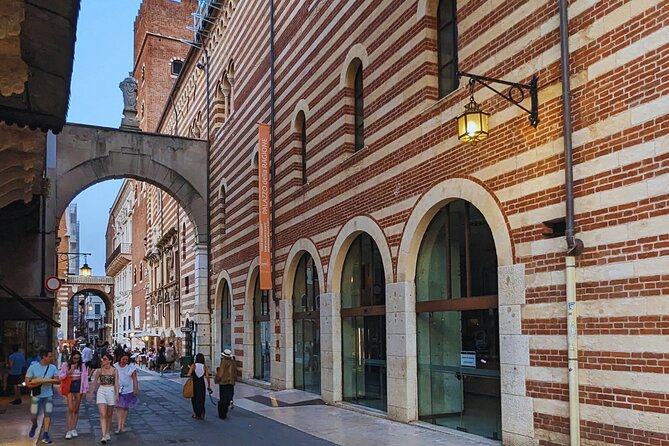
You meet at Piazza San Fermo. The practical tip is how to locate your guide: wait in front of the church along a little square with a bar on the corner.
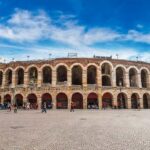
If you’re using the Arena area as your landmark, plan for about an 8-minute walk to the meeting point. That’s close enough to do without stress, but still far enough that I’d arrive a few minutes early so you can get oriented before the story begins.
The tour includes wheelchair access, so if you’re using a mobility aid, this one is listed as wheelchair accessible. For most people, the main “gear” need is simple: comfortable shoes.
Porta Leoni: A City-Story Opening Stop
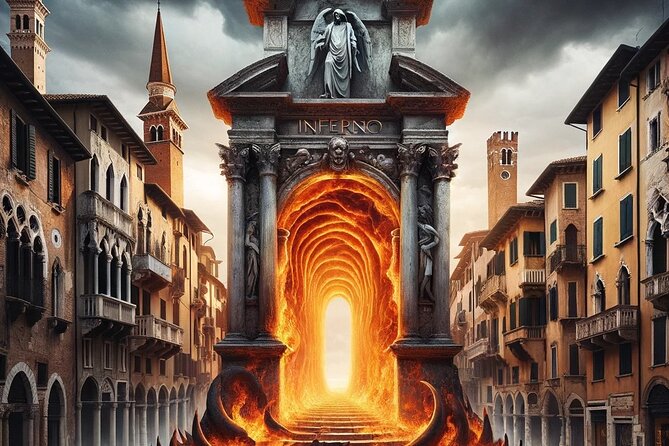
The first hop after Piazza San Fermo is Porta Leoni. You’ll spend around 10 minutes here, and the goal isn’t just to look at an old gate. The guide uses this kind of place to set the tone: Verona’s medieval layout and power centers are what you need to understand Dante’s Verona lens.
This stop works well if you like the feeling of grounding literature in geography. It’s an early moment where you start thinking about Dante as a traveler and poet in a living city, not a distant genius behind glass.
Verona Street Sightseeing: Where the Meaning Begins
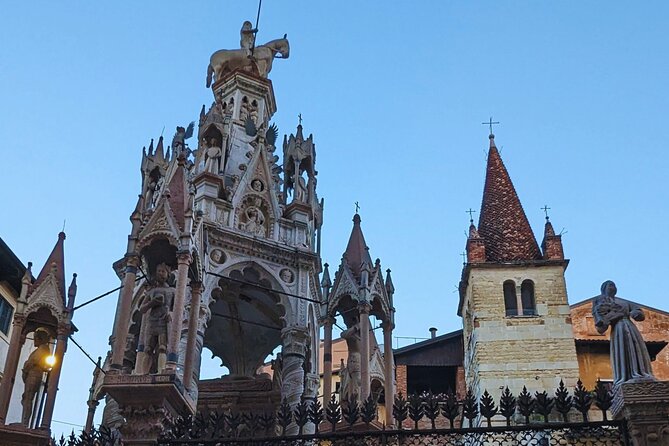
You’ll also do a short “Verona sightseeing” segment (about 10 minutes). This isn’t just passing time. The guide uses the surrounding streets to connect the themes of the Divine Comedy to the city’s real paths and civic spaces.
I like this approach because it trains your eye. After a few minutes, you start noticing how a city’s layout shapes movement, social life, and where people gather. That’s the kind of awareness that makes your remaining self-guided sightseeing better, even after the tour ends.


Juliet’s House as a Contrast Point
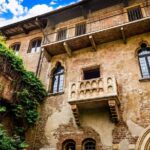
Next is Juliet’s House, with about 5 minutes here. That quick stop might seem like it’s all romance at first. But on this tour, it’s more of a contrast tool—how Verona later became associated with love stories, while Dante’s era belonged to different concerns: politics, philosophy, faith, and human choices.
Even if you’ve seen Juliet’s House before, the Dante framing changes how you look at it. Instead of treating it as a photo stop, you treat it as another layer of Verona’s identity.
Arche Scaligere and Lamberti Tower: Power in Stone

Then you move into the Arche Scaligere area (about 10 minutes). This is one of the tour’s key landmarks for understanding why Dante’s Verona wasn’t just poetic—it was political and social. The Scaligeri tombs connect directly to the family’s dominance, and the guide ties that to the world Dante wrote about.
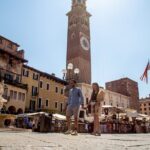
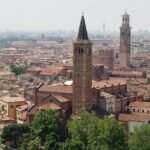
After that, there’s Lamberti Tower (around 5 minutes). It’s a shorter stop, but it helps you “read” the skyline and see how monumental families and civic pride show up in architecture. The tower also works as a quick reset point: stand, look around, and let the guide’s narrative stitch the city together.
If you enjoy symbolism, these stone monuments are useful. They give you physical anchors for the tour’s larger theme: Dante’s ideas aren’t floating abstractions. They connect to real people in real places.
Piazza dei Signori: Civic Space Meets Storytelling
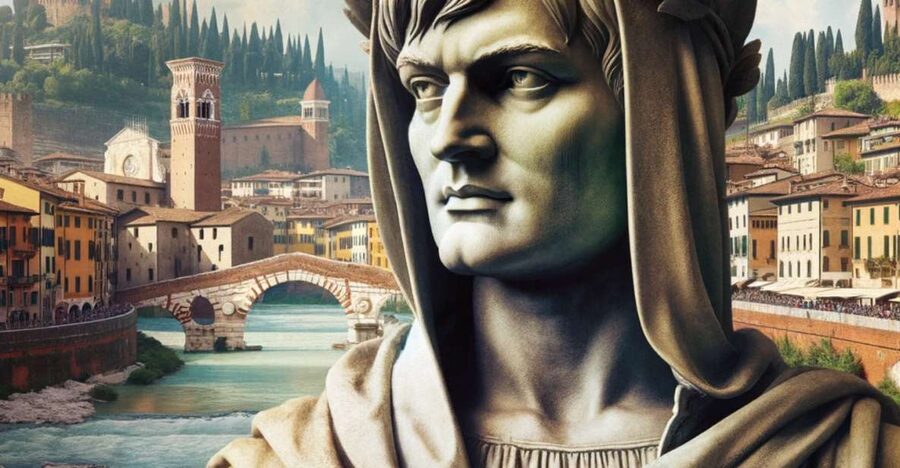
You’ll spend time at Piazza dei Signori (two segments: roughly 10 minutes and then 5 minutes). The split timing is smart. It gives the guide room to build and then reinforce the story, rather than cramming everything into a single rushed pass.
This is the kind of square where you can feel how public life works. It’s also a great setting for symbolism-based explanations because squares are where people gather, speak, argue, and watch. The guide uses that logic to tie the Divine Comedy’s themes—journey, consequence, moral choice—back to civic spaces in Verona.
One review detail I’d call out as a practical plus: guides have been praised for selecting stops with shade when possible. In summer, that’s not a luxury; it’s comfort that keeps the tour enjoyable instead of draining you.
Ponte Pietra: Seeing Verona’s Crossing as a Finale Thread
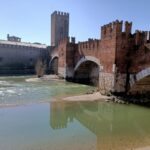
Next up is Ponte Pietra (about 5 minutes). This is where the tour starts to shift from “here’s Verona” to “here’s what Verona means in Dante’s world.”
The value of this stop is less about staring at the bridge and more about what the guide does with transitions. Bridges are natural story metaphors—crossing states, moving between worlds, leaving one reality behind for another. That’s exactly the vibe you want when the tour is also covering Inferno, Purgatory, and Paradise pieces.
Even with a short time allotment, it’s a memorable waypoint because it gives your mind a clear image: Dante’s journey as movement through different conditions.
Duomo and the Finish at Cattedrale di Santa Maria Matricolare
The tour includes a stop at Verona Cathedral (about 10 minutes). This is one of the major religious anchor points, and it matters because the Divine Comedy’s structure is deeply rooted in spiritual and moral frameworks. Standing in or near these churches helps you understand why Dante’s story doesn’t just describe places—it interprets them.
The tour finishes at Cattedrale di Santa Maria Matricolare. Finishing at a cathedral-like setting gives the whole walk a rounded feel: you start with a city gate and medieval cues, and end inside a sacred space where the themes land.
For practical planning, this end point is useful because you’ll likely be able to continue exploring nearby at your own pace, without needing to relocate across town.
The Live Acting Moment and the Inferno-to-Paradise Arc
A major part of the value here is the way the tour brings the Divine Comedy to life. You’re not just hearing a lecture. You’ll listen to pieces connected to Inferno, Purgatory, and Paradise, and you’ll also experience a live acting moment with Dante.
That mix changes how you remember the story. Reading Dante can feel dense. Hearing even short pieces performed or dramatized makes the language more human. And when the guide connects those moments to specific sites, the city becomes a memory tool.
I also like that the tour frames Dante as a traveler, poet, and human being. That matters because you’re not just collecting trivia; you’re learning how a person thinks and writes while moving through a real world.
Guides such as Giovanni and Leonardo have been singled out for strong storytelling skills and clear explanations that handle symbolism without drowning you. You might not control which guide you get, but the general focus on tying complex ideas to concrete places is the point.
Price and Value: Is $45 a Good Deal?
At $45 per person for 1.5 hours, you’re paying for three things at once: a Dante expert, guided landmark time, and a live acting component. That’s different from a basic walking tour that only tells you dates and locations.
Is it worth it? For me, it’s a yes if you want more meaning than what you get from wandering around with a map. Verona is crowded with sights, but this tour gives you a lens. Instead of asking What’s this? you start asking Why does this matter to Dante’s story?
If you’re the type who enjoys literature, philosophy, or symbolism, the price makes sense because the guide time is doing real interpretive work. If you only want quick photos and minimal talking, you may prefer a lighter self-guided itinerary.
Who Should Book This (and Who Might Skip It)
This tour is a great fit if:
- You want to see Verona through Dante’s world, not just famous attractions
- You’d like story-based learning you can carry into your rest of the trip
- You’re visiting for the first time and want a smart introduction to key sites
I’d be cautious if:
- You’re pregnant, since it’s not listed as suitable
- You have very limited tolerance for walking on uneven pavement, since it’s a city walk with multiple stops
For everyone else, the tour’s “short stop” format keeps it manageable. You get movement, story, and a clear endpoint.
Before You Go: Small Tips That Make It Better
Bring comfortable shoes. Even on a “relaxed” walking tour, your feet will do the work of turning the city into a story.
Plan to arrive at the meeting spot at Piazza San Fermo early enough to find the church entrance area by the nearby bar. From the Arena, allow about 8 minutes on foot.
If you prefer guided explanations in a specific language, note that the tour runs in English and Italian. That helps you pick a departure time that matches your comfort level.
Should You Book Dante in Verona?
I’d book this if you want Verona with a point of view. The Inferno to Paradise through-line plus the live acting element makes it memorable, and the guide’s ability to connect Dante’s symbolism to actual places is the kind of value that changes how you see the city afterward.
Skip it only if you don’t like talking during sightseeing, or if walking is a concern for you. Otherwise, this is one of those tours where you leave with a clearer mind and a city that feels more personal.
FAQ
How long is the Dante in Verona tour?
It lasts 1.5 hours.
How much does it cost?
The price is $45 per person.
Where does the tour start?
The tour starts at Piazza San Fermo.
Where is the meeting point exactly?
Meet in a small square along the road with a bar on the corner, and wait in front of the church. It’s about 8 minutes walking from the Arena.
Where does the tour finish?
The tour finishes at Cattedrale di Santa Maria Matricolare.
What landmarks are included?
Key stops include Duomo main church, Piazza Erbe square, Arche Scaligere tombs, and Ponte Pietra Arch Bridge.
What languages is the tour offered in?
The tour guide works in English and Italian.
Is the tour wheelchair accessible?
Yes, it’s listed as wheelchair accessible.
Is it suitable for pregnant women?
No. It’s listed as not suitable for pregnant women.
What should I bring?
Bring comfortable shoes for walking.
Final Thought
If Verona is on your list and Dante is even remotely interesting, this one is a smart use of 90 minutes. You’ll leave with both sights and story, instead of just photos.