Reviewed · VERONA
Dante in Verona: From Inferno to Paradise
Dante’s Verona is more than scenery. In 90 minutes, this English walking tour maps key Dante connections onto real corners of Verona, ending in the calm of Cattedrale di Santa Maria Matricolare.
I love the way the guide turns Dante’s Divine Comedy into street-level stories, with named guides like Leonardo and Giovanni bringing the places to life. I also like that the route keeps things manageable in a small group of up to 15, and the listed sight stops have free admission.
One thing to plan for: you’ll spend a good chunk of the time outdoors, so bring water and be ready for sun if you go in warmer months.
In This Review
- Key highlights worth clocking
- Why Dante fits Verona so well
- Price and practicalities for a 90-minute walk
- Start at Stradone S. Fermo and follow the story arc
- The Alighieri chapel church: Dante’s family connection in stone
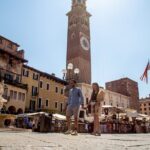
- A tower clock that used to be a family fortress
- Piazza dei Signori: Dante’s square, Dante’s statue, Inferno references
- Via Sottoriva: one of Verona’s oldest streets and a view over Torricelle
- Arche Scaligere: Gothic tombs, Cangrande, and why poets care about rulers
- Duomo di Verona (Santa Maria Matricolare): the Paradise-style ending
- What the best guides do (and why it matters to you)
- Who this walking tour suits best
- Should you book Dante in Verona: From Inferno to Paradise?
- FAQ
- How long is the Dante in Verona walking tour?
- How much does it cost?
- Is the tour in English?
- How big is the group?
- Where does the tour start and end?
- Is there a mobile ticket?
- Do I need to pay for admission at the stops?
- Is there free cancellation?
- Optional extras: what to do with your time before and after
Key highlights worth clocking
- Inferno-to-Paradise pacing: the story arc moves from tense, historical details toward a quieter finish at the Romanesque Duomo
- Dante’s places, not just plaques: you visit sites tied to the poet’s life, his family, and people he referenced
- Free-entry stops built into the route: the itinerary’s sights don’t require separate entry tickets
- Small group feel: with a max of 15 people, it’s easier to hear the guide and stay together
- Old streets plus big monuments: you get both the literary stops and the “walk it yourself” Verona texture
Why Dante fits Verona so well
Verona isn’t trying to be a theme park about Dante. This tour works because it treats the poet like a real person with ties to specific places, families, and power struggles.
You start in the kind of setting where Dante would have been around when the city was shaping political alliances. Then the walk grows outward into public spaces like Piazza dei Signori and monuments like the Arche Scaligere, where politics and poetry overlap. By the time you reach the Duomo, the theme shifts from conflict and references to something quieter—a kind of Paradise finish, not just a random church stop.
If you know Dante only from school, you’ll still get value here. The guide-style story linking Dante’s life to the Inferno and Paradise sides gives you a map for understanding what you’re seeing.
Still deciding how to fill your days in Verona? Here are a few more tours and tastings worth a look before you book.
Price and practicalities for a 90-minute walk

At $42.05 per person for about 1 hour 30 minutes, this is priced like a focused city walk, not a full-day tour with heavy add-ons. The value angle is that many of the scheduled stops list free admission for the sights you visit, so you’re mostly paying for the story, timing, and guiding.
A few practical notes help you plan:
- Small group: maximum 15 travelers, so it feels less like a cattle call and more like a guided stroll
- Language: offered in English
- Tickets: you use a mobile ticket
- Where it starts/ends: it begins at Stradone S. Fermo, 3 and ends at Cattedrale di Santa Maria Matricolare, Piazza Vescovado
- How far ahead to book: on average, people book about 10 days in advance, so it’s smart to reserve before you’re squeezed by schedules
Comfort tip: wear shoes that handle old stone streets. The pace is not described as a hike, but you are walking through Verona’s center and side lanes.
Start at Stradone S. Fermo and follow the story arc
The tour start is Stradone S. Fermo, 3. I like starting points like this because they help you orient fast: you’re already in the heart of the action, and you can see how the route gradually spreads out.
From the first minutes, the story theme is clear: Dante in Verona isn’t only about famous verses. It’s about the city as a living backdrop—who mattered, where people met, and how even architecture played a role in rivalry, safety, and status.
You’ll also be guided in how long each stop matters. The itinerary keeps each phase fairly tight—think about 10 to 15 minutes per major beat—so you won’t feel dragged to your next photo spot.
The Alighieri chapel church: Dante’s family connection in stone
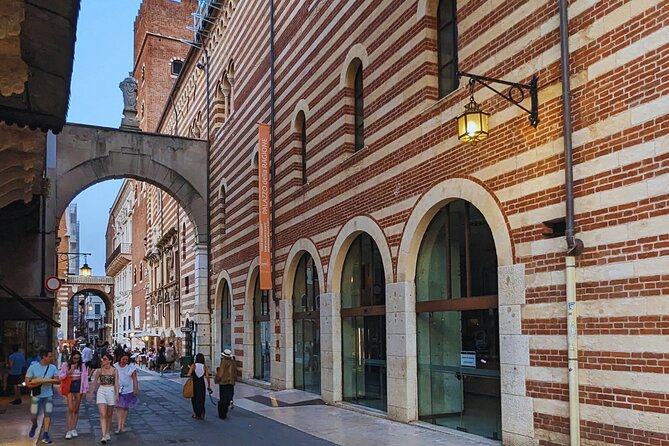
One of the earliest stops is a church where Dante reportedly used to hang out when it was built. Today, it contains a chapel built by his family, the Alighieri chapel.
This is the kind of stop that changes how you read the rest of the walk. Instead of treating Dante as a distant author, you get a sense of him as someone tied to a family legacy that still marks the building. It’s also a reminder that medieval cities weren’t just streets and views—they were places of memory.
What to watch for: this is a “pay attention to details” stop. If you drift into autopilot mode, you’ll miss the whole point. Listen for how the guide connects the physical space to the Dante story.
A tower clock that used to be a family fortress
Next comes a stop tied to a structure that looks like a tower clock now, but used to be a tower built to protect a noble family from rivals.
This matters because Verona’s story is not only literary. It’s political. When you see a defensive structure turned into something public-facing, you can almost feel the shift from fear and power struggles toward everyday life.
This part of the walk also sets you up for Piazza dei Signori. The square is where politics shows up in daylight. The tower stop is where politics started in darker, defensive ways.



Piazza dei Signori: Dante’s square, Dante’s statue, Inferno references
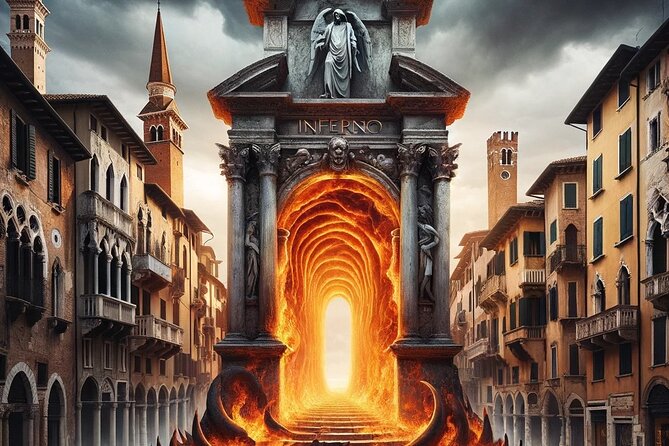
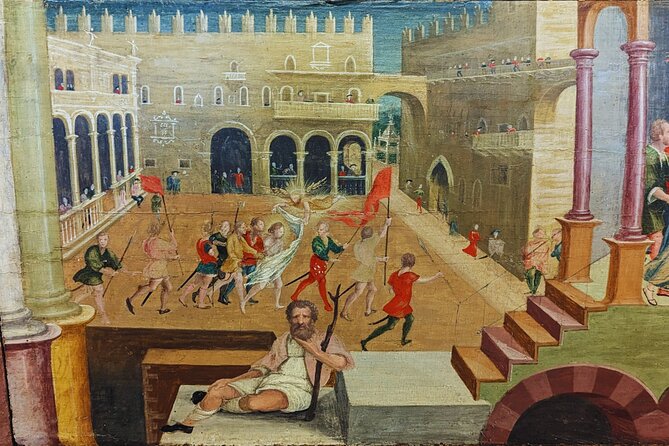
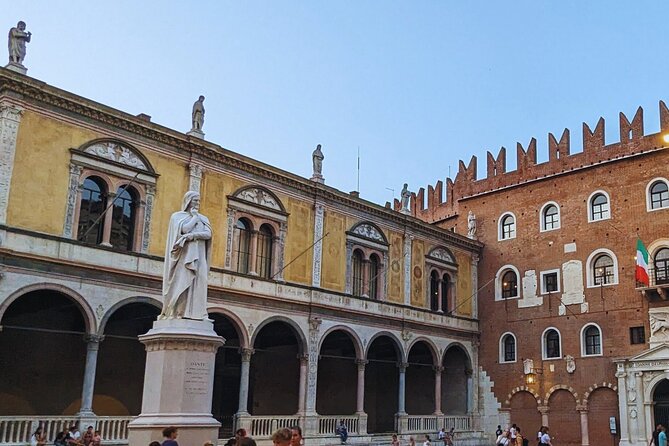
Then you step into Piazza dei Signori, one of Verona’s most important ancient squares. The guide talks about Dante Alighieri’s life here and points you toward unique cultural spots connected to the Inferno theme.
A big visual anchor is the statue of Dante in the square. Even if you’re not a Dante superfan, that statue gives you a focal point. It makes the walk feel intentional—like the city is guiding your eyes along the same trail Dante is guiding your imagination.
What makes Piazza dei Signori especially useful is the mix of roles it played. It wasn’t only a pretty place to pass through. It was described as a cultural and political center, and that context helps you understand why Dante’s references land where they do.
Practical timing: expect around 15 minutes here. That’s long enough to hear the story and glance around without burning the whole afternoon.
Via Sottoriva: one of Verona’s oldest streets and a view over Torricelle
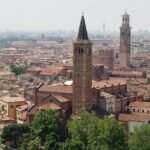
After the square, you move into Via Sottoriva, described as one of the oldest and best-preserved streets in Verona. The walk here also gives you a perspective looking toward the hills of Torricelle.
I like street stops like this because they slow you down just enough to “feel” the city. You’re not only learning names. You’re walking the kind of passage where daily life would have made history feel normal.
What to do: if the group allows it, pause for a look out toward the hills. Even without dramatic scenery, the point is orientation—Verona sits with geography that affects how people moved, met, and defended themselves.
This is also a good segment if you’re traveling with mixed interest levels. People who love architecture still enjoy the age and preservation, while people who love literature get a break from intense “story stops” without leaving the theme.
Arche Scaligere: Gothic tombs, Cangrande, and why poets care about rulers

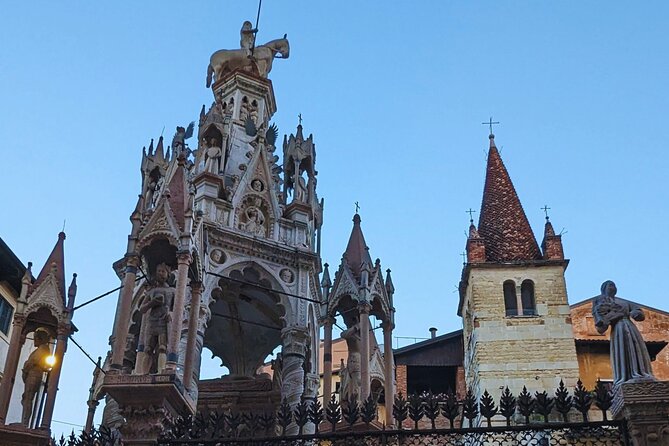
One of the most memorable stops is Arche Scaligere, the famous series of elaborate Gothic tombs. Here, the guide highlights the resting place of Cangrande I della Scala, a powerful figure whom Dante admired and referenced in his Divine Comedy.
This stop is where the tour’s title turns into something practical. You see how Dante’s world mixed poetry with power. If you ever wondered why writers in the Middle Ages couldn’t avoid politics, this is the visual answer.
Why it works for you: tombs like these aren’t just “old stuff.” They’re messages. They show who mattered, how the family wanted to be remembered, and how admiration or loyalty could take shape in literature.
Expect about 15 minutes at this stop, with just enough time to understand the significance and then let the scale sink in. If you’re a fan of Dante’s work, you’ll likely enjoy hearing how the guide connects references back to what you’re standing near.
Duomo di Verona (Santa Maria Matricolare): the Paradise-style ending
The tour finishes at Cattedrale di Santa Maria Matricolare, the Duomo di Verona. It’s described as a Romanesque church, and the itinerary frames it as a place where the peace of Paradise is found.
This ending choice is smart. After tombs, defensive structures, and a political square, you end somewhere that feels quieter and more reflective. It gives your brain somewhere to land after all the narrative fuel.
It’s also noted as an off-the-beaten path spot. Even if you’ve been in Verona before, this kind of ending can feel like the tour gives you something slightly different from the most obvious postcard stops.
Timing-wise, this is short—around 10 minutes—so treat it as a graceful close, not a long church visit.
What the best guides do (and why it matters to you)
The biggest reason this tour has a strong rating is how the guide tells the story. Names that show up in the experience include Leonardo, Giovanni, and Leo, and the consistent theme is that the tour feels both entertaining and informative without becoming a lecture.
Here’s what that means for you in real life:
- You’ll learn Dante’s connections without needing a crash course first
- You’ll get more from the statues and architecture because the guide explains what to notice
- The walk feels like a narrative, not a list of stops
I also think the guide’s handling of hot weather is a quiet win. Even with short stops, you still feel the sun. When a guide keeps the group moving at a human pace and stays attentive, the whole experience feels smoother.
Who this walking tour suits best
This is a good fit if you want:
- A short, focused Verona experience
- A route that connects literature and real locations
- A manageable time commitment that still feels like you learned something
It’s also ideal if you’re not sure you’ll want a huge museum day. The tour is built as a city stroll with story stops, so you get a Verona feel without committing to hours inside.
If you’re traveling with someone who cares about history but doesn’t want a heavy format, this kind of Dante thread can bridge the gap. And if you’re a Dante fan, you’ll appreciate how the guide links names and themes directly back to the places in the walk.
Should you book Dante in Verona: From Inferno to Paradise?
Yes, I’d book it if you want a guided walking route that turns Dante into something you can actually see in Verona.
Here’s the decision checklist I’d use:
- Choose it if you like stories tied to specific places and want to connect Dante’s work to real architecture and squares
- Choose it if you prefer English guiding and a small group pace
- Skip it only if you strongly dislike outdoor walking in the sun, since the schedule includes time on streets
At $42.05 for about 90 minutes, this is good value when you treat the cost as paying for narration, not just sightseeing. The fact that the major stops list free admission makes it even easier to feel like you’re getting your money’s worth.
FAQ
How long is the Dante in Verona walking tour?
It lasts about 1 hour 30 minutes.
How much does it cost?
The price is $42.05 per person.
Is the tour in English?
Yes, it is offered in English.
How big is the group?
The tour has a maximum of 15 travelers.
Where does the tour start and end?
It starts at Stradone S. Fermo, 3, 37121 Verona VR, Italy and ends at Cattedrale di Santa Maria Matricolare, Piazza Vescovado, 37121 Verona VR, Italy.
Is there a mobile ticket?
Yes. You receive a mobile ticket.
Do I need to pay for admission at the stops?
The itinerary lists free admission ticket for the stops included.
Is there free cancellation?
Yes. You can cancel for a full refund up to 24 hours in advance.
Optional extras: what to do with your time before and after
If your schedule allows, plan a little wandering time near Piazza dei Signori after the tour. The route gives you context, so the city makes more sense when you keep walking on your own.
If you want, tell me your travel month and whether you know Dante already. I’ll suggest the best time of day to go and how to connect this walk with the rest of your Verona day.